Why we went undercover for the BBC to expose crime in the Kurdish community

 BBC
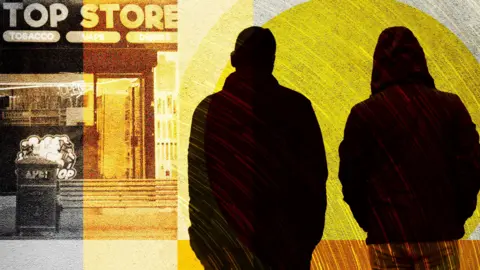
Two Kurdish men who say criminals are damaging the reputation of Kurds in the UK have agreed to go undercover for the BBC and expose the network behind illegal businesses on the High Street.
The duo we call Saman and Ali are Kurdish journalists who have been living legally in England for years.
The BBC discovered that a Kurdish criminal network was running mini-markets, barbers and car washes across Britain and wanted to find out more about how the network operated and who was involved.
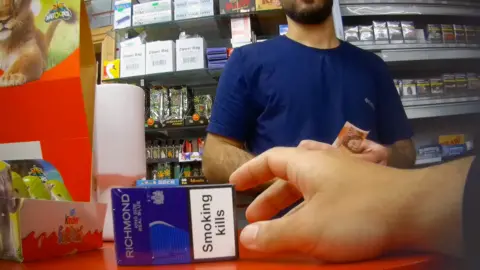
Equipped with hidden cameras, Saman and Ali pretended to be Kurdish refugees who had no right to work and wanted to buy and run a minimarket. sell illegal cigarettes and electronic cigarettes.
They managed to reveal how easy it is For someone in these circumstances to set up and run a business in full view on the High Street. We discovered that those involved helped deceive authorities by paying Kurds with UK citizenship to register businesses in their names.
Saman and Ali also managed to secretly film one of the men at the center of the network, who claimed he could wipe out government fines of up to £60,000 faced by those who employ illegal workers.
“I wanted to play a role in uncovering these illegal activities.” […] Saman, a former refugee, says loudly that they do not represent us. Because his life was at risk, Saman entered the country illegally by escaping from Kurdistan, which is located in the middle of the borders of Iraq, Iran, Turkey and Syria, but is not recognized as a country internationally.
Reporters acknowledge that tensions over illegal immigration are high in the UK and say they are both concerned the investigation could inflame hostilities.
But Ali says that illegal work “harms the entire Kurdish community” and that he “feels obliged to bring it back.” [the criminal network] out in broad daylight”.
Separately, Ali said he was concerned the news could be picked up by the far right.
He says he was particularly struck by far-right activist Tommy Robinson’s discovery of this situation. Unite the Kingdom march It happened in London during one of the weekends he was working undercover for the BBC. Banners and flags saying “We want our country back” were seen at the rally.
Saman and Ali have been monitoring social media reactions to the BBC investigation from within the Kurdish community and say it has sparked intense anger in some. One Facebook comment they spotted said: “How can we detect and find it? [the undercover reporters] kill them like dogs!”
Another called for the slaughter of their families in Kurdistan.
They also read accusations that they were spies for the British government and traitors to their Kurdish brothers. Saman says, “We are not spies and we have no intention of harming the Kurdish society.” “Our goal is to expose those who harm our Kurdish identity. We are proud of our Kurdish identity and are deeply concerned about the actions of such people.”
Ali says he has also encountered positive reactions praising and defending journalists for exposing injustices and crimes.
He says some young Kurdish men come to the UK because they hear they can make money selling illegal cigarettes.
Reaction to our investigationHome Affairs Minister Shabana Mahmood said on Tuesday that such networks “create incentives for people to come here illegally”. It was confirmed that an “urgent investigation” had been launched by the Home Office.
Ali emphasizes that a small proportion of Kurds living in the UK are involved in this business: “Perhaps a minority in society is involved in this illegal business and harms the whole society.”
The exact size of the Kurdish population in the UK is difficult to ascertain; official records tend to record nationality rather than ethnicity. The Kurdish Community Center in Haringey, London, puts the number at just over 500,000.

According to Ibrahim Avicil of the Refugee Workers Cultural Association (RWCA), a charity supporting refugees and asylum seekers in the United Kingdom, many of those seeking asylum say they are fleeing political persecution.
Such was the case with our undercover reporter Saman, who struggled for years when he first arrived in the UK. He says he is forced to live on less than £20 a week while his asylum claim is assessed.
Refugees are no longer around £49 per week – or £9.95 if they are in accommodation that provides meals in line with Home Office guidance.
“Realistically speaking, this is not enough to live a dignified life,” says RWCA’s Mr. Avicil.
He considers that because asylum seekers are largely prevented from working, many are vulnerable to exploitation and are effectively “forced to work in the illegal market for as little as £3 an hour”.
A Home Office spokesman said: “We make no apology for not giving asylum seekers the right to work; doing so would create an incentive for people to come to the UK illegally.”
Asylum cases can take years to resolve, with almost a third taking more than 12 months, according to government figures at the end of March this year.
Saman told us that it could be very easy to work illegally in a car wash, barber shop or mini market, but he would never do that to us.
But he says the people he met while working in illegal mini-markets during the BBC investigation appeared “missing”, particularly those who had been refused asylum and those in the process of appealing.
“They used all their money to come to the UK, their asylum claim was rejected and now they have lost everything.”
Ali admits that these people seem desperate.
“If [they] say you are not allowed to work – but also [you] you don’t get paid enough to survive; what should you do? “Most people in this situation would do anything.”
But they also note that there were individuals in the criminal network they uncovered who were not in need, and that they appeared to be motivated by greed.
He points out that Shaxawan, a Kurdish man who turned out to be a key mechanic in the network, was driving a BMW.
“He just wants to get richer. He exploits vulnerable people.”
Saman states that these people exploit the system “shamelessly and ruthlessly” and says that “many of these people are smart and find loopholes to deceive the authorities.”
However, he finds it difficult to emphasize that there is still a sense of “honour, kindness and hospitality” in Kurdish society. He is concerned that “the image of Kurds in Britain is now changing and becoming negative.”
He says: “I want to show the true image of the Kurds and make it clear that we are not involved in these illegal activities.”


