Climate protesters march on UN climate talks

Some wore black dresses symbolizing a funeral for fossil fuels, while hundreds wore red shirts symbolizing the blood of those fighting to protect the environment.
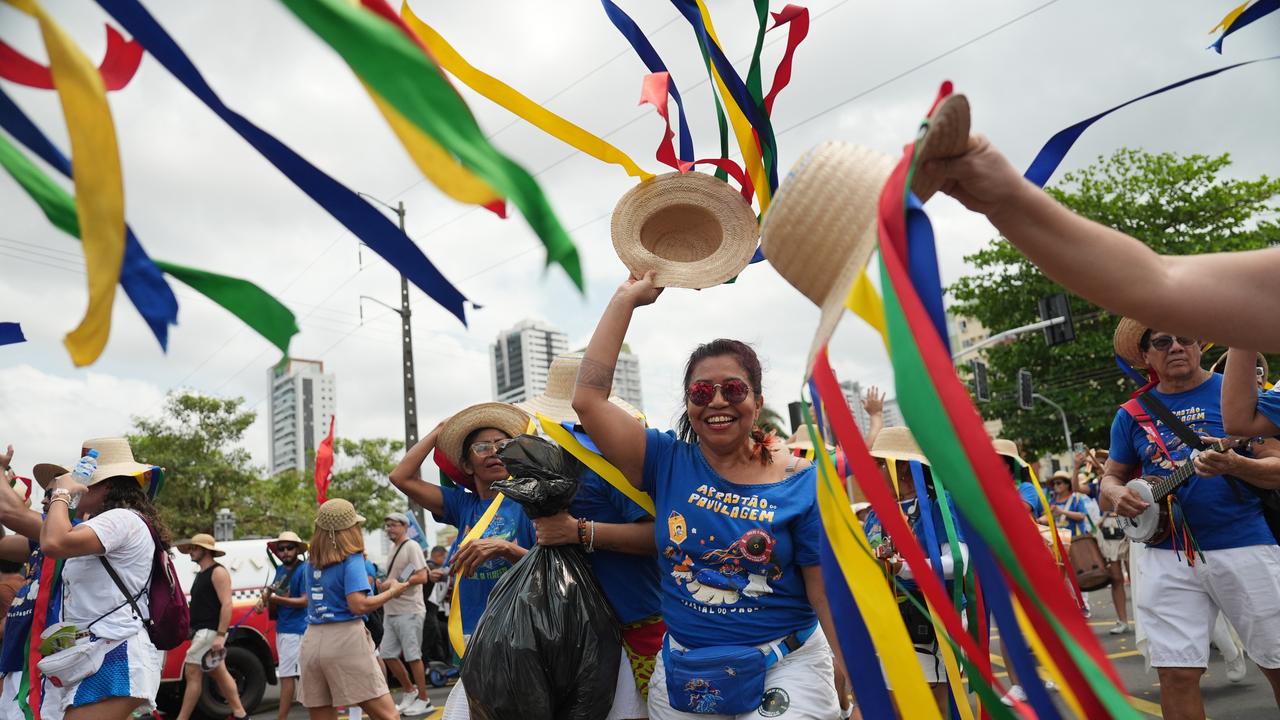
Saturday was the biggest day of protests at the halfway point of the United Nations climate talks in Belem, Brazil.
Using booming sound systems on trucks with raised platforms, organizers directed protesters from a wide range of environmental and social movements.
Marisol Garcia, a Peruvian Kichwa woman who marched at the head of a group, said the protesters were there to pressure world leaders to make “more humane decisions.”
Demonstrators planned to march about four kilometers along the route that would take them near the main venue of the talks, known as COP30.
Protesters twice disrupted talks earlier this week by surrounding the venue, including an incident on Tuesday that resulted in minor injuries to two security guards.
Many protesters have enjoyed the freedom to demonstrate more openly than at recent climate talks in more authoritarian countries, including Azerbaijan, the United Arab Emirates and Egypt.
Youth leader Ana Heloisa Alves, 27, said this was the biggest climate march she had ever been a part of.
“This is incredible,” he said.
“You can’t ignore all these people.”
Alves was on the march to fight for the Tapajos River, which the Brazilian government wants to develop commercially.
“The river is for the people,” his group’s signs read.
Pablo Neri, coordinator of Movimento dos Trabajadores Rurais Sem Terra, an organization for rural workers in the Brazilian state of Pará, said organizers of the talks need to include more people to reflect a climate movement shifting toward public participation.
The United States, where President Donald Trump has called climate change a hoax and withdrew from the 2015 Paris Agreement aimed at limiting the world’s warming, is skipping the talks.
One of the demonstrators, Flavio Pinto from the state of Pará, targeted the United States.
Wearing a brown suit and a large top hat with an American flag, he shifted his weight back and forth on stilts and fanned himself with fake hundred-dollar bills with Trump’s face on them.
His banner read, “Imperialism produces wars and environmental crises.”
The marchers formed a sea of red, white and green flags as they made their way up a hill.
A crowd of onlookers gathered outside a corner supermarket to watch them approach, lean over the railing and take cellphone photos.
“It’s beautiful,” said a man carrying shopping bags.
Climate talks are planned to continue until Friday.
Analysts and some participants said they did not expect any major new agreements to emerge from the talks, but hoped for progress on some past promises, including money to help poor countries adapt to climate change.

Australia’s Associated Press is the beating heart of Australian news. AAP is Australia’s only independent national news channel and has been providing accurate, reliable and fast-paced news content to the media industry, government and corporate sector for 85 years. We inform Australia.


