Home battery subsidies wound back, scheme cost tripled

Discounts for larger systems will be clawed back under the popular home battery scheme as the scheme’s budget is tripled.
The federal subsidy, which has been in effect for five months, will receive a generous top-up of up to $7.2 billion over four years after initially being allocated $2.3 billion.
The fund was thought to be rapidly depleted; This was partly because households were installing systems up to the subsidized maximum size to take full advantage of the one-time offer.
Under the program, eligible households and small businesses were able to receive a 30 percent discount on a home battery installed near new or existing rooftop solar.
Subsidies were available for batteries with capacities from 5kWh to 100kWh, with the discount applied to the first 50kWh.
The changes, announced by Energy Minister Chris Bowen on Saturday, confirmed that the first 50kWh of the system would still be eligible for support, but the per kWh discount for medium and larger sized batteries would not be as generous.
The government said a staggering boost based on battery size would encourage more households to buy the “right-sized” battery and ensure the scheme remains available to more households.
“We want more Australian households to have access to bills- and grid-friendly batteries – because it means cheaper, faster, safer solar power is available in our homes when and where it’s needed, day or night,” Mr Bowen said.
Starting from May 1, systems up to 14 kWh that are deemed suitable for small households will be able to benefit from a full discount of 30 percent for each kWh.
The discount will then decrease for medium-sized kits and large systems over 28 kWh.
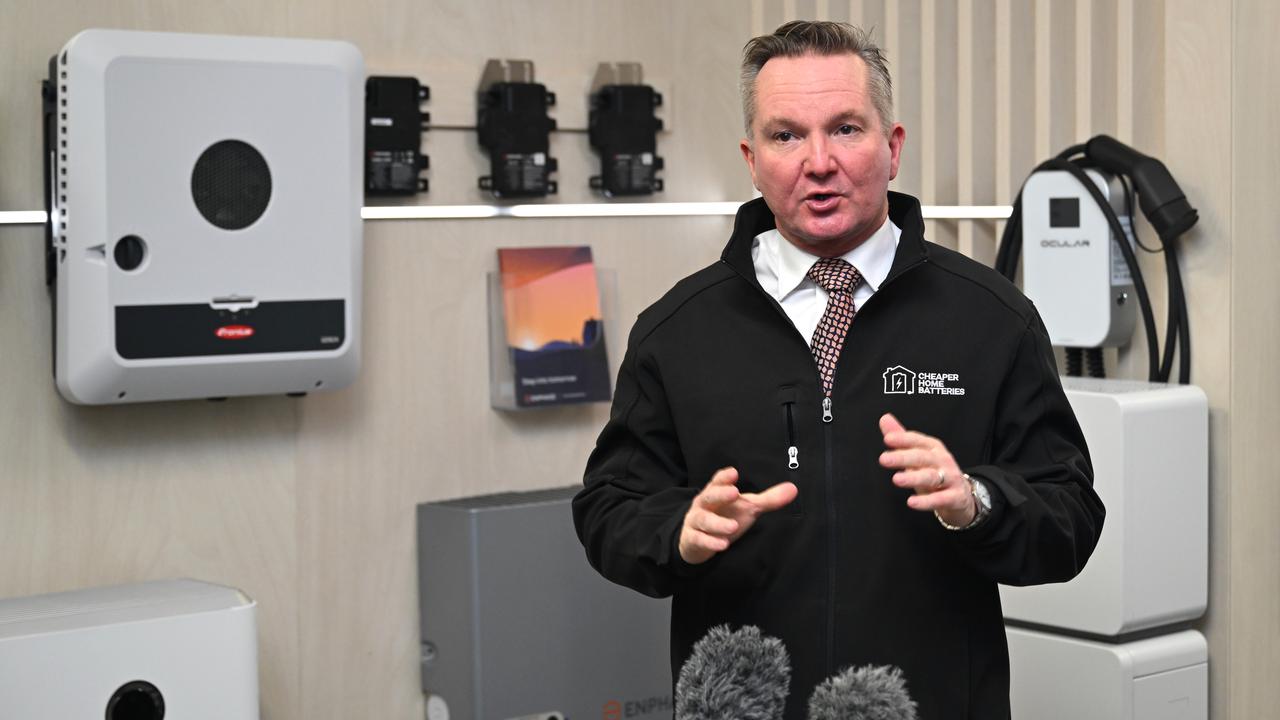
Nepean Solar CEO Jim Hill said the changes were a “huge relief”.
“A boom and bust cycle has been a hugely influential feature of this industry, so this sensible change that ensures the long-term viability of our sector is a huge relief and we welcome it,” the chairman of the Sydney-based solar and battery installation company said.
“As a small business we need to be able to plan for stock ordering, training and upskilling of staff and indeed the recruitment of new apprentices. This approach allows us to do this with confidence.”
John Grimes, chief executive of the Smart Energy Council, welcomed the funding increase and supported the rebate changes so more households and businesses can have access.
“We are a responsible industry that believes in spreading the benefits of solar energy and batteries to as many people as possible,” he said.
“If that means changing the discount, we support that.”
According to Australian Energy Market Commission figures, households that add batteries to their homes can expect to save $600-$900 a year in energy costs, in addition to the bill benefits from solar power.

Australia’s Associated Press is the beating heart of Australian news. AAP is Australia’s only independent national news channel and has been providing accurate, reliable and fast-paced news content to the media industry, government and corporate sector for 85 years. We inform Australia.


