‘El Mencho’: From California drug dealer to cartel kingpin
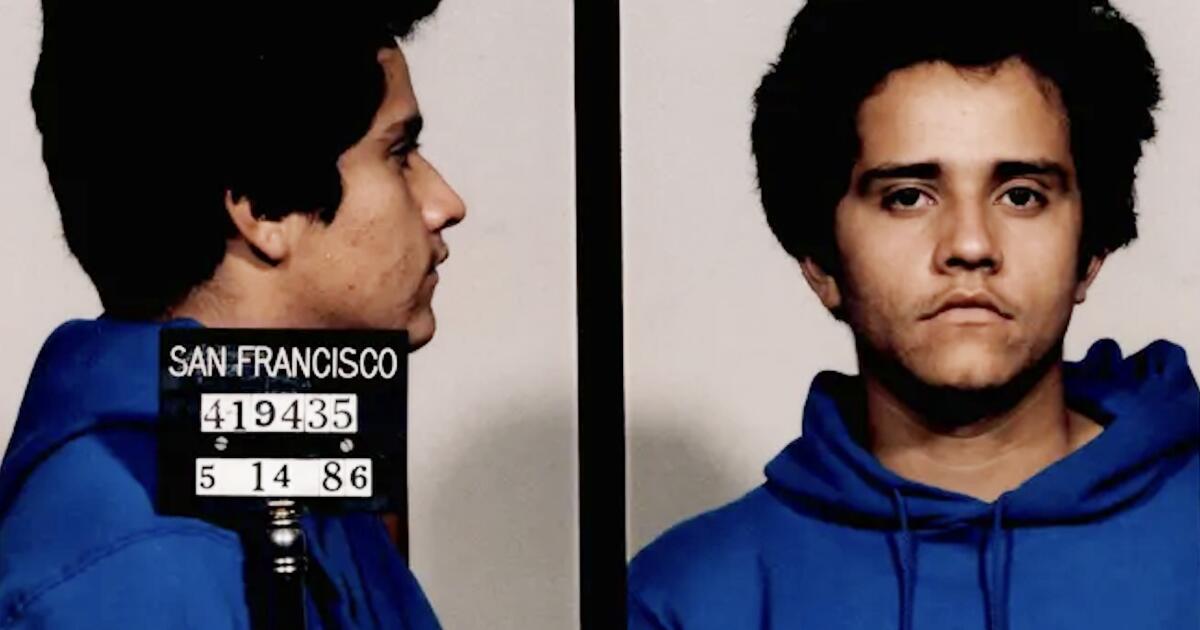
Long before Nemesio Rubén Oseguera Cervantes had a $15 million bounty on his head as the leader of Mexico’s ruthless Jalisco New Generation cartel, he was a shaggy-haired kid trying to make a living on the streets of San Francisco.
Sometime before he turned 20, he crossed the border illegally, making the journey north through the avocado and lemon groves that surround the immigrant’s small town in Michoacan state. He was first busted on drug charges on May 14, 1986, according to news reports and a San Francisco police officer’s booking photo that showed him frowning at the camera while wearing a blue hoodie. He was arrested two more times and finally arrested in 1992 for selling $9,500 worth of heroin to two undercover police officers at a bar.
He went to prison, was deported, and became the local police officer in his hometown despite his record.
Thus began the criminal career of one of the most notorious figures in the world of international drug trafficking. It ended spectacularly and violently on Sunday, with Mexican authorities announcing that the ringleader nicknamed “El Mencho” had been killed in a shootout with government forces in Jalisco, where his group, known as the CJNG, had long dominated.
The murder sent shockwaves of violence across large parts of Mexico where the CJNG dominates. Flights to some airports in Jalisco were grounded, and cartel gunmen set fire to vehicles and blockaded highways in 20 states, according to Mexican officials. The country’s top security official said 25 National Guard members were killed in retaliatory attacks on Sunday. President Claudia Sheinbaum urged the public to remain calm and maintained that most regions in the country were in a “completely normal” situation.
The discrepancy between the president’s statements and images of burned cars belching black smoke circulating on social media — along with swirling rumors about the degree of U.S. involvement in the operation — added a dark coda to Oseguera’s violent and tumultuous life. He rose from a small-time drug dealer in California to the head of an organized crime group with tentacles stretching around the world; This is a rise that follows the broader evolution of cartels in Mexico.
Oseguera, the leader of the Jalisco New Generation cartel, is shown with his son, Ruben Oseguera Gonzalez, known as El Menchito, in an evidence photo used by federal prosecutors.
(US District Court)
Groups that were once devoted almost exclusively to transporting illicit substances to meet the demand of American consumers have diversified their businesses into human trafficking, extortion, fuel theft, and even more. Latest applications from the US Treasury Department Against CJNG, a timeshare fraud scheme targeting tourists in Puerto Vallarta.
The narco-blockades that have disrupted life in parts of Mexico since Sunday also reflect the formidable power of the CJNG as a paramilitary organization. The U.S. Drug Enforcement Administration estimates that in 2023 the cartel employed approximately 20,000 “members, associates, facilitators and intermediaries” in various countries. The cells in Mexico are armed to the teeth with military-grade weapons; These include drones that drop explosives, improvised land mines, and .50-caliber rifles that fire armor-piercing bullets the size of carrots. The Trump administration’s designation of CJNG as a terrorist group last year increased long-standing pressure from U.S. officials on Mexican officials to disband the group and eliminate its founder.
Although experts said his death was a major blow to the CJNG, they also warned that Oseguera’s creation had metastasized beyond the point where severing the primary head would cause the hydra-like infrastructure to collapse.
Paul Craine, the former head of the DEA in Mexico, said Oseguera pioneered a kind of franchise system in which local criminal groups were selected and allowed to fly the CJNG flag as long as they paid tribute.
Because of the various groups controlled by key lieutenants, some of whom were close relatives, Oseguera’s name was used to instill terror and keep his subordinates in line, Craine said. The group, accused of assassinating politicians, journalists, environmental activists, police officers and anyone else who dared to stand in their way, frequently issued threatening proclamations, often delivered by masked gunmen who said they spoke on behalf of El Mencho.
“Mencho’s name and Mencho’s aura carried a lot of myth, sowing fear,” Craine said. “He was the head of everything, the head of everything.”
Oseguera’s connections to California extend beyond his early days in the Bay Area. The DEA’s office in Los Angeles spearheaded the agency’s lawsuit against him and his close relatives, and the family’s ties to the area are reflected in court filings.
In 2024, federal authorities arrested a suspected high-ranking cartel member. fakes death and hides out in Riversidewhere he enjoys a luxurious life. Authorities said Cristian Fernando Gutierrez-Ochoa began working for CJNG around 2014 and later married El Mencho’s youngest daughter, identified in court records as a U.S. citizen who owned a coffee shop in Riverside. Gutierrez-Ochoa pleaded guilty to money laundering conspiracy charges last year and sentenced to approximately 12 years in prison in prison.
It is not known exactly when Oseguera quit his job as a local police officer and resumed his life of crime, but at some point in the 1990s Mexican authorities said he began working as an enforcer for Los Cuinis and the organization then known as the Milenio cartel. He became famous for his passion for cockfighting and also called himself “El Señor de Los Gallos”, meaning the lord of the roosters.

Pedestrians pass a burning bus on a highway in Cointzio, Michoacán, after the Mexican president announced Oseguera’s death on Sunday.
(Armando Solis / Associated Press)
Margarito “Jay” Flores, a former cartel associate who grew up in Chicago and became a high-level trafficker who, along with his twin brother Pedro, ran large drug shipments from Mexico, recalled his first encounter with El Mencho in Puerto Vallarta in 2007. Flores, who eventually left cartel life and has since cooperated extensively with U.S. authorities, told The Times that he and his brother were detained by Mexican federal police officers after a night of partying with their wives.
Flores said he left the names of top capos to ensure his release, but said his captors showed no reaction until he told them he knew El Mencho.
“When I said that name, their eyes all lit up,” Flores said.
After a series of phone calls, El Mencho and a large group of cartel gunmen arrived and ordered Mexican authorities to release the captives, Flores said. Flores said Oseguera is small, barely 6 feet tall, with a “jockey build” but “confident and fearless.”
Flores said that during a brief dispute with Mexican law enforcement, Oseguera told the chief Mexican official: “We’re all going to do this the right way, or we’re all going to die.”
The twins were released and Oseguera sent them off in a convoy. sikarios – hitmen – to keep safe. He was just a local chief at the time, but Flores said he wasn’t surprised when Oseguera later formed his own cartel.
“He governed with violence and fear,” Flores said. “He didn’t just want to be the boss, he wanted the world to know he was the boss.”
Times staff writers Kate Linthicum and Patrick McDonnell contributed to this report.