Market analysts react to US-Israel strikes on Iran
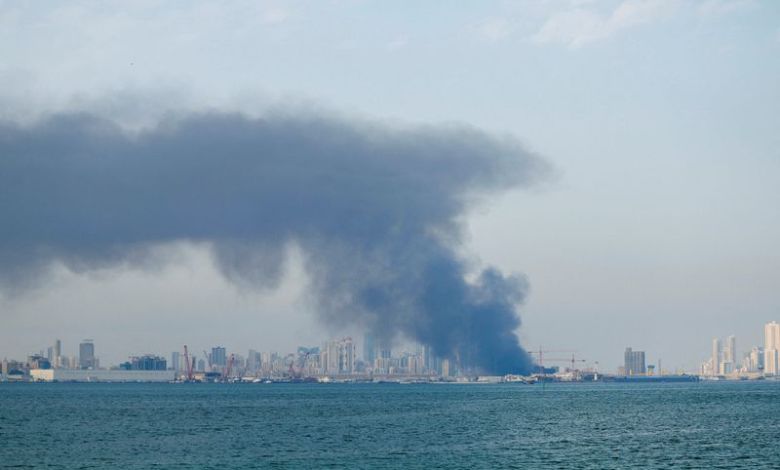
Feb 28 (Reuters) – The United States and Israel launched attacks on Iran on Saturday, targeting its leadership and plunging the Middle East into a new conflict that President Donald Trump said would end the security threat and give Iranians a chance to overthrow their rulers.
The attacks put nearby oil-producing Gulf Arab states on edge as fears of escalation grew, and Tehran responded by launching missiles at Israel.
Some oil majors and leading trading companies have suspended crude oil and fuel shipments through the Strait of Hormuz because of the attacks, four business sources said on Saturday.
QUOTES:
ENERGY ANALYSTS OF EURASIA GROUP:
“Oil prices will rise sharply when markets open. If the conflict continues into Sunday, oil prices are likely to react by rising $5-$10 above the current $73 baseline, based on Iran’s alleged blockade of the Strait of Hormuz and disruption to tanker traffic.”
ENERGY ANALYSTS AT BARCLAYS:
“Oil markets may have to confront their worst fears on Monday. Given the current situation, we think Brent could reach $100 per barrel as the market grapples with the threat of potential supply disruptions amid the increasingly insecurity situation in the Middle East.”
VISHNU VARATHAN, HEAD OF MACRO RESEARCH, ASIA EX-JAPAN, MIZUHO, SINGAPORE:
“A broader regional attack/instability point situation could also be par for the course, in line with Iran’s warning. Oil prices are likely to remain high as production and transit are vulnerable to attacks and disruptions. OPEC may be under pressure to increase production to try and compensate. But a 10-25% premium on oil is not outlandish – “even without a blockade of the Strait of Hormuz, which is easily a 50% premium risk event.”
CHRISTOPHER WONG, STRATEGIST, OCBC, SINGAPORE:
“The strike increases the geopolitical risk premium as markets head towards Monday’s open. The immediate reaction function is fairly predictable: “safe haven assets such as gold are likely to see some upside gap, while oil prices may also strengthen due to supply disruption concerns. Risky assets and high-beta currencies may face an initial wave of volatility, especially if headlines point to potential retaliation or regional spread.”
NICK FERRES, CIO, VANTAGE POINT ASSET MANAGEMENT, SINGAPORE:
“Energy is still cheap. That’s definitely the sector that rose on Monday. And gold.”
(Reporting by Scott Murdoch, Tom Westbrook, Rae Wee; Additional reporting by Scott DiSavino; Compiled by Vidya Ranganathan; Editing by Rod Nickel and Andrea Ricci)