Oil poised for more gains amid export facilities threat

Oil prices could extend gains when markets open as the US-Israeli war against Iran enters a third week, putting oil infrastructure at risk and keeping the Strait of Hormuz closed in the world’s largest supply disruption.
U.S. President Donald Trump threatened further attacks on Iran’s Kharg Island oil export hub, prompting a defiant response from Tehran to retaliate further.
Brent and US West Texas Intermediate crude oil futures have already risen sharply, rattling global financial markets.
Both contracts have surged more than 40 percent so far in March to their highest levels since 2022, after U.S.-Israeli attacks on Iran prompted Tehran to halt shipping through the Strait of Hormuz, a key transit point for a fifth of global oil supplies.
Trump called on China, France, Japan, South Korea, Britain and others to deploy warships to secure the strategic passage.
The United States struck military targets on Kharg Island on Saturday, which was quickly followed by drone strikes on a major Iranian oil terminal in the United Arab Emirates.
“This indicates an escalation of the conflict,” said JP Morgan analysts led by Natasha Kaneva.
“So far, the region’s oil infrastructure has been largely preserved.”
Analysts said the UAE’s Fujairah, as well as Saudi Arabia’s Ras Tanura export terminal and Abqaiq oil processing facilities, are listed as critical and highly vulnerable energy nodes in the Gulf.
However, oil loading operations in Fujairah have resumed, an industry source based in Fujairah told Reuters on Sunday.
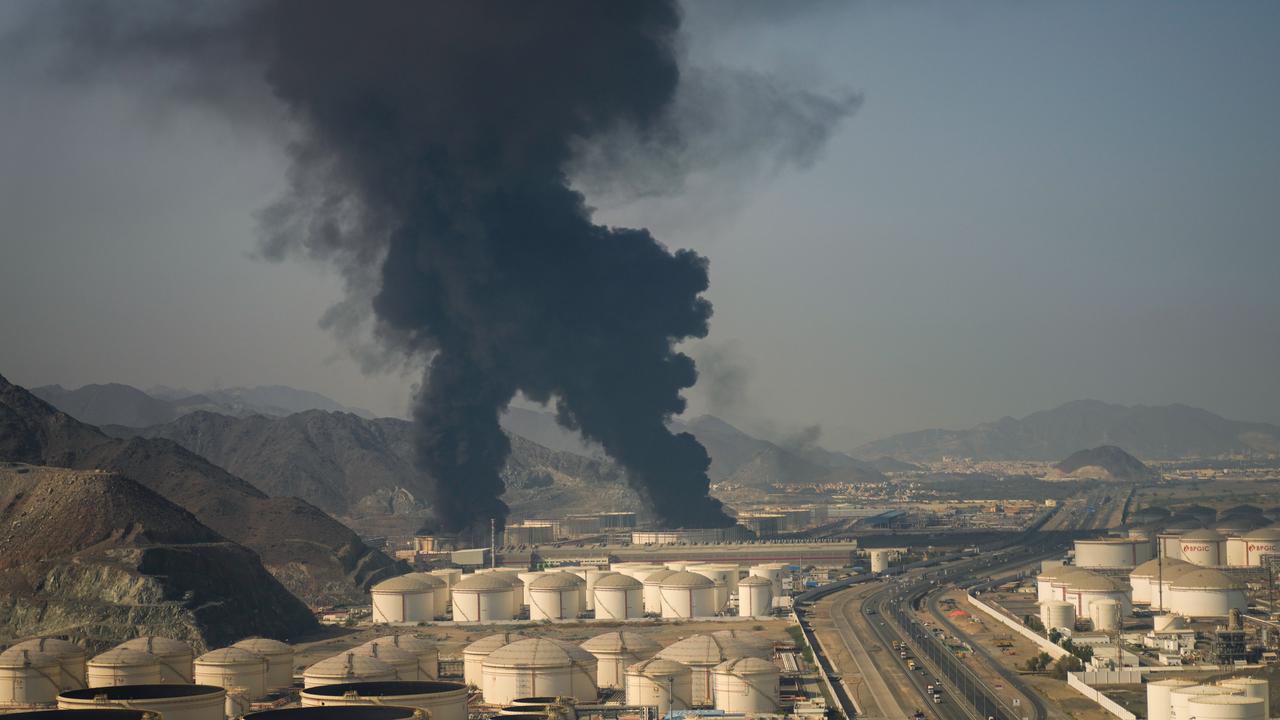
Fujairah, outside the Strait of Hormuz, is the origin of nearly one million barrels per day of the UAE’s flagship Murban crude; this is a volume equal to approximately one percent of world demand.
According to the International Energy Agency, global oil supplies are expected to decrease by eight million barrels per day in March due to transportation disruptions, while Middle Eastern producers have cut production by at least 10 million barrels per day.
On Thursday, the agency agreed to release a record 400 million barrels of oil from strategic stocks held by member countries to combat price increases.
Japan plans to release its oil on Monday, with Tokyo promising to release a record 80 million barrels; This means approximately 45 days of supply for the resource-poor country.
The government has asked Japanese refiners to use the released crude oil, which would reduce national reserves by 17 percent, to secure domestic supplies.
Meanwhile, the Trump administration has rebuffed efforts by Middle Eastern allies to open diplomatic talks, while Iran has ruled out any ceasefire until U.S. and Israeli attacks end, dampening hopes for a quick end to the conflict, according to three sources familiar with the effort.

Australia’s Associated Press is the beating heart of Australian news. AAP is Australia’s only independent national news channel and has been providing accurate, reliable and fast-paced news content to the media industry, government and corporate sector for 85 years. We inform Australia.


