US calls for new Cuban leaders as blackout eases

Cuba reconnected the power grid across much of the island after the collapse left nearly 10 million people without electricity due to a US-imposed oil blockade that crippled the island’s already outdated production system.
The Ministry of Energy and Mines announced the restoration early Tuesday, just hours after U.S. President Donald Trump stepped up his rhetoric against the communist-run island by saying he could do whatever he wanted with Cuba.
Energy officials said they reconnected the grid from the westernmost state of Pinar del Rio to Holguin, near the eastern tip of the island. According to reports, Santiago de Cuba, the country’s second largest city, remained offline.
State-owned media reported late Monday that electricity had been restored to five percent of residents in the capital Havana, representing about 42,000 customers.
The Trump administration has made clear that it sees Cuba as the next country where the United States can realize its ambitions on the world stage.
“Cuba is in very bad shape right now,” Trump said, a day after Cuba’s third nationwide power outage in four months.
“And we’ll be doing something with Cuba very soon,” the president said.
Until recently, Trump’s comments about change in the socialist island nation would have been considered remarkable. But these followed his administration’s daring U.S. military raid in Venezuela, which captured then-President Nicolás Maduro and cut off oil exports from that country that supported the Cuban economy.
They are also following the US military strike against Iran on February 28.
The administration is awaiting the departure of President Miguel Díaz-Canel as the United States continues negotiations with the Cuban government, according to a U.S. official and a source with knowledge of talks between Washington and Havana. No details were offered about who the administration might want to come to power.
Many Cubans do not believe that Díaz-Canel has much power in Cuba, unlike revolutionary founding father Raúl Castro and his family.
Power was slowly being restored to hospitals and some homes on Tuesday afternoon, but authorities warned that the crumbling power grid could fail again.
The government blames its woes on a U.S. energy blockade after Trump in January warned of tariffs on any country that sells or supplies oil to Cuba.
Secretary of State Marco Rubio, who is of Cuban origin, said the island “has an economy that doesn’t work in the political and administrative system. They can’t fix that.”
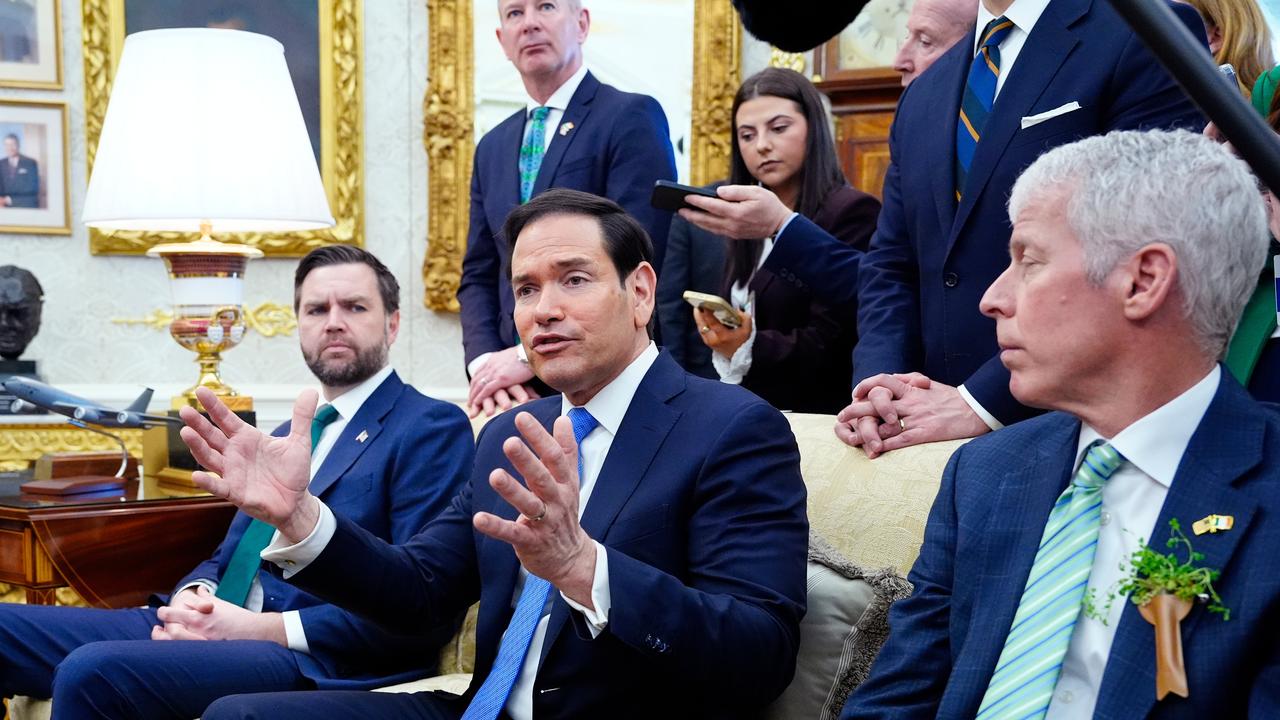
A Cuban official said Monday that Cuba is open to trade with U.S. companies, but such promises have been made before.
“That’s why they need to change dramatically,” Rubio said.
“What they announced yesterday is not dramatic enough. It’s not going to fix the situation.”
The Trump administration also demands that Cuba release political prisoners and move toward political and economic liberalization in exchange for the lifting of sanctions. Trump also raised the possibility of a “friendly takeover of Cuba.”
While Cuba produces 40 percent of its oil and generates its own electricity, it is not enough to meet demand as the electrical grid continues to collapse.

Australia’s Associated Press is the beating heart of Australian news. AAP is Australia’s only independent national news channel and has been providing accurate, reliable and fast-paced news content to the media industry, government and corporate sector for 85 years. We inform Australia.


