UK gas prices surge by 25% overnight after strikes in Qatar

The price of UK natural gas has risen by almost a quarter following Iran’s latest attack on a gas hub in Qatar, raising fears of major disruptions to global supplies.
Natural gas futures – contracts to purchase the commodity over the coming months – have been trading between 125 and 132 pence per Therm (a unit of heat energy) for the past few days, but rose slowly on Wednesday to close around 140 pence.
However, when trading hours opened on Thursday, the rate jumped 24 percent to 174p. It fell quickly to 169p by 08:00 GMT, but an industry expert warned the developments would be a “major concern for ratepayers” across Britain.
It comes after Qatar said on Thursday that Iranian missile strikes had hit the liquefied natural gas field Ras Laffan, “causing large fires and further damage”. This follows reports that Israel has launched an attack on Iran’s South Pars gas field.
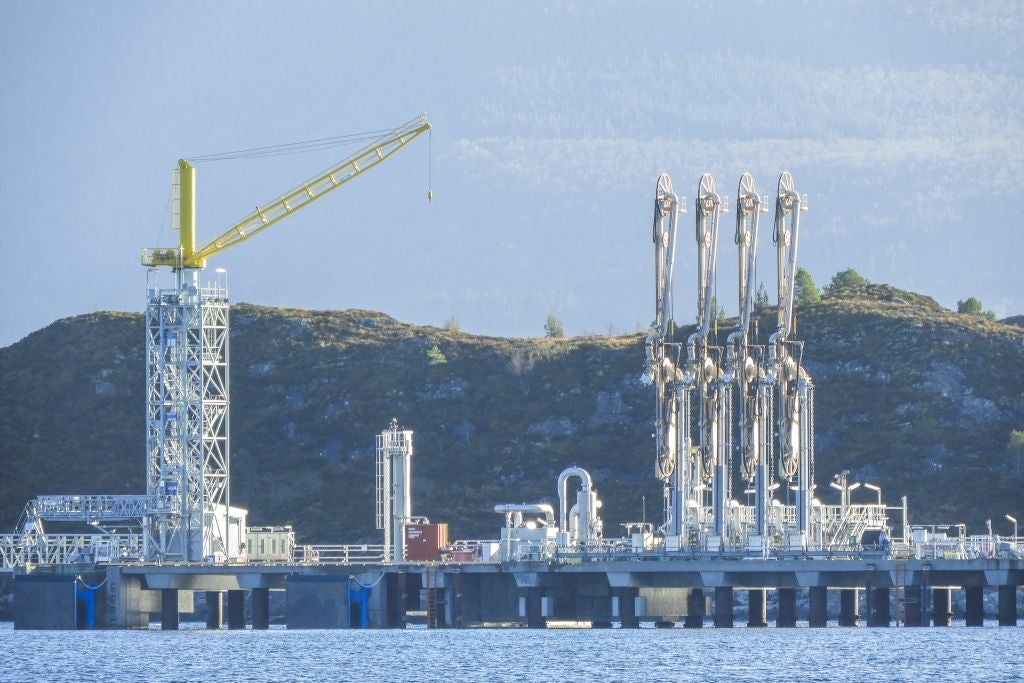
Britain imports a significant portion of its natural gas, and after a cold winter Europe’s reserves are expected to be lower than normal.
Government data for 2024 shows natural gas accounts for a third (33%) of overall energy supply; but this may now be slightly lower as the level of renewable energy in the mix (then 42%) continues to increase. Although domestic gas supplies are available from the North Sea, the UK also imports gas from Norway and other parts of Europe.
European gas prices have also risen more than 20 percent through Thursday.
Comparison website Uswitch said more than 20 fixed deals have been taken off the market by UK energy firms in the past three weeks, a response to rising wholesale costs that will push the energy price cap higher in the summer months. Fixed energy tariffs protect consumers from rising prices or energy price shocks.
The price cap is expected to rise to around £1,827 in July, according to Cornwall Insight. Ofgem set the price cap.
Meanwhile, oil prices also rose as attacks on energy facilities in the Middle East increased.
The price of Brent crude rose nearly 7 percent on Thursday morning to exceed $114 per barrel; This means the conflict is approaching its highest level since it escalated in late February.
Citing the rising cost of oil as a result of the conflict, Secretary of State for Trade Chris Bryant said it was turning into a “really big moment for the UK economy” and called for continued progress towards green energy to reduce dependence on fossil fuels and their volatile prices.
Mr Bryant said Chancellor Rachel Reeves would “look at what we can do about the fuel cap” and added that time would show that decisions made now were the right ones in the long run. “The biggest message I take away from what’s happening in the Gulf is that we need to make sure we’re not so dependent on oil and gas prices,” he said.
“The most important part of this is making sure we transition the UK economy to renewable energy.
“I think in ten years’ time people will say this was a really big moment for the UK economy and the UK Labor government did it right.”
Common Wealth think tank published a report. report He suggested that UK household energy bills could fall by £200 if gas was no longer used to determine pricing as it is currently, and called on the government to “remove the price-setting function of gas from the electricity market”.
Jess Ralston, Head of Energy at the Energy and Climate Intelligence Unit (ECIU), said: “This will be a huge concern for bill payers, many of whom are still carrying debts from the last gas crisis when Russia invaded Ukraine. This led to taxpayers having to subsidize gas for tens of billions of homes for millions of homes. And let’s be clear: trying to extract more gas from the North Sea has no real impact on the price households pay because this is determined by international markets and caused by foreign actors such as Putin.” world events.
“Simply put, if you want to protect yourself from such price shocks, use less gas.
“British wind and solar farms reduce our reliance on foreign gas, as do net-zero technologies such as electric heat pumps, which helps bill stability. British wind power cut wholesale prices by a third last year. These are permanent solutions, whereas the North Sea is a mature basin that is running out of oil and gas, meaning faster drilling will be finished quicker.”
Following the latest attacks, US President Donald Trump said he “knew nothing” about Israel’s attack and did not want to allow “this level of violence and destruction”. But he also promised that Iran’s South Pars gas field would be “completely blown up to a large extent” if Iran attacked Qatar’s facilities again.
Qatar’s state-supported energy company, Qatar Energy, stopped the production of liquefied natural gas in its facilities at the beginning of the month due to attacks on its facilities.
Additional reporting by PA


