U.S. Forest Service to close all of its Michigan research facilities
The U.S. Department of Agriculture will close all four Forest Service research and development facilities in Michigan as part of a major restructuring effort, the federal agency announced this week.
The move could affect the health of Michigan’s nearly 3 million acres of national forests, a Michigan forestry researcher said. State officials are still evaluating how the redevelopment will affect Michigan forests.
The U.S. Forest Service headquarters will move from Washington, D.C., to Salt Lake City, Utah, the department announced March 30. The Forest Service will close 57 research and development facilities, including those in Houghton, East Lansing, Wellston in Manistee County, and L’Anse in Baraga County in Michigan’s Upper Peninsula.
With the closure of Michigan’s research facilities, the closest ones to the state will be in Rhinelander and Madison, Wisconsin, and Delaware, Ohio.
A USDA spokesperson did not answer how many employees in Michigan would be affected by the restructuring. At least some of them will be able to move to other facilities.
“The transition will occur in phases,” the spokesperson said in an email. “Employees will receive clear information about relocation timelines, available options, and resources to support their decisions.”
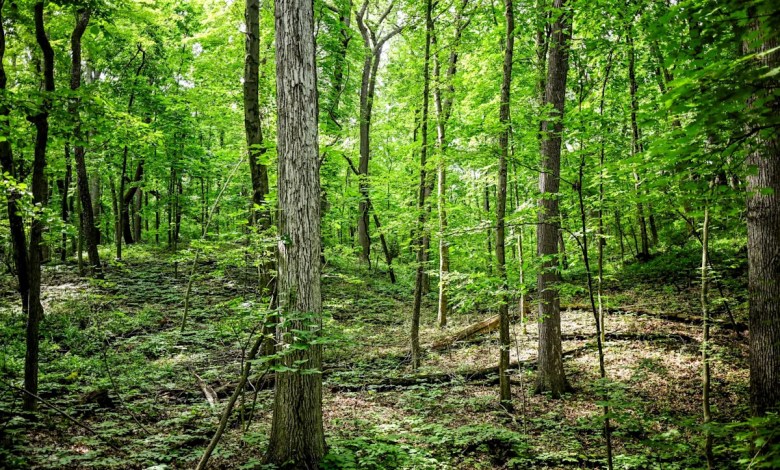
Michigan has three national forests: Huron-Manistee, Hiawatha, and Ottawa national forests. Collectively, the forests cover approximately 3 million acres in the Upper Peninsula and northern Lower Peninsula.
Could the Forest Service’s moves harm Michigan’s forested areas?
The Forest Service’s East Lansing facility is on the campus of Michigan State University, said MSU forestry professor Bert Cregg. Federal employees work with MSU researchers and share resources, he said, which is why many Forest Service research facilities are located on university campuses.
Forest Service researchers worked with Cregg in East Lansing to focus on forest health problems caused by diseases and invasive pests, he said.
He said Michigan faces a number of problems that are damaging Michigan’s forested areas, such as emerald ash borer and beech bark disease.
“These are not going to go away with global trade,” Cregg said. “There will be more and more of it. That’s one of the things that could affect us… I don’t know exactly how all of this is going to play out, but it’s hard to imagine it being good news.”
US Forest Service plans new western headquarters in Salt Lake City
The shift west will streamline Forest Service operations by bringing leaders closer to larger areas of federal lands in the western U.S., USDA Secretary Brooke Rollins said in a press release.
“Moving the Forest Service closer to the forests we manage is an important action that will advance our core mission of managing our forests while saving taxpayer dollars and increasing employee employment,” Rollins said. “Establishing a headquarters out west in Salt Lake City and streamlining the way the Forest Service is organized will position the Chief and operations leaders closer to the areas we manage and the people who depend on them.”
Cregg, who worked for the Forest Service in the 1990s when he graduated from his doctoral program, questioned the logic of closing research stations.
“They will move the Forest Service headquarters closer to where the forests are, but they will close the research stations where the problems are,” he said.
It’s unclear how the Forest Service reorganization will affect the Michigan Department of Natural Resources’ forestry efforts, DNR spokesman John Pepin said in an email. DNR foresters manage three national forests in Michigan together.
Pepin said the DNR is working closely with the Northern Institute for Applied Climate Science in Houghton, which has moved to Fort Collins, Colorado.
ckthompson@detroitnews.com
This article first appeared in the Lansing State Journal: US Forest Service to close all research facilities in Michigan