First baby Asian elephant born at Smithsonian’s National Zoo after 25 years

NEWYou can now listen to Fox News articles!
A night in Washington DC has something to say after welcoming a very small and very special new resident.
A baby Asian elephant was born at the Smithsonian National Zoo early Monday, officials announced; It’s a rare development that marks the zoo’s first elephant birth in nearly 25 years.
The 308-pound, 38.5-inch calf arrived at the zoo’s Elephant Trails exhibit at 1:15 a.m., with animal care and veterinary staff on hand to watch the birth and the newborn’s first moments.
The female calf spent these first hours near her mother, 12-year-old first-time mother Nhi Linh, who zoo staff say is doing well as she bonds with her baby under the supervision of keepers and veterinarians.
AMERICA’S NATIONAL BIRD LAYS A SECOND EGG IN HIS FAMOUS CALIFORNIA NEST AS ROLLING SEASON CONTINUES.
At the Smithsonian National Zoo in Washington, D.C., an Asian elephant calf was strung up on ropes by staff who guided it to walk shortly after it was born. (Smithsonian National Zoo via YouTube)
Zoo officials called the birth a rare and joyful milestone not only for the National Zoo but for Asian elephant conservation more broadly.
“After nearly 25 years of waiting for an Asian elephant calf, this birth fills us with profound joy,” said Brandie Smith, John and Adrienne Mars director of the National Zoo and Institute of Conservation Biology.
“When you see the calf and the heartwarming interactions with the herd, I hope you will be inspired to help save this endangered species. What we learn from our elephants in DC directly strengthens our work to protect wild Asian elephants in Southeast Asia. I am incredibly proud of our team, whose expertise made this moment possible for Nhi Linh and all of us.”
With fewer than 50,000 Asian elephants remaining in the wild, each birth in human care represents a meaningful step toward conservation of the species, according to the Smithsonian.
Asian elephants face increasing threats from habitat loss, disease and human-elephant conflict, making successful live births increasingly important. The Smithsonian has been studying and protecting Asian elephants for more than 50 years, both at the National Zoo and in the countries where Asian elephants live.
CHIMPANE ESCAPES CONTAINMENT AT INDIANAPOLIS ZOO, TRIGGERING EMERGENCY LOCKDOWN
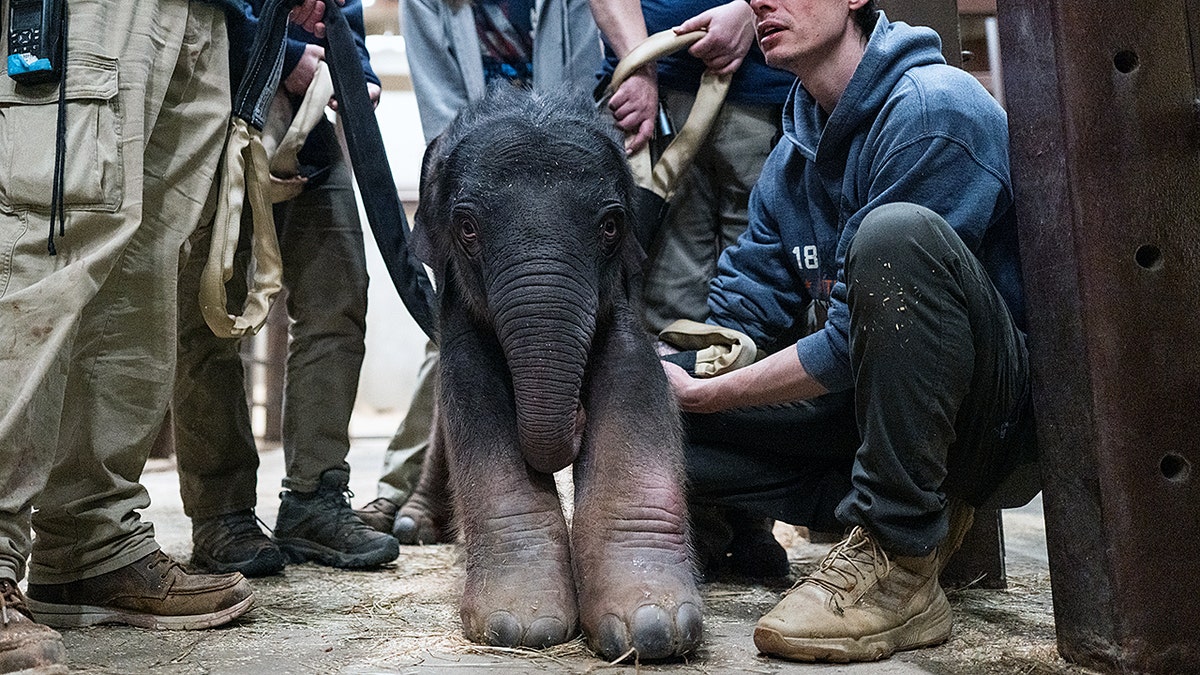
Smithsonian animal care and veterinary staff with an Asian elephant calf born Monday at the Smithsonian National Zoo. (Roshan Patel, Smithsonian National Zoo and Conservation Biology Institute)
The calf’s arrival came after 21 months of pregnancy, the longest gestation period among land animals, according to the Smithsonian. Zoo officials said the birth was part of a carefully planned breeding advisory through the Association of Zoos and Aquariums Species Survival Plan, a nationwide program designed to maintain healthy, genetically diverse animal populations in zoos.
The calf’s mother, Nhi Linh, was born at Rotterdam Zoo in the Netherlands on August 10, 2013, and joined the National Zoo herd in November 2022. He stands about 8 feet tall, weighs about 6,700 pounds, and is described by keepers as energetic and “going with the flow.”
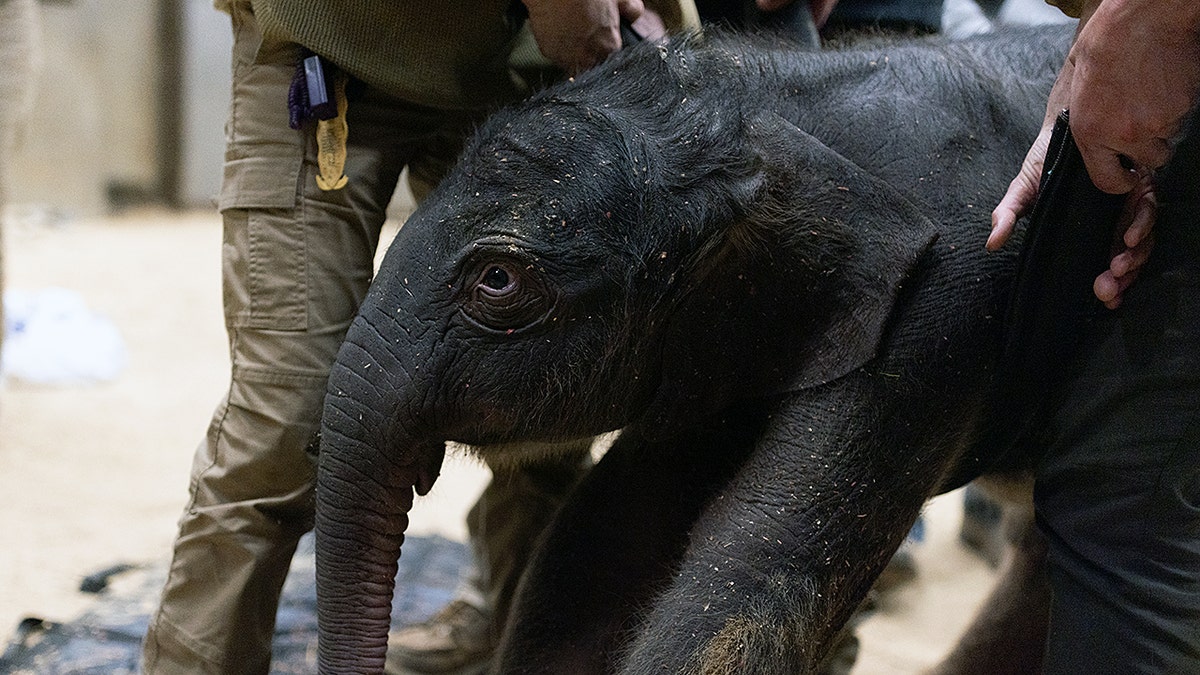
Smithsonian animal care and veterinary staff with the Asian elephant calf born Monday. (Roshan Patel, Smithsonian National Zoo and Conservation Biology Institute)
Proud dad Spike is a familiar presence on the zoo’s Elephant Trails. Born at the Miami Zoo on July 2, 1981, Spike arrived at the National Zoo in 2018. At nearly 10 feet tall and weighing 13,000 pounds, it is one of the largest animals in the area and, according to staff, a calm and gentle presence within the herd.
Spike had given birth to three baby elephants in other zoos, but none of them survived.
The zoo released photos showing the newborn calf nestled next to Nhi Linh while animal care teams were nearby in the hours after birth. Officials said the calf’s health, social development and weather conditions will determine when visitors can see the baby elephant in person.
For now, keepers are focusing on giving mother and calf time to bond while closely monitoring the newborn’s progress. Updates will be shared via the zoo’s website and social media accounts.

Smithsonian animal care and veterinary staff with an Asian elephant calf born this week at the Smithsonian National Zoo in Washington, D.C. (Roshan Patel, Smithsonian National Zoo and Conservation Biology Institute)
Animal lovers can also take part in naming the new arrival. The Smithsonian National Zoo has opened a public naming vote, with $5 donations counting as votes and proceeds supporting Asian elephant care and conservation efforts.
Voting will end at noon on February 13 and results will be updated daily.
Name options include Linh Mai, meaning “spirit flower”; Thảo Nhi, meaning “gentle and beloved”; Tú Anh means “bright and intelligent”; and Tuyết, meaning “snow,” a reference to the winter storm that hit the D.C. area shortly before the birth.
CLICK TO DOWNLOAD FOX NEWS APPLICATION
Admission to the Smithsonian National Zoo is free, and no special ticket is needed to visit Elephant Trails when open. Zoo officials encourage visitors to check online for updates on when the calf will make its first public appearance.
The arrival of the tiny elephant is being celebrated as a once-in-a-generation moment as he takes the first wobbly steps of a new life.