China and ASEAN sign upgraded free trade pact

Beijing’s Ministry of Commerce said the ASEAN bloc of Southeast Asian countries and China on Tuesday signed an upgrade to its free trade agreement that includes chapters on digital, green economy and other new industries.
The 11-member Association of Southeast Asian Nations is China’s largest trading partner, with bilateral trade totaling US$771 billion ($A1.2 trillion) in 2024, according to ASEAN statistics.
China is seeking to intensify its relations with ASEAN, a region with a collective gross domestic product of US$3.8 trillion, to counter heavy import duties imposed on countries around the world by US President Donald Trump’s administration.
China’s Ministry of Commerce said in a statement that the updated agreement “fully reflects the two sides’ solemn determination to jointly promote multilateralism and free trade.”
Beijing is trying to position itself as a more open economy, despite criticism from other major powers over expanding export restrictions on rare earths and other critical minerals.
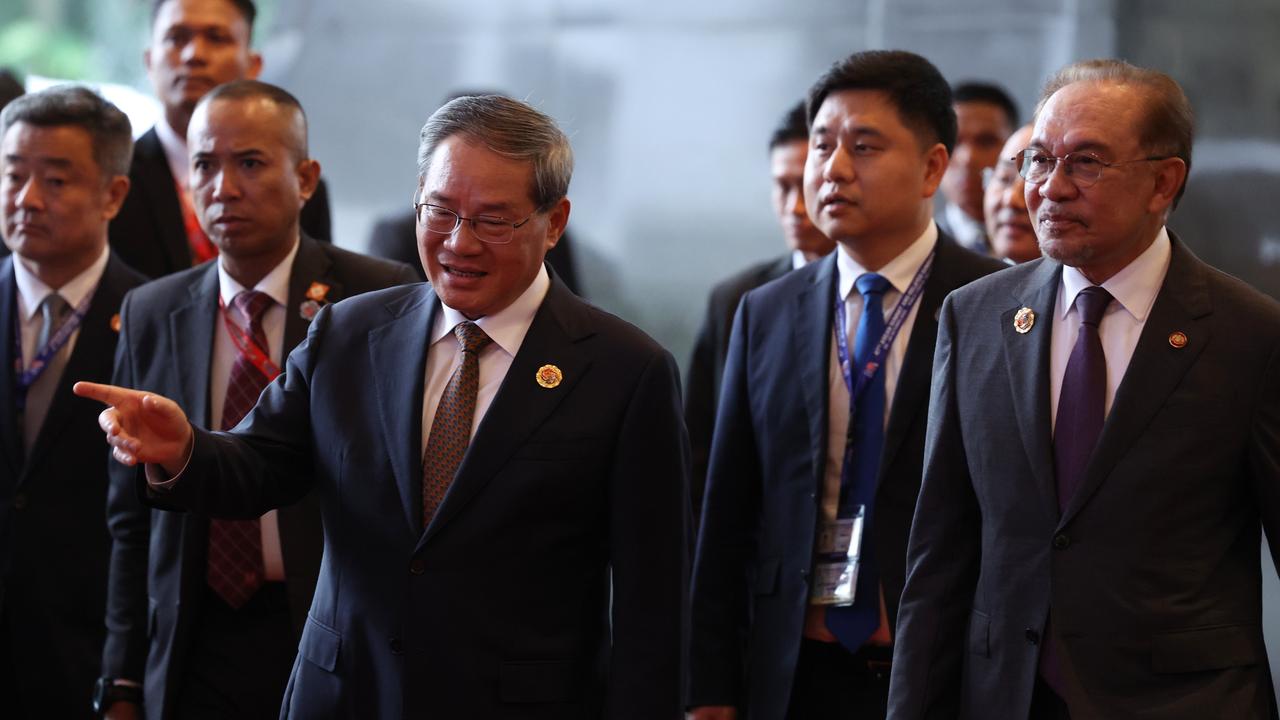
The so-called version 3.0 of the free trade agreement between ASEAN and China was signed at a summit of the bloc’s leaders in Malaysia, which Trump attended at the start of his Asia trip on Sunday.
Negotiations on the upgraded ASEAN-China agreement began in November 2022 and ended in May, just after Trump’s tariff offensive gained momentum.
The first FTA came into force in 2010.
China had previously said that the agreement would pave the way for improved market access between China and ASEAN in sectors such as agriculture, digital economy and pharmaceuticals.
Both China and ASEAN are part of the Regional Comprehensive Economic Partnership, the world’s largest trading bloc, covering almost a third of the global population and nearly 30 percent of global gross domestic product.
Malaysia hosted an RCEP summit in Kuala Lumpur on Monday for the first time in five years.
China has been engaged in an escalating trade war with the United States since Trump took office in January and imposed high tariffs on Chinese goods.
While Beijing has described Trump’s tariffs affecting most countries as protectionism, it has also expanded its controls over the flow of critical minerals and magnets.
China processes more than 90 percent of the world’s rare earths.
The world’s two largest economies extended a trade truce when negotiators met in Kuala Lumpur over the weekend and reached an agreement for Trump and Chinese President Xi Jinping to decide when they meet in Seoul later this week.
Since Trump left Malaysia on Monday morning, China has pressed for increased economic cooperation in the region, stressing the importance of open trade.
“The world should not return to the law of the jungle, where the strong prey on the weak,” Chinese Premier Li Qiang said in his speech at the East Asia Summit regional forum on Monday.
“We should more firmly support the free trade regime, establish a high-standard regional free trade network, and advance regional integration strongly and effectively.”

Australia’s Associated Press is the beating heart of Australian news. AAP is Australia’s only independent national news channel and has been providing accurate, reliable and fast-paced news content to the media industry, government and corporate sector for 85 years. We inform Australia.


