Experts issue warning over dangers of using cosmetic face fillers

Experts have warned that cosmetic fillers can lead to blindness and skin loss if injected incorrectly.
Non-surgical procedures such as fillers are growing in popularity, with nearly 10,000 performed by members of the British Association of Aesthetic Plastic Surgeons (BAAPS) in 2024.
Cosmetic fillers are injectable substances commonly used to target wrinkles and smooth or rejuvenate skin; The most common filler is hyaluronic acid.
However, if applied incorrectly and the filler is injected into or too close to blood vessels, it can have serious consequences as a result of artery blockage.
Clinics are now advised to perform an ultrasound before injecting dermal fillers to see where the veins are located.

Study author Rosa Maria Silveira Sigrist, a radiologist at the Department of Radiology at the University of São Paulo in Brazil, said: “Facial vascular occlusion events can be devastating because, if not treated appropriately, they can cause necrosis and even facial deformity.”
For the study presented at the annual meeting of the Radiological Society of North America (RSNA), researchers examined filler-related vascular complications in 100 patients.
In slightly less than half of the cases, ultrasound scans showed no flow in the blood vessels connecting superficial arteries in the face to deep arteries. In more than a third of cases, there was no flow in large blood vessels.
The areas around the nose are particularly risky injection sites because nasal blood vessels communicate with some important parts of the head, including the eyes.
Dr Sigrist warned that damage to these vessels could lead to serious complications such as skin damage, blindness and paralysis.
To treat filler-related complications, an enzyme called hyaluronidase is injected to break down the hyaluronic acid filler material. Ultrasound also helps guide clinicians to the area that needs treatment.
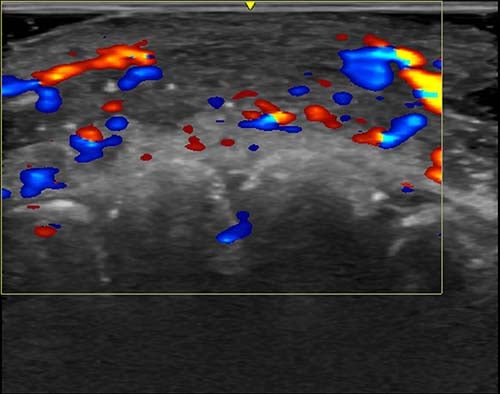
“If injectors are not guided by ultrasound, they treat based on where the clinical findings are and inject blindly,” Dr Sigrist added.
“But if we can see the ultrasound finding, we can target the exact location where the blockage is occurring. Instead of filling the area with hyaluronidase, we can perform guided injections that use less hyaluronidase and provide better treatment results.”
He explained that ultrasound is also a useful tool to guide filler injections and can help with sensitivity, so it will be needed less often and the chances of complications will be less than they were to begin with.
Those who experienced complications following filler injections emphasized the importance of having them performed by a qualified practitioner.
Lauren Bateman previously said Independent He explained that the under-eye filler left his face feeling like “the face was going to explode” and that an infection occurred on his face that could reach his eyes. He admitted that the person who applied the filler did not have any qualifications.
Ultrasound can help prevent mistakes, but BAAPS has warned that although its use is increasing, it is not yet the standard of care.
BAAPS President Nora Nugent said: “Mapping the location of blood vessels undoubtedly provides valuable information prior to treatment.
“Such risks from dermal fillers are one of the many reasons why BAAPS has long campaigned for greater regulation of aesthetic procedures and for the provision of medical procedures such as injectable treatments to be restricted to those with medical training.
“We hope the government will finally introduce improvements in safety and regulations with its proposed licensing scheme for non-surgical procedures.”
The government has previously said it plans to introduce restrictions to curb “cowboy” cosmetic procedures that leave people maimed, injured and in need of urgent NHS care.
Practitioners will need to meet strict safety, training and insurance standards to operate legally. A public hearing will be released in early 2026 before the proposed changes.


