Aussie firm losing bid to mine rare earths in Greenland

A stalled Australian rare earth mining project in Greenland has been dealt a fresh blow as authorities say its exploration license will not be renewed.
Perth junior miner Energy Transition Minerals (ETM) is suing the Greenland government for billions of dollars after it introduced legislation banning uranium mining in 2021.
This move effectively halted operations that had begun at the Kvanefjeld field as the uranium would be a byproduct.
Many residents in the nearby town of Narsaq, population 1,500, oppose the project due to concerns about the risk of radioactive dust and waste leakage. The region is considered the breadbasket of Greenland.
The legal dispute is in Greenland’s supreme court, but a hearing date has not yet been set.
ETM, which has spent nearly $150 million on the project, received a draft decision in early April stating that the Greenland Ministry of Mines recommended rejecting the application for renewal of the exploration license after the permit expires in December.
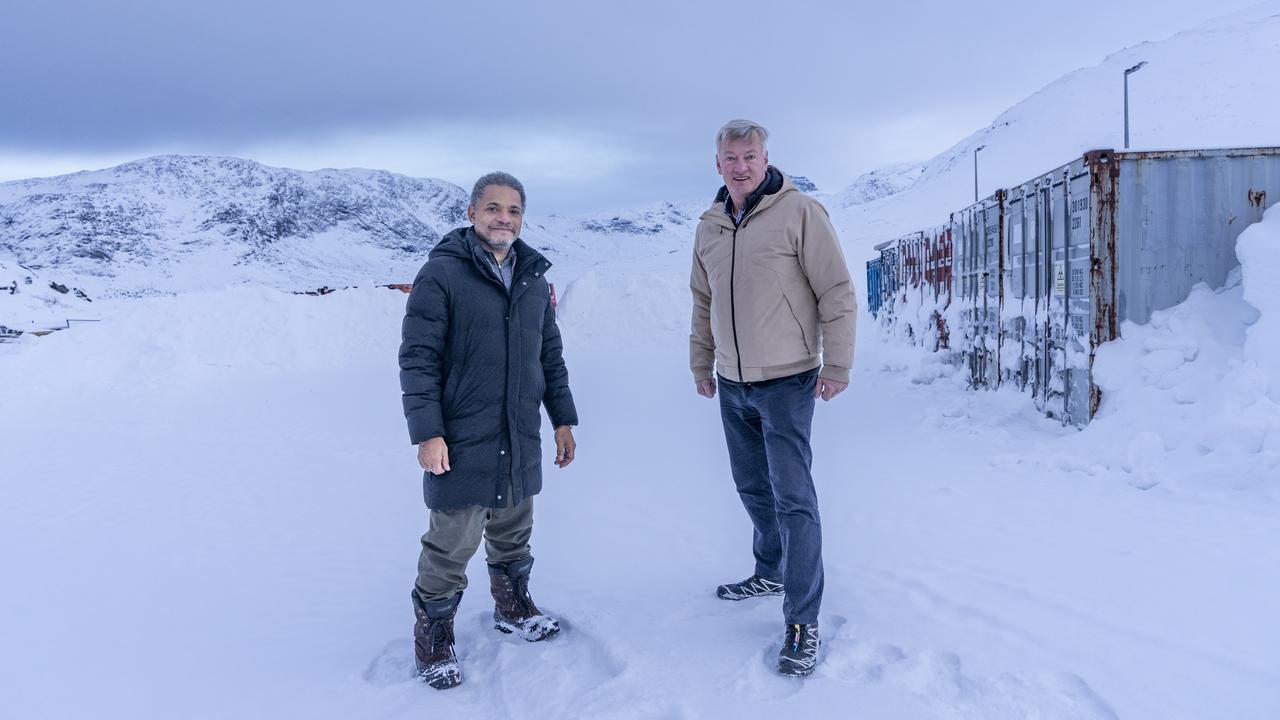
“Meanwhile, in terms of their refusal to extend it based on legislation that is still being tested in legal proceedings… I would be embarrassed if I were a Greenlandic MP,” ETM director general Daniel Mamadou told AAP.
The company said it was “blindsided” by the decision and plans a $10 million drilling program in 2026 to comply with regulations requiring minimum spending on exploration activities.
Jorgen Hammeken-Holm, head of department at Greenland’s mining ministry, rejected accusations that the company was gaming and insisted ETM would have a chance to respond before the final decision.
“(The company’s) application for permission to extract rare earths and uranium was rejected twice. The reason why the exploration permits were not extended lies in these two rejections, which formed the basis of not having to conduct further exploration,” he told AAP.
Asked if ETM’s only hope for the project to get started was for US President Donald Trump to invade Greenland and lift the ban on uranium mining, Mr Mamadou laughed and said: “No, of course not.”
“The company and I do not support any illegal activity,” he said.
Mr. Mamadou expressed frustration with legal delays and accused government lawyers of dragging their feet; however, this claim was denied by Mr. Hammeken-Holm.
“It is the judicial system that carries out the process,” he said.
In March, an arbitration court ordered the Danish and Greenlandic governments to pay legal costs totaling €3.1 million (A$5.2 million) after finding that the ETM did not have jurisdiction to hear the case.
Venture capitalists finance the company’s legal proceedings.
Mr Mamadou said the government’s stance on ETM would not go unnoticed by other international miners.
“This is a big test for the confidence of (foreign) investors,” he said, noting that Greenland sent a delegation to a recent congress in Canada to promote itself as an investment destination.
“(They) claim that Greenland is open to trade… but at the same time they are committing these acts of expropriation against us.”

The Australian Associated Press is the beating heart of Australian news. AAP is Australia’s only independent national news channel and has been providing accurate, reliable and fast-paced news content to the media industry, government and corporate sector for 85 years. We inform Australia.


