Children’s social media addictions linked to mental health problems in new study

A new study has found that young people’s addiction to social media and video games is linked to a higher risk of developing mental health problems, suicidal behavior and sleep problems.
The amount of screen time teens spend tends to increase significantly during adolescence, which is the period when mental health and sleep problems often begin to emerge, researchers said.
In light of the findings, the lead author of the study calls on digital platforms to look at limiting addictive features in apps and social media.
Jason Nagata said: “Problematic screen use is when children cannot control the time they spend online, even if they try, and this begins to cause stress, conflicts, or problems at school or at home. “It can also lead to withdrawal-like feelings, needing more time online to feel satisfied, and repeated relapses like other addictive behaviors.
“Our findings suggest that digital platforms and families should consider ways to reduce the addictive properties of apps and social media, as these usage patterns can be altered and impact adolescents’ mental health.”
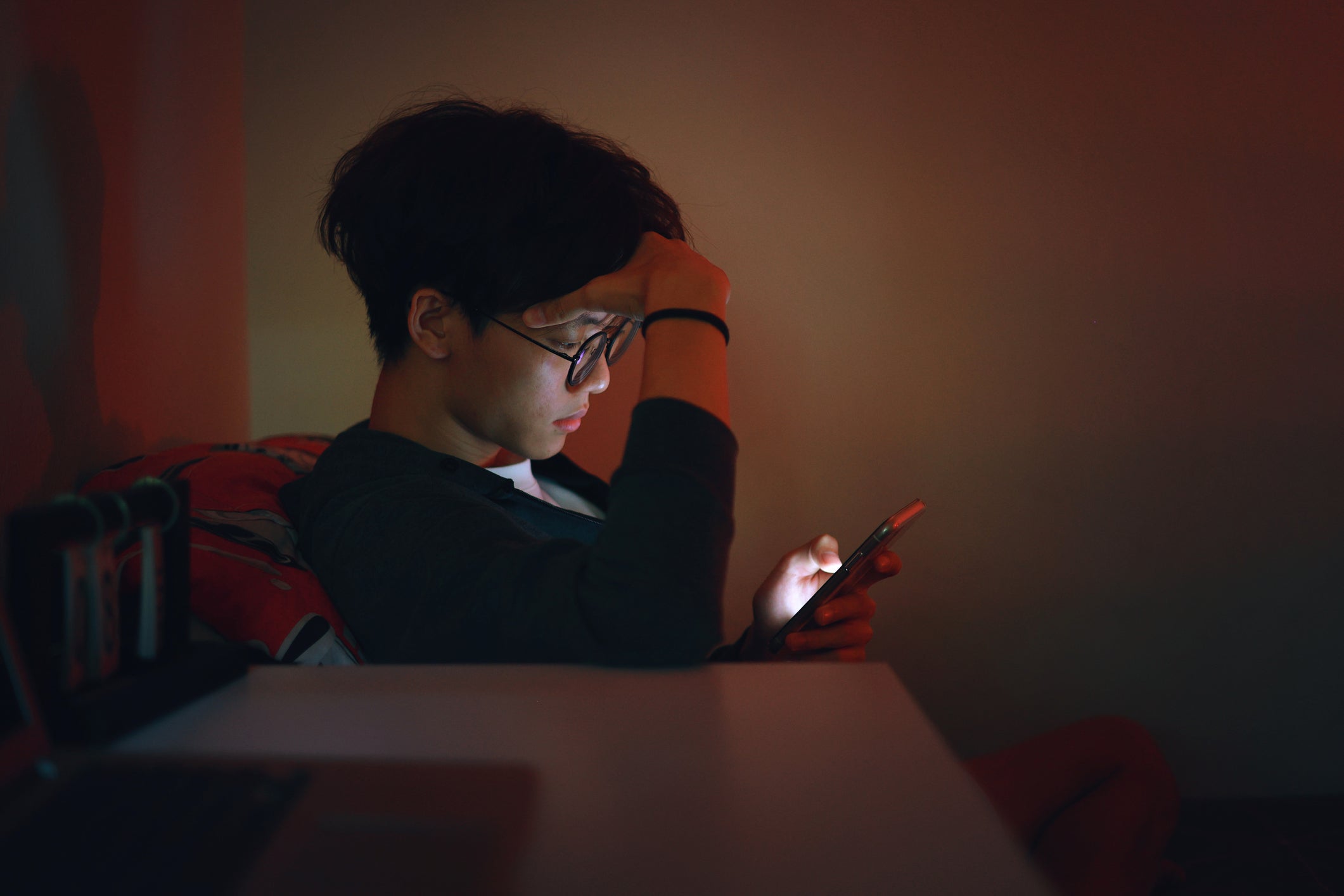
Researchers from the University of California, San Francisco, tracked more than 8,000 teenagers ages 11 to 12 for a year.
They determined whether participants had “problem” cell phone and social media use, defined as addiction-like symptoms including compulsive use or loss of control. The children’s parents or caregivers then had to answer questions to assess psychiatric symptoms and behavioral problems.
The study found that problematic social media, video game and phone use was associated with a higher risk of having depressive problems, sleep problems and suicidal behavior.
The findings follow a study in December that found there was “little evidence” that going on social media or playing video games was bad for people’s mental health. Last year the University of Manchester’s research was based on the experiences of more than 25,000 students.

Dr Nagata said: “Not all screen time is harmful. The real risk occurs when use becomes addictive or problematic, when children cannot stop, feel stressed when not using, or when it begins to disrupt sleep, mood or daily life.”
But Professor Neil Humphrey, co-author of the study from the University of Manchester, said: “Our findings show us that young people’s preferences for social media and gaming may be shaped by how they feel, but not the other way around.
“Instead of blaming the technology itself, we need to pay attention to what young people are doing online, who they are connecting with and how supported they feel in their daily lives.”
The research follows the UK government’s decision to consult on a social media ban on under-16s; as fears grow about how this ban will affect the well-being of young people.

Scottish Labor Party leader Anas Sarwar, who backed the ban, said social media was fueling a “mental health emergency”.
In late January the government launched a three-month consultation on how to improve children’s relationships with mobile phones and social media, including a proposal for an Australian-style ban.
In December, Australia began enforcing a social media ban on children under 16 for the first time in the world; This has forced platforms to exclude young users or risk heavy financial penalties.
If you are experiencing or struggling to cope with feelings of distress and isolation, Samaritans offer support; You can talk to someone confidentially over the phone, free of charge, or email on 116 123 (UK and ROI) jo@samaritans.orgor visit the Samaritans website to find details of your nearest branch.


