How could inheritance tax change at the Budget?

Economists have warned Labor faces a series of difficult choices in the upcoming Budget; Chancellor Rachel Reeves stated that further tax increases and spending cuts could be expected.
The government may need to raise at least £22bn in fiscal activity on 26 November, according to the latest research from the Institute for Fiscal Studies (IFS), and speculation is growing about the Chancellor’s options.
Ms Reeves said Labor was sticking to its manifesto commitment not to increase taxes on ‘working people’, which means no increases in the headline rate of income tax, national insurance or VAT.
Ignoring these three largest revenue streams, the Treasury now needs to make smaller adjustments to the tax system to raise the funds it needs. This was recently called a “mixed bag” by tax expert Dan Neidle at the cross-party Treasury Committee.
Instead of that approach, the founder of Tax Policy Associates advised Ms Reeves to “step back and consider ways to reform the tax system to be pro-growth”, adding: “It’s a situation that we’ve rarely seen over the last few decades but has now become quite desperate.”
One possible area the Chancellor will examine ahead of November 26 is the inheritance tax system. Both Ms Reeves and the prime minister, Sir Keir Starmer, have previously wanted those with the “broadest shoulders” to pay a fair share of tax; Inheritance tax policy is one of the most obvious ways to achieve this.
How does inheritance tax work?
Inheritance tax is a tax on the inheritance of someone who has died, but only four per cent of families pay it as most estates fall below the £325,000 tax threshold.
The key to this exemption is that anything left to a spouse or civil partner is not subject to inheritance tax, regardless of the value of the property. This means that if a deceased person leaves their entire estate to their spouse, inheritance tax will not be charged, even if it is worth £10 million.
However, this exemption does not extend to partners who live together but are not married or in a civil partnership.
Each individual has a tax-free inheritance allowance of £325,000. While properties with a value below this threshold are not subject to any tax, properties above this threshold are subject to a 40 percent tax on the excess.
What changes have Labor already made to IHT?
However, two major changes to how inheritances will be taxed have already arrived in last year’s Budget, making it less clear whether Labor will look at this option again this year.
The most controversial were the agricultural property discount reforms, called the ‘tractor tax’, which were planned to come into force in April 2026.
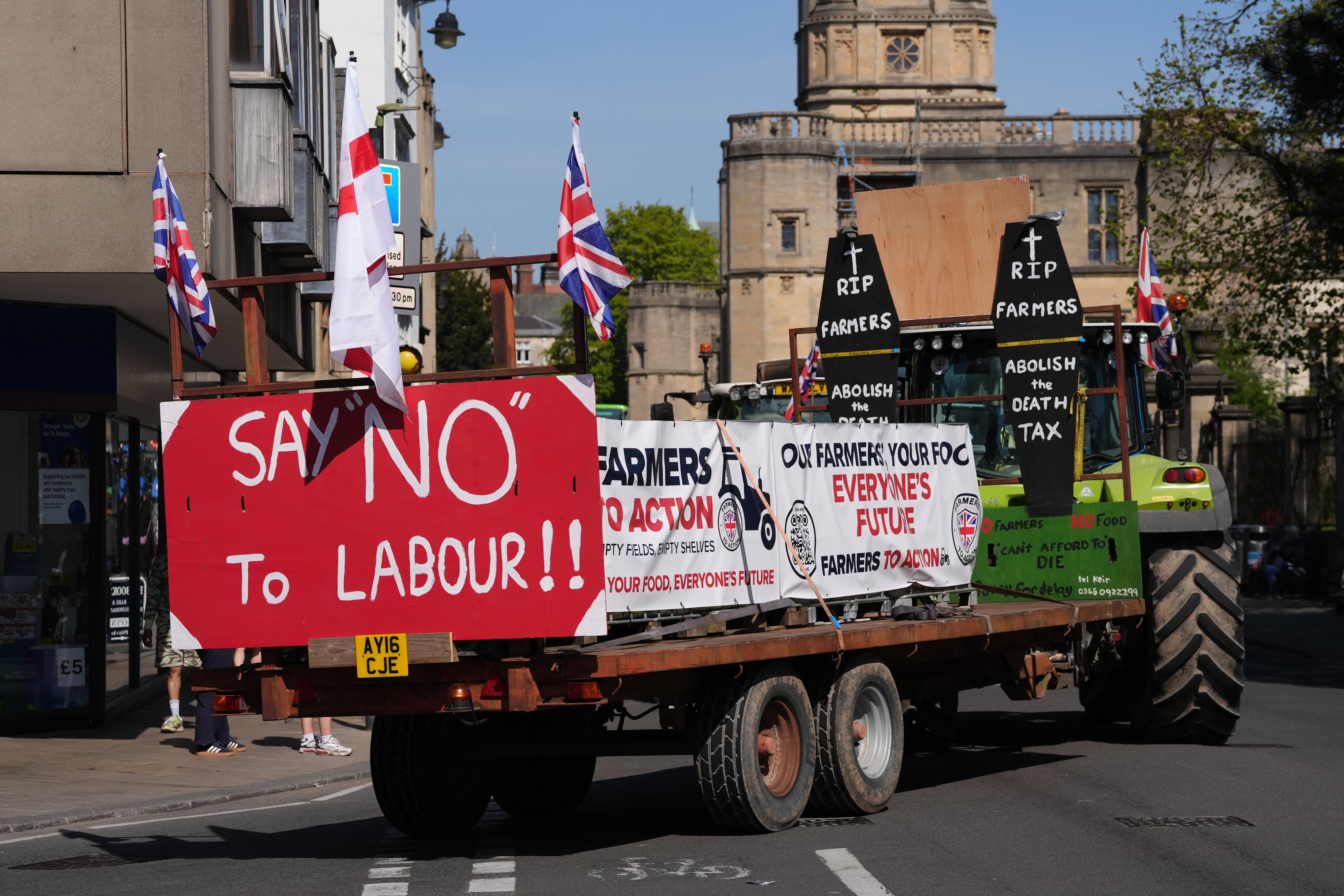
This will see inheritance tax relief for business and agricultural assets limited to £1 million, above which a new reduced rate of 20 per cent will apply (deducted from the standard 40 per cent IHT rate. The tax will be paid in installments over 10 years, interest-free.
The government says the actual threshold before paying inheritance tax could be as much as £3 million, once exemptions are taken into account for each joint and farm property in the couple.
The Chancellor announced that transferred private pension wealth will also be included in inheritance tax from April 2027. Ms Reeves also opted to extend the freeze on the IHT tax-free allowance at £325,000 until at least April 2030; This rate has been frozen at this rate by successive governments since 2009.
How could Labor change IHT further?
The Treasury is now reportedly considering introducing a lifetime limit on the value of gifts a person can transfer before they die; This is sometimes done to reduce the final inheritance tax bill.
The exemption for gifts given before death is also being reduced; There is no tax on gifts given seven years before death; up to 32 percent for gifts made 3 to 4 years before death. The full 40 percent will be paid to those given only a year or two before death.
It appears that this issue is also being examined by the Treasury.
Finally, the Chancellor may look at further extending the freeze on tax-free allowances. Latest data from the Treasury showed HMRC made an extra £4.4bn in the last six months due to the frozen threshold, making it an attractive option due to its relative uncertainty.


