Mobile Missile Systems That Don’t Need a Base to Attack
In today’s high-stakes battlefield, the ability to move fast, strike hard, and disappear without a trace has become a game-changer.
Mobile missile systems that don’t need a fixed base are rewriting the rules of modern warfare, making armies more unpredictable and their strikes more deadly. These weapons are like lightning bolts on wheels, capable of launching devastating attacks from almost anywhere. Whether rumbling through rough terrain or hiding in plain sight, these missile launchers bring power and flexibility that can tip the balance in any conflict.
From the dense forests of Eastern Europe to the deserts of the Middle East, mobile missile platforms are the silent threats commanders count on when seconds matter most. Here, we dive into the 12 most formidable mobile missile systems that combine speed, stealth, and firepower to keep adversaries guessing.
Mobile Missile Masters: The Art of Strike Without a Base
Image Credit: Mil.ru – CC BY 4.0/Wiki Commons.
Choosing which missile systems make this list wasn’t just about numbers or technical specs. Instead, we focused on what truly matters in the heat of battle: mobility, independence, and the ability to launch powerful strikes without relying on fixed bases or elaborate support.
We looked for systems proven to deliver fast “shoot and scoot” tactics, those that could operate in diverse terrains, and those that have made a real impact on modern warfare. Our ranking was guided by factors like operational flexibility, ease of relocation, and the element of surprise, because the best missile systems are the ones that keep their enemies constantly guessing.
Iskander-M (Russia)

Image Credit: Mil.ru – CC BY 4.0/Wiki Commons.
Operational range: 310 miles
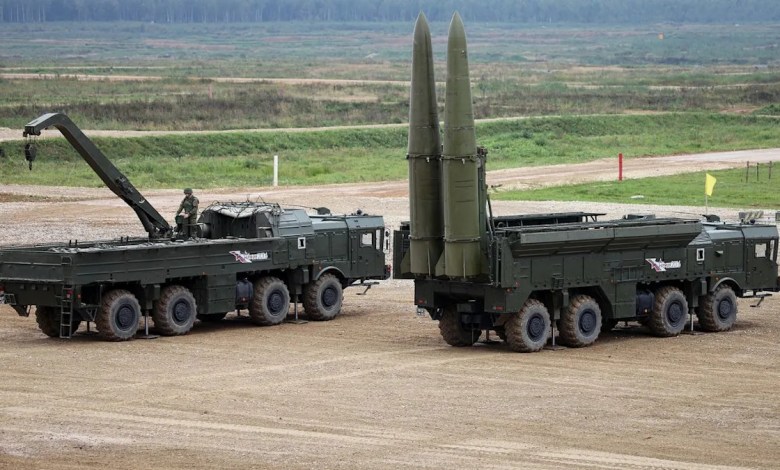
The Iskander-M looks more like a heavy-duty construction vehicle than a high-end missile system, which is exactly the point, as it’s nearly impossible to spot until it’s already in position.
The Russian military favors it for fast strike missions where speed and surprise matter most. It’s been used to hit high-value targets with little warning, then quickly disappear before enemy drones or aircraft can react. This thing doesn’t need a launch pad or a bunker, it only needs a patch of solid ground and a target. Operators can reposition the launcher multiple times a day, making it a nightmare to track. Some say it plays hide-and-seek with enemy radar… and usually wins.
It’s a go-to choice when you want to send a message without leaving fingerprints. With multiple variants in service, its flexibility makes it a battlefield favorite.
DF-17 (China)

Image Credit: Yiyuanju – Own work, CC BY-SA 4.0/Wiki Commons.
Operational range: roughly 1,100 to 1,550 miles (commonly cited estimates are about 1,800 to 2,500 km)
If missiles had a futuristic sibling, the DF-17 would be it. This mobile system is designed to deploy hypersonic glide vehicles, which are faster and harder to intercept than traditional warheads.
What makes it even more dangerous is that it doesn’t need to be stationed anywhere permanently, it just drives out, sets up, and fires. The truck-mounted system blends into the environment far better than a stationary silo ever could. It’s showcased proudly in military parades, but in the field, it hides and haunts rather than shows off. With high mobility and near-invisible deployment, it’s as elusive as it is powerful. Once it launches, even the best defense systems struggle to respond in time.
China uses it not just as a weapon, but as a psychological tool, as it’s meant to rattle nerves. A base-free, runway-free strike system, it’s built for modern, unpredictable warfare.
M142 HIMARS (USA)

Image Credit: DVIDSHUB – Flickr, CC BY 2.0/Wiki Commons.
Operational range: depends on munition; roughly 45 to 190 miles with commonly used rockets and missiles, and up to about 310 miles with newer missiles
The M142 HIMARS doesn’t look like much, just a modified truck with a big box on the back. But inside that box is the ability to change the direction of a battlefield.
Used across multiple continents, it’s become a symbol of quick, precise, and mobile firepower. What makes HIMARS unique is how fast it can strike and then relocate, and it’s often out of sight before counterstrikes even begin. It runs on standard tires and doesn’t need a launch facility, making it ideal for unpredictable terrain. Allies love it, enemies fear it, and war planners count on it. The simplicity of its design hides a shockingly complex targeting system, able to deliver devastating blows from dozens of miles away.
It’s often called a game-changer, not because of its size, but because of its flexibility. HIMARS fires, reloads, and rolls again, always staying one step ahead of danger.
BM-30 Smerch (Russia)

Image Credit: Vitaly V. Kuzmin – CC BY-SA 4.0/Wiki Commons.
Operational range: 120 miles
The BM-30 Smerch isn’t subtle, it doesn’t try to hide its strength or sneak onto the battlefield. It shows up loud, tall, and proud with twelve massive rocket tubes mounted on a heavy-duty 8×8 truck, ready to level wide areas in a single salvo.
When it rolls into position, it’s not there for precision, but rather to erase grid squares. Known for its saturation fire tactics, Smerch can rain down dozens of rockets in seconds, overwhelming defenses and leaving a lasting mark. It thrives in open terrain but can just as easily back into a treeline and unload from cover. Soldiers call it “the hammer” because when it strikes, there’s no mistaking what happened. Even decades after its debut, it’s still seen in front-line use, updated and reloaded for modern conflict.
The launcher looks dated to some, but its destructive power is anything but. In the age of drones and micro missiles, Smerch reminds everyone that sometimes brute force still has a place.
Pantsir-SM (Russia)

Image Credit: Alexxx1979 – Own work, CC BY-SA 4.0/Wiki Commons.
Operational range: varies by missile variant; Pantsir is primarily designed for air defense
Most people associate Pantsir with air defense, but when paired with the Hermes missile, it becomes a mobile attack system. It rides on a wheeled chassis and looks like a small tank with oversized sensors and tubes.
The Hermes gives it a longer offensive reach, capable of striking targets well beyond visual range. What’s impressive is how self-contained it is, radar, command, and missiles all in one vehicle. It can roll up to a position, launch, and move again without needing external help. In a battle scenario, it’s often used to support armored columns or strike strategic points on the move. Its mobility gives it a role in both defense and offense, switching between them without breaking stride.
Though often overlooked in offensive discussions, the Pantsir-Hermes combo is surprisingly versatile. As a mobile platform, it’s flexible and unpredictable.
Typhon (USA)

Image Credit: Darrell Ames – Public Domain/Wiki Commons.
Operational range: 1,000+ miles
The U.S. Army’s Typhon system doesn’t look like much at first glance, just a shipping container on a flatbed. But behind that unassuming face is one of the most advanced land-based strike systems in the world.
Designed to launch Tomahawk and SM-6 missiles, it turns any open patch of ground into a launch site with serious reach. The real trick is its flexibility, it doesn’t need a dedicated base, just a place to park and an order to fire. Once deployed, it fades into civilian scenery, making targeting it a nightmare. Unlike traditional systems that scream “military hardware,” the Typhon hides in plain sight and hits like a ghost. It’s part of the Army’s new strategy of spreading firepower across mobile, unpredictable nodes.
In recent exercises, it’s been used to simulate strikes on both land and sea targets from hundreds of miles inland. The launcher is fully mobile and networked, capable of reacting to new threats in minutes.
TELAR Bastion-P with P-800 Oniks (Russia)

Image Credit: Mil.ru – CC BY 4.0/Wiki Commons.
Operational range: 186 miles
Russia’s Bastion-P coastal defense system may be designed for anti-ship roles, but it doesn’t need a dock or base to get the job done. Mounted on a massive off-road transporter, it can operate far from traditional naval stations.
This missile launcher usually hides in forests near the sea or behind coastal cliffs, waiting for the right moment. When deployed, it can lock onto targets far offshore and fire from land, striking with brutal precision. Its platform looks more like a mining truck than a missile system, which helps it stay under the radar. The best part? Once it fires, it doesn’t wait around.
The Bastion-P is made to launch, relocate, and relaunch, giving coastal forces maximum flexibility. It’s part of a larger trend of making ship-killers mobile and nearly impossible to neutralize. In recent years, it’s been spotted along key coastlines, giving Russia a powerful land-based naval punch.
Polonez (Belarus)

Image Credit: Mil.ru – CC BY 4.0/Wiki Commons.
Operational range: 186 miles
The Polonez system is Belarus’ answer to modern mobile artillery, and it’s turning heads. It rides on an 8×8 wheeled chassis, giving it excellent speed and off-road capability.
The launcher looks imposing, but it’s surprisingly nimble for its size. What sets Polonez apart is its ability to fire multiple missiles in rapid succession from a hidden position. Once empty, it moves out quickly to avoid counterstrikes, keeping enemy forces constantly guessing. It doesn’t need radar trailers or support vehicles nearby, as everything’s packed into one compact system.
The modular nature of the launcher means it can carry different missile types depending on the mission. Belarus has shown it off in exercises as a key strategic deterrent, capable of acting independently. With growing tensions in its region, this system represents a flexible tool for quick response.
Tochka-U (Russia)

Image Credit: Mil.ru – CC BY 4.0/Wiki Commons.
Operational range: 75 miles
The Tochka-U is the improved version of the original Soviet Tochka tactical missile system, and it has still appeared in modern conflicts. It’s a tracked vehicle, which means it doesn’t rely on roads and can go wherever tanks can go, through forests, over mud, and across rough terrain.
What makes it dangerous is its ability to hide and fire from places wheeled systems can’t reach. It’s often positioned in rugged terrain, waiting for a green light to strike a target and then retreating quickly. In many conflicts, it’s used to hit high-value assets like airfields, supply depots, or command centers. The system is well-known for its “shoot and scoot” tactics, never staying in one place long enough to be hit back.
Its relatively small size helps it blend in, while its mobility means it doesn’t need external support to operate. Even decades after its introduction, its sudden-strike ability keeps it relevant in fast-moving combat zones. Many of its launches are designed to sow chaos, not just cause damage.
GMARS (Global Mobile Artillery Rocket System)

Image Credit: Rheinmetall.
Operational range: depends on munition; GMARS is presented publicly as a launcher concept for existing guided rockets and missiles
The GIMARS system is one of the newest names in mobile warfare, and it’s designed for next-generation battlefields. Unlike traditional missile platforms, GIMARS focuses on infrared-targeting tech and long-distance autonomy, allowing it to hunt targets from a distance with incredible precision.
It’s built on a fast, agile vehicle that can launch and relocate in minutes, which makes it extremely tough to pin down. GIMARS doesn’t rely on ground-based radar or satellite uplinks to operate, it carries its own targeting systems and operates as a self-contained hunter-killer. It’s designed for joint operations, often moving alongside mechanized infantry or armored units to provide immediate missile support. Commanders like it because it doesn’t need a runway, a base, or even a network connection to strike. It’s being adopted for rapid-deployment missions in remote environments where traditional support structures don’t exist.
With just a few minutes of setup, it can fire a guided missile across borders or terrain features. GIMARS isn’t just a weapon, it’s a new way to wage mobile warfare.
M270 MLRS (USA)

Image Credit: Cpl Jamie Peters RLC/MOD, OGL v1.0/Wiki Commons.
Operational range: depends on munition; roughly 45 to 190 miles with commonly used rockets and missiles, and up to about 310 miles with newer missiles
The M270 MLRS is the big brother of the HIMARS, and it brings serious muscle to the battlefield. Riding on a tracked chassis, it can roll across mud, snow, or sand without breaking a sweat.
What sets the M270 apart is its twin-pod launcher system, which can unleash a barrage of missiles in seconds. Despite its size, it’s fully mobile and doesn’t need any kind of fixed base or launch pad to operate. It’s designed for fast deployment, quick strikes, and immediate relocation, perfect for avoiding enemy counter-battery fire. Over the years, it’s been used in everything from precision strikes to saturation bombardments, always from unexpected locations. The U.S. and its allies have used it to deliver firepower in remote regions without ever needing air support or permanent infrastructure.
Reloads can be done in the field, and the vehicle is armored to survive close combat if needed. The M270 has proven itself in every conflict it’s entered, and it’s still evolving to meet modern threats. For commanders who want raw, mobile firepower on call, this system delivers.
Šumadija (Serbia)

Image Credit: Srđan Popović – Own work, CC BY-SA 4.0/Wiki Commons.
Operational range: up to about 186 miles
Born from Serbia’s growing defense ambitions, the Šumadija system is as much a symbol as it is a weapon. Built on an 8×8 truck chassis, it carries a commanding presence, tall, square, and bristling with quiet threat.
Designed for long-range precision, it doesn’t waste time with flashy displays; it simply does the job and vanishes. Operators love its hit-and-run ability: fire from cover, relocate, reload, all before enemy radar even catches up. In drills, it often appears on highways one minute and vanishes into forest roads the next. It’s built for Balkan terrain but can hold its own in desert flats or mountain passes.
The launcher holds four heavy rockets, and once those leave the tubes, targets hundreds of kilometers away know it. Everything from targeting to launch is handled onboard, making it an autonomous threat. For a country not usually mentioned in the same breath as global powers, Šumadija is a statement of intent.
Ready, Aim, Move: The Future of Mobile Missile Power

Image Credit: Staff Sgt. Daryl Bradford – Public Domain/Wiki Commons.
As warfare evolves, so do the weapons that define it. These mobile missile systems are tools of destruction, strategic game-changers designed to strike fast and vanish before the enemy can respond.
Their mobility makes them unpredictable, their firepower makes them feared, and their independence makes them essential in today’s complex combat environments. Whether on dusty roads, rugged hills, or dense forests, these systems keep armies one step ahead.
The era of stationary missile bases is fading, replaced by a new breed of missile warriors on wheels, tracks, or even hybrid platforms. Watching these mobile masters in action, one thing is clear: the future of missile warfare is fast, flexible, and fiercely mobile.