Somalia welcomes its first bowling alley as the middle class and diaspora returnees grow
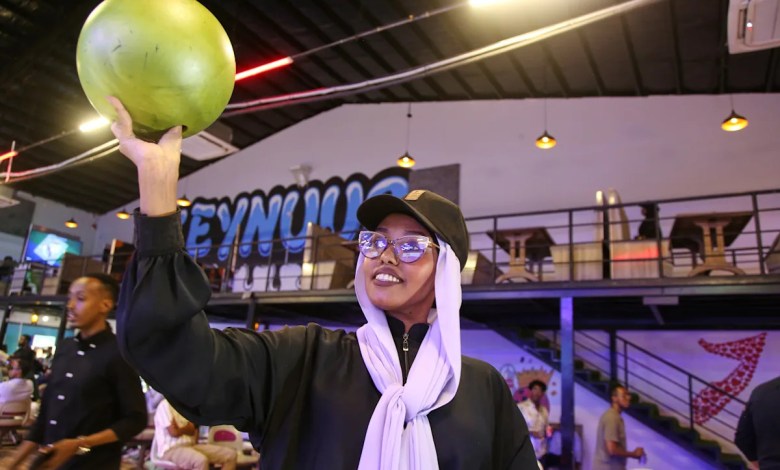
MOGADISHU, Somalia (AP) — In a city long defined by conflict, Somalia Mogadishu, the capital of , now echoes with the sound of pins in the country’s first modern bowling alley.
It’s the latest sign of a revival in the once-thriving Indian Ocean port shaped by 35 years of civil war and militant bombings. Millions of people had to flee what became one of the most dangerous cities in the world. Those who remained avoided public spaces as the al-Qaeda-linked al-Shabaab group launched an insurgency against the Somali state.
In recent years, improved security measures against al-Shabaab, expanded government presence, and increased private investment have allowed the reemergence of daily life. Cafes line newly opened streets, beaches become crowded in the evenings, and once-unimaginable traffic jams now clog major intersections.
The Feynuus Bowling Center, which opened last year, attracts many locals and Somalis returning from the diaspora who bring investment and business ideas after years of sending billions of dollars in remittances from abroad.
On a recent evening, young Somalis gathered in groups, laughing and filming each other on their phones while playing music. Many people from the diaspora are visiting Mogadishu for the first time or for the first time in years.
“I couldn’t believe Mogadishu had this place,” said Hudoon Abdi, a holidaying Somali Canadian, as he prepared to take his turn to bowl.
“I’m having fun. Mogadishu is actually safe,” he said, encouraging others to visit.
But Mogadishu remains vulnerable to militant attacks, as security measures such as checkpoints and heavily guarded areas are part of daily life. Non-Somalis are largely confined to a compound at the international airport.
But residents say coming together for fun marks a significant psychological shift. Such venues provide a warm environment for the young generation looking for safe spaces to socialize.
Abukar Hajji returned from the UK on holiday after many years and made an illuminating discovery of the difference between what he imagined and what he experienced.
“Flying from the UK, I believed it was a scary place, like a war-torn country,” he said. “Everyone told me ‘Good luck’, but when I came and saw it with my own eyes, I didn’t want to leave.”
Sadaq Abdurahman, manager of the bowling centre, said the business idea emerged from the growing demand for recreational facilities among young people.
“Employment opportunities were created for at least 40 young people,” he said.
According to the Somali National Bureau of Statistics, the unemployment rate in Somalia stands at 21.4%.
The bowling alley has private security guards, bag checks and security cameras, reflecting measures commonly implemented in public spaces in Mogadishu.
Urban planners and economists say businesses like the bowling alley signal a broader shift in Mogadishu’s recovery as private sector growth increasingly complements international aid and government-led rebuilding efforts.
Ahmed Khadar Abdi Jama, an economics lecturer at the University of Somalia, said innovative businesses were responding to the needs of diaspora returnees and a growing middle class, “which is contributing to the expected increase in Somalia’s GDP.”
Traffic outside the bowling alley was humming and neon signs were flickering; These too were a reminder of Mogadishu’s fragile transformation.
___
For more information about Africa and development: https://apnews.com/hub/africa-pulse
The Associated Press receives funding from the Gates Foundation for global health and development coverage in Africa. AP is solely responsible for all content. Find APs standards for working with philanthropists, a list of supporters and areas of funded coverage AP.org.