UK consumer confidence plunges amid ‘twin threat’ fallout from Iran war

Consumer confidence in the UK economy has fallen due to concerns about the “double threat” of rising prices and a lack of economic growth due to the effects of the Iran war.
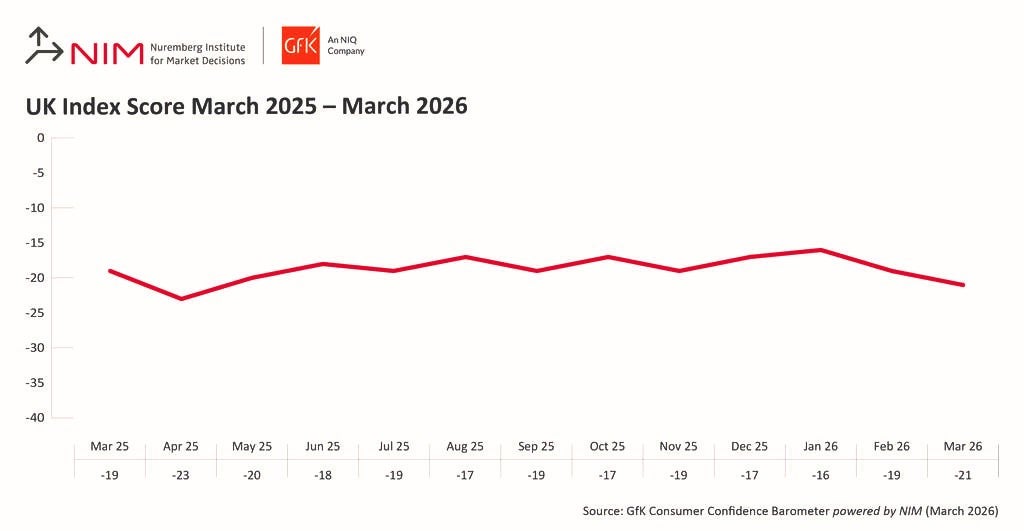
The consumer confidence index provided by global market research company Growth from Knowledge (GfK), the longest-running survey of its kind in the UK, shows a two-point drop to minus-21, suggesting people expect further price rises.
It is back to the level seen in April last year, when inflation was still high and a new wave of price increases on energy, internet and other bills hit households.
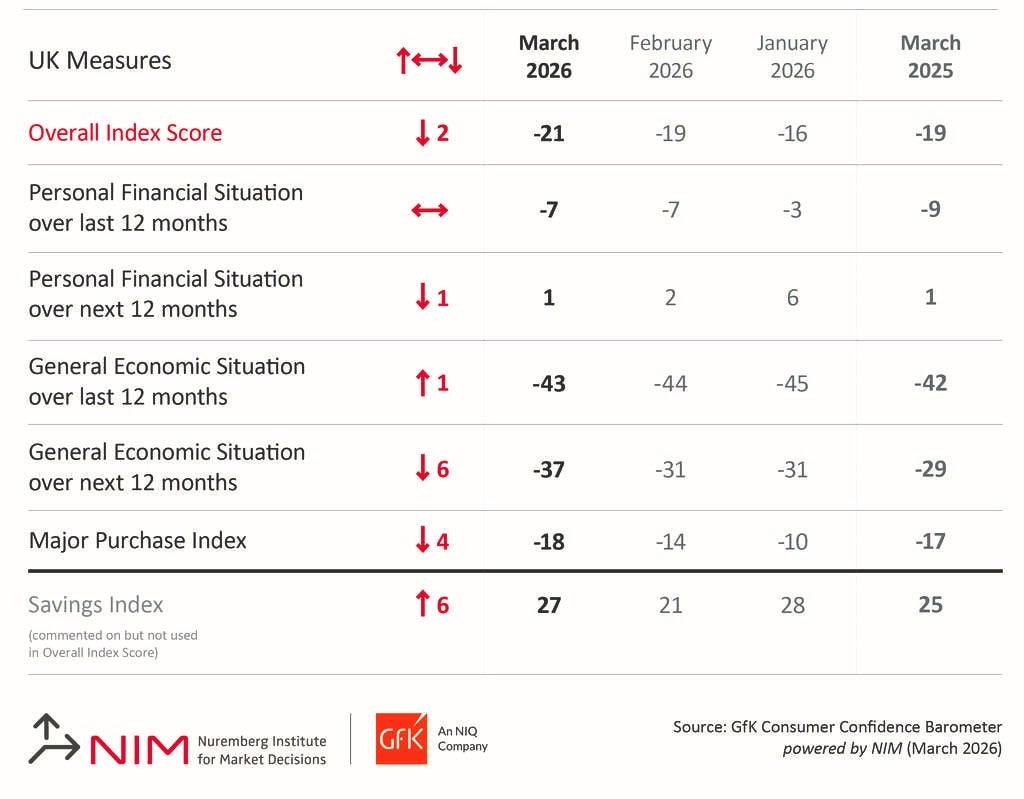
Neil Bellamy, Director of Consumer Insights at GfK, said: “A wave of fear is spreading, as evidenced by the six-point drop in perceptions of the overall economic situation over the next 12 months, as well as the four-point drop in the main purchasing index.”
The war against Iran increased oil and natural gas prices; This threatened to see energy bills skyrocket after the price cap expired in the summer, increasing the costs of production, transportation and even food.
Swap rates (expectations of future interest rate rises) have risen as rising prices have meant a return to inflation, driving mortgage deals even higher, creating new cost pressures for UK households across the board.
The Bank of England predicts inflation will rise to 3.5 per cent by mid-2026, while it previously predicted the UK would reach its 2 per cent target by April.
Expectations for the general economy over the next 12 months fell by six points to minus 37 in the GfK index; That’s eight points worse than this time last year. Meanwhile, personal finance forecasts for next year also fell, but by one point to one; the same score as last March.
However, the main purchasing index, an indicator of confidence in buying big-ticket items, fell four points to minus 18, down one point from last year.
The savings index rose six points to 27, an indication that consumers are adopting a “wait and see” approach to the knock-on effects of the conflict.
“People don’t think the economy is strong enough to recover from the knock-on effects of the conflict in the Middle East,” Mr. Bellamy added.
“In addition, the decline in purchasing intentions and the six-point increase in the savings index suggest that people are holding on to their money and avoiding making large purchases while they wait to see what the medium-term impact of the conflict will be.
“There are two key concerns going forward: First, the UK will need to have a careful and balanced response to the wider volatility we have seen since the end of February.
“Secondly, as concerns grow about sharper price rises in the coming months, there is a danger that this wave of fear we saw in the March data will turn into a flood unless a quick solution to the dispute is found or government plans such as additional support for energy bills are implemented.”
The latest figures show retail shopping has not fallen as much as predicted, with a small increase on last month.
But Matt Britzman, senior equity analyst at Hargreaves Lansdown, says the consumer confidence indicator is more important going forward.
“Fresh retail sales data showed volumes fell 0.4 per cent in February from the previous month, a smaller decline than expected, meaning activity retained much of its early-year momentum at least for now. But weakening consumer confidence, with the GfK reading falling to an 11-month low in March, is likely to be a more telling signal as households grapple with the twin threats of higher inflation and weak growth prospects.”
Additional reporting by PA


