Ukrainians flee from southeast as Russia lurches forward
By Serhiy Chalyi
TAVRIISKE, Ukraine, Feb 4 (Reuters) – Over the past few weeks, buses traveling from the major city of Zaporizhzhia, about 50 km (31 miles) away, to the village of Tavriiske in southeastern Ukraine have stalled.
As the war with Russia approaches, the village is slowly becoming empty. Maryna Vyshnevska, 35, said it had become too dangerous for her and her five children, some of the few remaining residents, to stay.
“We thought they (the Russians) would be pushed back and this would all be over,” Vyshnevska said before loading her family and a handful of belongings onto a police evacuation bus. “But when we realized that the situation was going to get worse and worse, it was better to leave.”
Russia and Ukraine began new U.S.-brokered peace talks in Abu Dhabi on Wednesday, while Moscow’s forces have begun to slowly advance along parts of the 1,200 km (745-mile) front line in recent months.
As Russian troops seal off the so-called “fortress belt” of cities in the eastern Donetsk region, they are also advancing towards Zaporizhia, the capital of one of four Ukrainian regions that the Kremlin claims as its own, although it occupies only part of the Zaporozhye region.
‘WE SEE MORE DESTRUCTION EVERY WEEK’
The Ukrainian military said fighting had intensified in key areas of the Southeastern Front in recent weeks, especially around the town of Huliaipole, 40 kilometers east of Tavriiske.
Residents of Tavriiske and nearby villages, which lie on a front line flanked by Russian forces, told Reuters during a recent visit that they fear for their lives due to the constant threat of drone and bomb attacks.
Police teams and volunteers are navigating the main regional road covered with anti-drone netting to rescue endangered residents. Local officials said there were almost no families left in the area around Tavriiske.
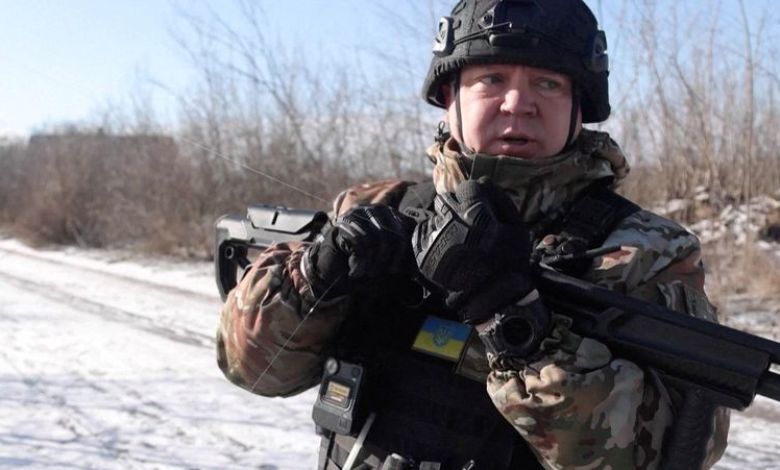
“Every day, every week we see more destruction and an increasing risk of entering towns like this,” said Vlad Makhovskyi, a 51-year-old volunteer decked out in a tactical helmet and gear.
In one place, two men carried an old woman out of a dilapidated house on a bright pink sheet.
Nataliia Fedorenko, 66, broke down in tears as she described the increasing emotional toll of remaining in a war zone as fighting worsens. Like Vyshnevska, she also left.
“It’s scary. No one wants to die. I know I don’t have much time left, but this kind of death…?”
(Written by Dan Peleschuk, Edited by William Maclean)