UK marine heatwave could reach ‘extreme’ levels next week – this is the impact it could have

A prolonged marine heatwave affecting UK waters will intensify to extreme levels next week, forecasters have warned.
Surface waters in northwestern European seas are currently experiencing moderate to severe conditions, with many areas classified as “strong” and some even as “severe”, the Met Office said.
These high temperatures mean waters have reached levels normally seen in August, an average of 2C above normal.
Locally, temperatures are running 4-5C above normal in some offshore areas off the coast of England and Wales.
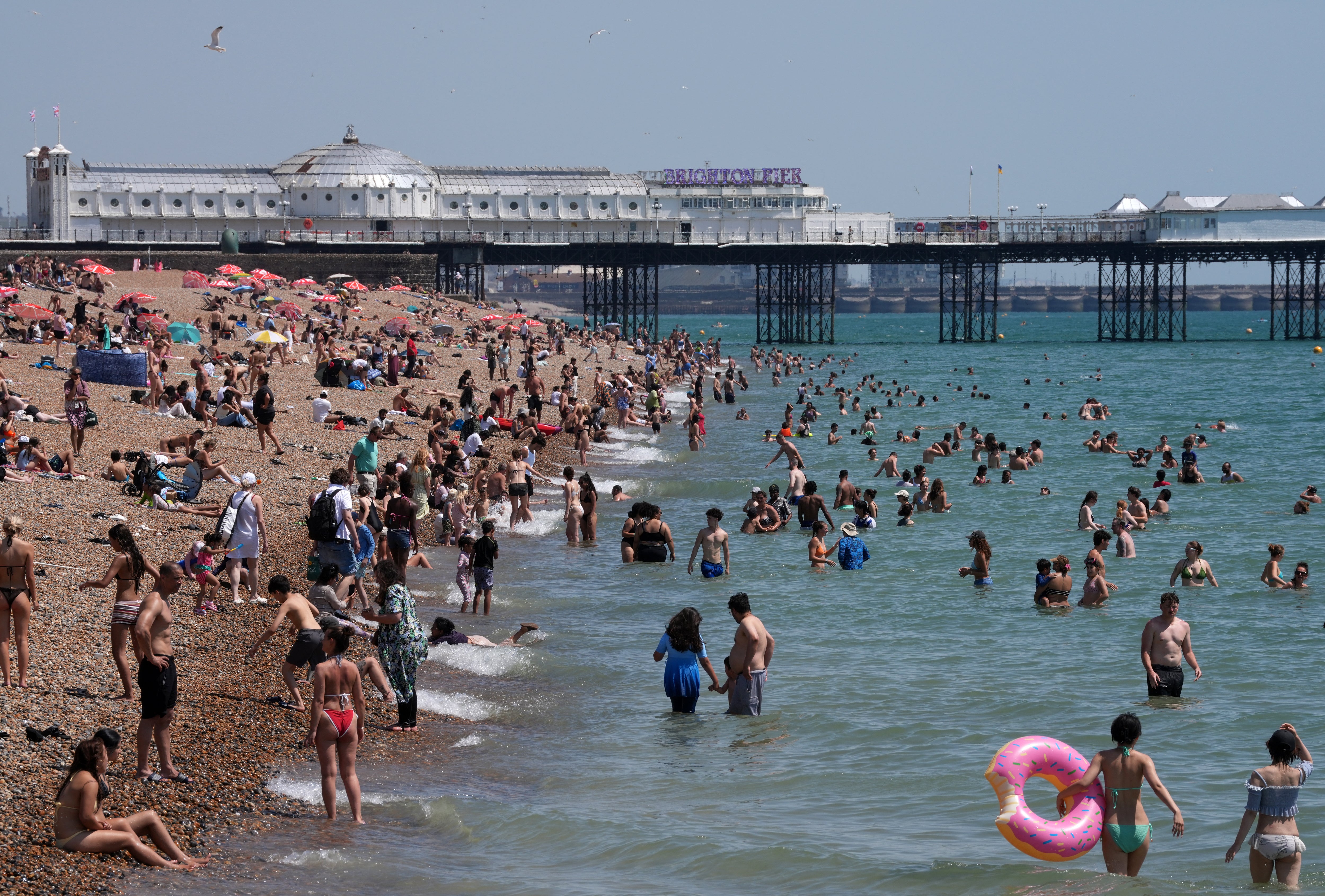
Experts warn that these record-breaking temperatures are expected to have significant impacts on weather patterns, global climate and marine ecosystems, potentially altering fish populations and harming many species.
This rise in sea surface temperatures follows last week’s unprecedented heatwave, made worse by climate change and the ongoing “heat dome” over Europe, which traps heat for days.
During the warm spell, temperatures broke the record for the hottest June day by more than 1°C, set 50 years ago in the famous summer of 1976.
After a brief spell of cold weather, forecasters say conditions will warm up again next week, with parts of South East England likely to see temperatures above 30C.
This means the sea surface will have limited opportunity to cool down following last week’s hot weather, raising the possibility of the current marine heatwave reaching an “extreme” classification, a level rarely recorded in UK waters, the Met Office said.
The Channel is likely to experience maritime heatwave conditions for much of 2026, making this region particularly susceptible to further warming.
Meanwhile, surface temperature anomalies in parts of the North Sea are forecast to peak at 4-5 degrees above average in the coming days.

Met Office air-sea interaction expert Dr. Segolene Berthou said: “Such conditions would be highly unusual for UK waters.
“Marine heatwaves around the UK have developed rapidly following the last heat dome and we are now seeing strong and locally severe conditions widespread.
“With weather likely to be even sunnier and calmer next week, there will be little opportunity for the ocean to release this excess heat.”
Earlier this week, the EU’s Copernicus Climate Change Service and Copernicus Maritime Service confirmed that global sea surface temperatures had exceeded previous records for this time of year, set in 2023 and 2024.
These new seasonal highs were expected following the development of the El Niño weather phenomenon, in which warming sea surface temperatures in the tropical Pacific Ocean drive global temperatures upward.
El Niño conditions were officially announced by the UN’s World Meteorological Organization (WMO) last month and come with higher-than-normal surface sea temperatures seen in many ocean regions in recent months.
John K Pinnegar, principal scientist and principal advisor on climate change at the government’s Center for Environment, Fisheries and Aquaculture Science, said: “Marine heatwaves can have significant impacts on ecosystems and wildlife.
“Unusually warm sea temperatures over long periods of time can cause shifts in fish populations, damage important habitats such as seagrass and algae, and increase the likelihood of harmful algal blooms.
“These changes could lead to mass mortality events for some marine species and alter the distribution of commercially important fish and shellfish.
“Prolonged periods of high seawater temperatures could encourage new species to visit UK waters, establishing new populations and potentially shaking up UK ecosystems.”
He gave the example of a recent expansion of the common octopus population, which has had “serious adverse consequences” on crab and lobster fisheries in South West England.
Despite sea temperatures being higher than normal, the public is still being warned about the risks of cold water shock.
Holly Clements, head of warning and guidance at the Met Office, said: “As warm weather approaches and even in marine heatwave conditions, it is important to remember that the water around the UK is still cold. Entering here unexpectedly could lead to cold water shock.”
Always opt for RNLI lifeguard beach whenever possible, swim between red and yellow flags and call 999 to summon the coastguard in an emergency, the Met Office advises.


