Gold prices surge past $4,800 on jitters over Greenland dispute
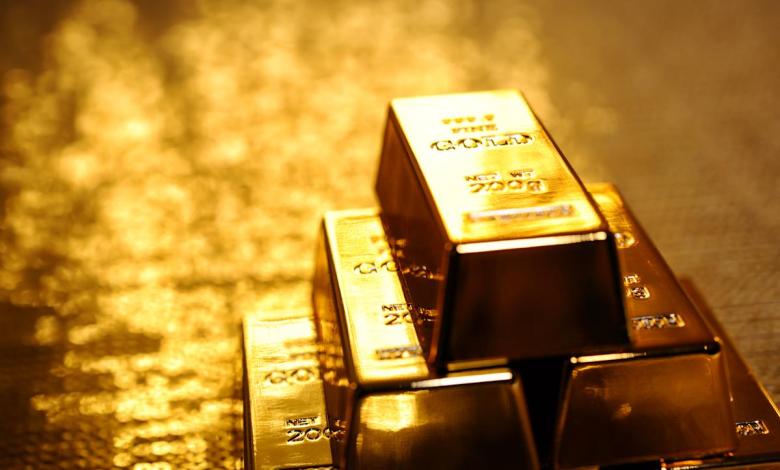
Gold prices extended recent gains on Wednesday morning as concerns grew over rising tensions over U.S. President Donald Trump’s move to take over Greenland.
Gold futures (GC=F) are up 2% to $4,863.50 per ounce at the time of writing, while spot gold is up 2.1% to $4,862.20.
Trump doubled down on his goal of seizing the semi-autonomous Danish territory and threatened to impose new tariffs on eight European countries over opposition to his plans.
The president will arrive at the World Economic Forum in Davos on Wednesday for discussions on Greenland and will speak at the forum later in the day.
Read more: Stocks quiet as Trump arrives in Davos amid Greenland row
Rising tensions over Trump’s pursuit of Greenland increased demand for so-called safe-haven investments, causing investors to flock to gold (GC=F) and causing prices to rise.
Susannah Streeter, chief investment strategist at the Wealth Club, said: “It is no surprise that investors are becoming discouraged and are increasingly looking for safer havens for their money that are less dependent on the direction of the US economy.”
“As unrest continues to spread over the potential for new geopolitical turmoil and the potential for a broader trade war, for now the only way for the precious metal appears to be up,” he said.
Concerns about the economic impact of renewed geopolitical tensions also continued to weigh on oil prices Wednesday morning.
Brent crude oil futures (BZ=F) are down approximately 0.9% to $64.35 per barrel at the time of writing, while West Texas Intermediate futures (CL=F) are down 0.8% to $59.86 per barrel.
Read more: Inflation in the UK increased for the first time in five months in December
Matt Britzman, senior equity analyst at Hargreaves Lansdown, said: “As geopolitical noise comes back into focus, from renewed tariff threats against Europe to tougher enforcement of Venezuelan sanctions, expectations that US crude and gasoline stockpiles will rise have added further pressure.”
“Temporary supply disruptions in Kazakhstan have provided some compensation, but with these disruptions likely to be short-lived, the balance of risks to oil remains to the downside for now.”
Sterling fell 0.3% against the dollar on Wednesday morning (GBPUSD=X) as the latest UK inflation rate came in higher than expected.
Data published by the Office for National Statistics (ONS) on Wednesday showed the UK consumer price index rose to 3.4% in December from 3.2% in November. This was the first increase in inflation in five months and was slightly above forecasts for a 3.3% increase.