Gold price at record high: Should you be buying or selling?

Gold is back in the headlines after breaking the $5,000 mark, just a week after a fresh rally followed Donald Trump’s tariff threat on Greenland.
Ongoing geopolitical uncertainty, not only around the US but also in the Japanese bond market and more broadly in the EU, is causing many investors to turn to gold and silver rather than currencies and stock markets.
So where does it stand now and how do you buy and sell?
How much did the gold price increase?
At the time of writing, gold is priced at $5,095 an ounce and was hovering just above $5,100 earlier in the day.
This represents an increase of over 12 percent last month and over 83 percent last year. Since the beginning of 2024, the price of gold has continuously risen at a higher rate, constantly setting new records in the process.
For some context, the FTSE 100 was up 19 percent last year.
Why buy gold and why should everyone have some gold?
Gold has long been considered a “safe haven”; in other words, a place where investors can put their money when there is uncertainty in other areas, such as government bonds or the stock market.
The precious metal is generally not that volatile and may increase in value over the long term.
However, unlike other assets such as shares in a business (through dividends) or cash in the bank (interest-bearing), it does not “pay” anything, meaning that in periods of no price appreciation, it can lag behind other wealth-building tools.
Unlike other metals such as silver or platinum, gold is generally not widely used in manufacturing and production, so its value is largely limited to being a store of value.
In addition, stock markets (or parts of them) can rise quickly when conditions are right; This means that overexposure to gold could mean you miss out on the opportunity when the metal is no longer in favor.
Experts tend to recommend allocating no more than 5-10 percent to gold in a diversified investment portfolio, but the actual amount you need depends on a number of factors specific to you: time frame, amount, risk tolerance, whether you’re focused on preserving or enhancing wealth, and much more.

Get a free partial share of up to £100.
Capital is at risk.
Terms and conditions apply.
ADVERTISING
Get a free partial share of up to £100.
Capital is at risk.
Terms and conditions apply.
ADVERTISING
How to buy and sell gold?
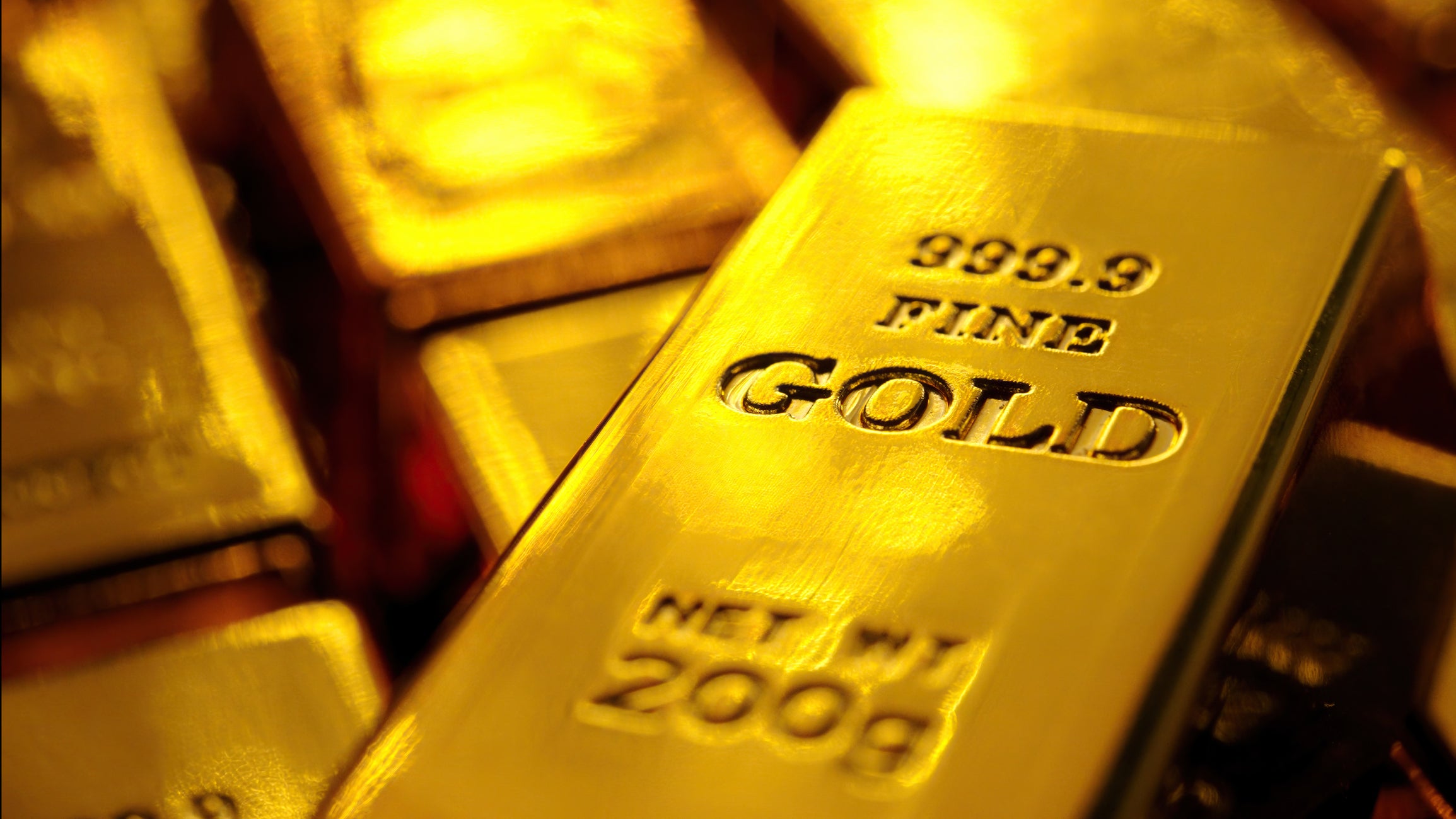
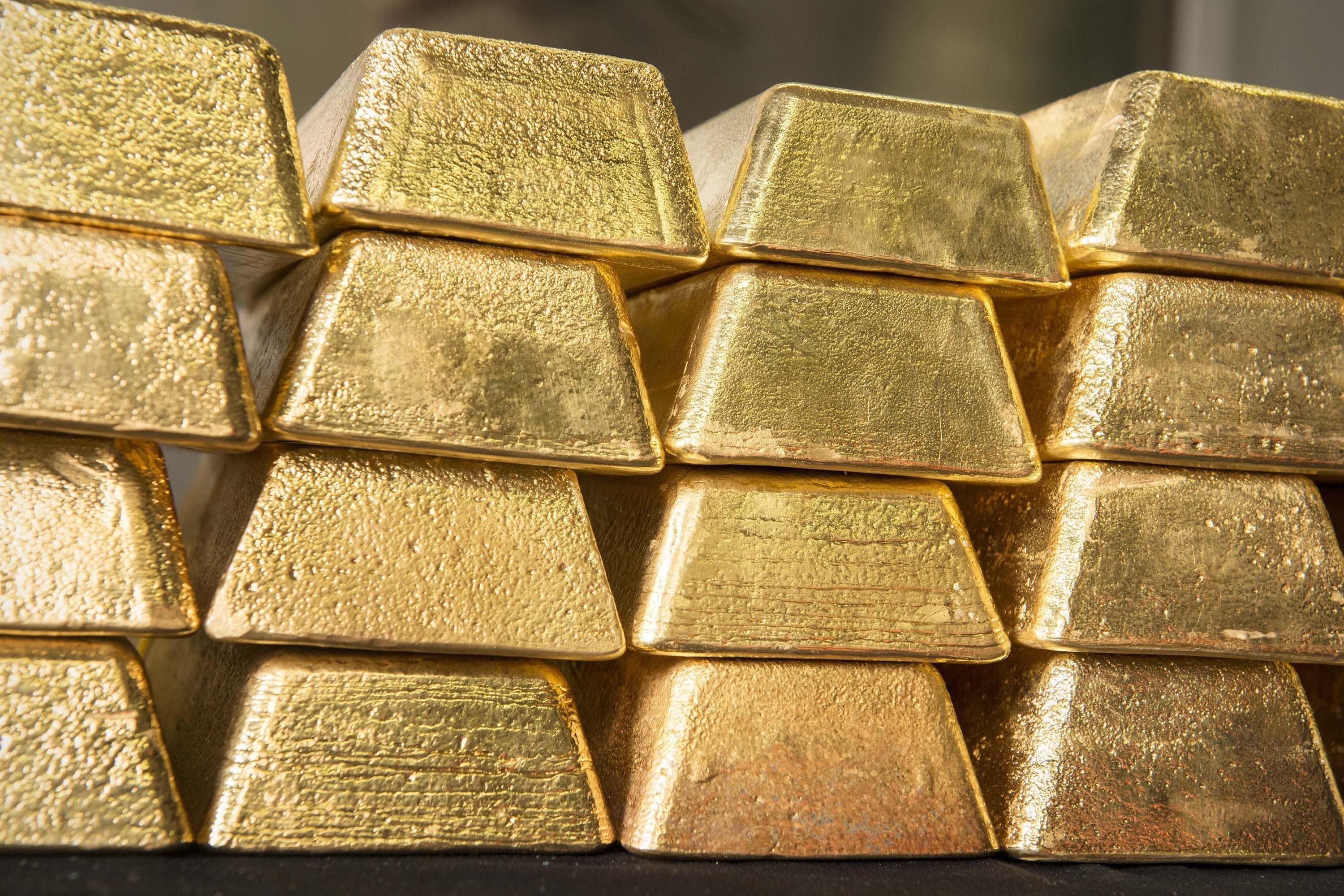
You can of course buy physical gold bars, called bullion, but the complexity of this, along with storage and insurance costs, makes this impossible for most people.
But a simpler method is to buy what is called an exchange-traded commodity (ETC); These are essentially investment instruments that track the price of gold for you and will rise and fall based on the spot price of gold. There is usually a small annual fee associated with them.
Examples of these are the iShares Physical Gold ETC (ticker SGLN on the London Stock Exchange) or the Royal Mint Responsibly Sourced Physical Gold ETC (ticker RMAU).
If you buy them within a stocks and shares ISA, any gains made will be tax-free.
Alternatively, you can invest directly in companies that mine gold, or invest in a broader fund with gold within it if you don’t want to focus on a single metal.
What do the experts say?
Most analysts and companies that follow commodities such as gold or silver, as well as oil or copper, still think that it can go higher, although no one knows when the trend will change.
Geopolitical stresses can change at any time, but multiple researchers have set a target of $6,000 for gold by 2026.
Susannah Streeter, Wealth Club’s chief investment strategist, points out the dollar’s impact on metals. “In this heated geopolitical environment, gold seems to know no bounds for now. Gold continues to pile up towards the gilded safe haven and the precious metal rises further. Drawing a bright streak above the psychologically important 5,000 level, it has started to rise sharply amid trade tensions originating from the US and discouraged investors,” he said.
“The dollar’s decline is part of the story. The dollar has taken another hit as continued concerns about the impact of tariffs, higher government spending and inflation on the US economy have led investors to rethink their exposure to the US. A weaker dollar makes precious metals more attractive to buy as they are denominated in currency. Gold and silver are shining as the march towards havens that offer safety through primary capital preservation continues.”
Lale Akoner, global market analyst at eToro, added that gold is replacing long-term bonds as a defensive depository, among other investments. “Gold is increasingly used by investors as a hedge against equity risk and is beginning to replace long-term government bonds as the defensive asset of choice in many portfolios. This shift reflects a structural breakdown in the traditional stock-bond relationship.”
“Since 2022, correlations have hovered around zero, reducing the effectiveness of bonds as a diversification tool.
“Gold, by contrast, is better off as a defensive asset. If the bond-equity correlation remains unstable, gold’s volatility-reducing role could become more entrenched and reshape the way portfolios hedge downside risk throughout the cycle.”
Market research firm Yardeni says gold’s outlook will push the price higher. “We are still targeting $6,000 by the end of this year and $10,000 by the end of 2029,” they said.


