Oil prices jump back above $100 a barrel as Donald Trump’s Strait of Hormuz blockade threat looms

Oil prices rose above $100 per barrel again after President Trump said the United States would blockade the Strait of Hormuz starting Monday.
The US president has threatened to block tankers from entering or leaving the key oil and gas shipping lane in response to the collapse of talks with Iran.
This move caused global prices to rise on Monday morning; The oil price rose around 7 percent to $102 before falling slightly lower by 9am BST.
The ceasefire agreement, which was planned to be signed within the last two weeks, came into force last week and caused the cost of a barrel of Brent crude oil to drop from $110 to the mid-90s.
However, when it became clear that the agreement was fragile and the Strait of Hormuz, through which approximately one-fifth of the world’s oil supply passes, remained effectively closed, it slowly rose again in the following days.
As Trump reportedly considers relaunching airstrikes on Iranian infrastructure, fears that prices will approach the $120 level will increase.
But markets appear less willing to make the big daily jumps at the start of the conflict; This is partly because investors are wary of the US president’s habit of going back on statements and not following through on his threats.
“The US announcement that it will effectively impose an embargo on the Strait of Hormuz from today, Iran’s open refusal to give up its nuclear ambitions and the possibility of a new conflict have led to a new increase in oil prices,” said Richard Hunter, head of markets at Interactive Investment.

Get a free partial share of up to £100.
Capital is at risk.
Terms and conditions apply.
ADVERTISING
Get a free partial share of up to £100.
Capital is at risk.
Terms and conditions apply.
ADVERTISING
“So inflation concerns are back on the table, and other commodities such as fertilizer have also risen due to supply concerns. Now it remains to be seen whether the US President’s latest threats will be implemented; the so-far muted market reaction suggests this could turn into a negotiating tactic.”
The same reaction was seen in the stock markets on Monday morning; The FTSE 100 index fell by just 0.4 percent. Spain’s Ibex 35, France’s CAC 40, Germany’s DAX and the Euro Stoxx 50 are also falling, but only by around 1 to 1.2 percent rather than the regular declines of 3 and 4 percent seen about a month ago.
Asian shares were mixed overnight; For example, there was a decrease in South Korea, India and Japan, while a slight increase was seen in Saudi Arabia, China and Taiwan.
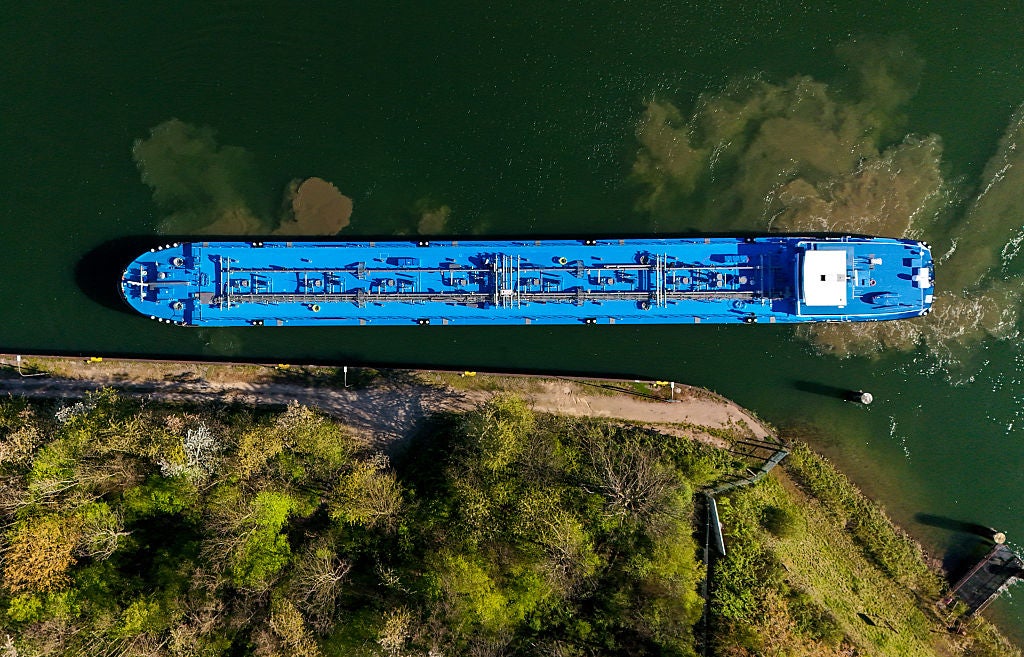
As XTB research director Kathleen Brooks noted, it leaves the picture that investors and money markets remain cautious when it comes to further oil price changes, but are completely risk-off at the moment. It is expected that more meetings will be held.
“The numbers coming from the Iranian regime imply that: [additional discussions with the US] this is the situation. Although President Trump plans to blockade the Strait of Hormuz starting at 16:00 ET today, the President is notorious for changing his mind and changing positions, so his threats are losing market impact,” Ms. Brooks said.
“At the beginning of this week, investors are partially reversing last week’s moves, but they are not returning to panic levels, and some might argue the selling could be worse.”
Separately, the price of heating oil on Monday remained the same as last week, at around 122 pence per litre.
The cost of heating oil, which is subject to different pricing conditions compared to the Brent crude oil above, can move very quickly both up and down. While it averaged around 56 or 57 pence per liter in the UK in the months before the Iran war, it rose rapidly to over 134 pence in the first week of March.
It has since retreated slowly and slightly, but remains high at approximately 115 percent above the pre-war price.


