‘Oil doesn’t discriminate’: businesses on shaky ground

Australian businesses were already feeling the pressure before the Middle East plunged them into further uncertainty, according to a business risk group.
CreditorWatch said business payment failures, tax defaults and bankruptcies rose in late 2025 and early 2026 before the Persian Gulf conflict effectively blocked a key oil route and caused crude oil prices to rise, dampening global growth prospects.
“To be clear, things weren’t catastrophic, but they were probably a little bit tougher in late 2025 and early 2026 before the latest pressures,” chief economist Ivan Colhoun told AAP.
“Interest rates and energy prices are two very important explainers or variables that lead to bankruptcy, and both have moved in the wrong direction over the last two months.”
The retail and transport sectors were under particular pressure before the conflict, with already weak margins on freight and long-term cost pressures hurting consumer confidence, according to data published by CreditorWatch on Wednesday.
Several major Australian companies, including Qantas, Westpac, A2 Milk and Cleanaway, have this week expressed concerns about the impact of the conflict on rising costs and supply chain issues.
“Oil doesn’t discriminate,” Mr. Colhoun said.
“Some sectors are more affected (than others) by high oil prices and high energy prices, but this affects the entire economy.”
It all depends on how soon traffic volumes in the Strait of Hormuz, a transit point for a fifth of global oil and gas shipments, can return to normal.
If crude oil prices remain high for an extended period of time, it will lead to higher inflation, tighter credit, increased bankruptcies, potential fuel rationing, and a possible recession.
“A quicker resolution would have prevented a much worse outcome, but even then the margin for error has narrowed,” Mr. Calhoun said.
Local small businesses and individual traders were at greater risk than their larger counterparts; because they often lacked the capital buffers available to larger firms to cushion the effects of higher costs.
While sole traders account for 30 per cent of all Australian businesses, they account for more than half of ATO tax delinquencies over $100,000.
According to ABS data, from June 2021 to June 2025, the survival rate for individual trading businesses was only one in two, while for all companies the rate was 68 percent.
Following the International Monetary Fund’s warnings about Australia’s economic growth prospects, Federal Finance Minister Jim Chalmers stated that the effects of the shock would be felt for a while even in the best-case scenario.
“This is a very serious, very dangerous time for the world,” Dr Chalmers told reporters on Wednesday.
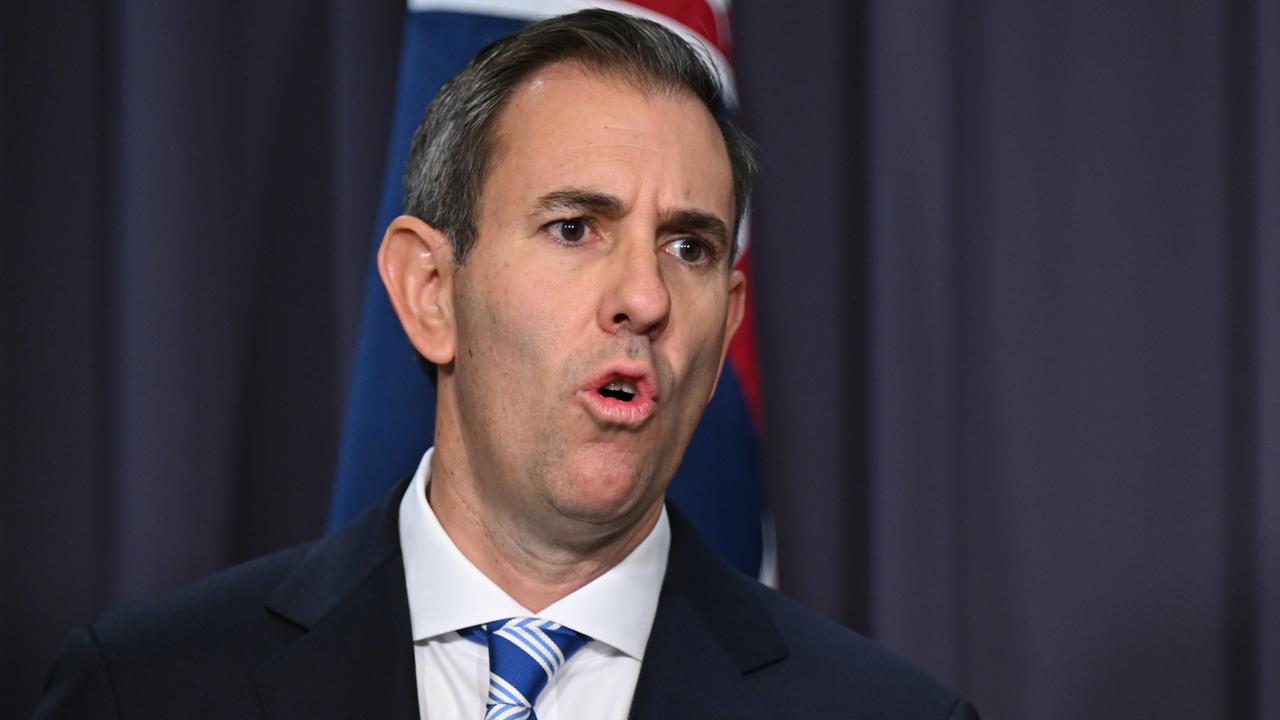
“Australia is better placed and better prepared than some other countries, but we will not escape the consequences of this very significant economic shock.”
The Albanian government will announce its fifth annual budget in May.
“I’m really confident that we can strike the right balances in the budget between short-term pressures and intergenerational obligations,” Dr Chalmers said.

Australia’s Associated Press is the beating heart of Australian news. AAP is Australia’s only independent national news channel and has been providing accurate, reliable and fast-paced news content to the media industry, government and corporate sector for 85 years. We inform Australia.


