Warning as study finds 800,000 more UK homes at high risk of flooding

More than 800,000 homes across the UK could be at serious risk of flooding by 2080, a new analysis has warned, as environmental campaigners highlight the increasing impacts of climate change on British households.
The research, carried out by flood risk assessment firm Geosmart on behalf of Greenpeace, shows that around 866,000 properties – a figure equivalent to all homes in Birmingham, Liverpool and Sheffield combined – could be at “high” or “very high” risk.
This forecast is based on a scenario in which global temperatures will rise 2.4 degrees above pre-industrial levels.
The findings come as communities across the country have been hit by storms, persistent rainfall and widespread flooding in recent weeks, with the South East and Southern England experiencing the wettest start to the year on record.
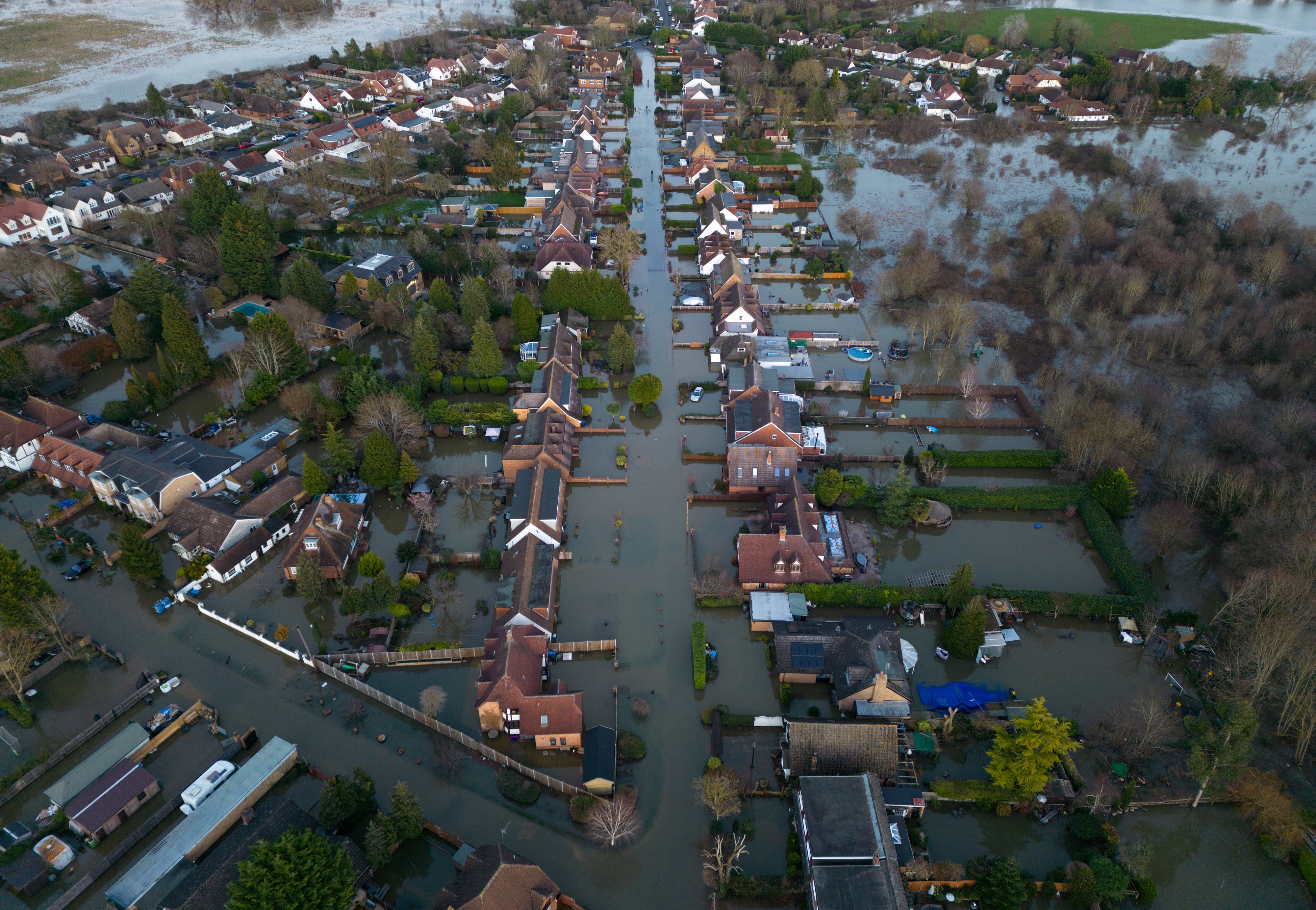
Ahead of local elections, green groups are calling on the Government and other political parties to force polluters to pay, adequately fund local authorities and emergency services and guarantee access to affordable home insurance for those affected.
The analysis compared the level of flood risk faced by each region and local authority across Britain under this climate scenario.
The report showed 386,716 homes in Scotland could be at “high” or “very high” risk of severe flooding; This equates to 19 per cent of all Scottish homes.
This was followed by 122,484 homes in the South East of England (2 per cent of all homes in the region), 71,431 in Wales (5 per cent), 65,884 in the South West (3 per cent) and 59,918 in the East of England (2 per cent).
In other regions, the analysis suggests 53,229 people will be at this high risk level in the East Midlands (2%), 45,320 in the North West (2%), 35,459 in Yorkshire and the Humber (2%), 18,049 in the West Midlands (1%) and 7,595 in the North East (1%).
Greenpeace UK’s senior climate advocate Phillip Evans said: “The economic cost of storms and floods hitting the UK is rising rapidly.
“Our data clearly shows that more and more homes will be at increased risk of flooding due to extreme weather events.
“Houses in some areas are already becoming uninsurable and in some cases insurers are abandoning towns, leaving municipalities to foot the bill.
“While oil giants like Shell are making billions of dollars, Britain is in a difficult situation. It’s time to make them pay for the climate collapse fueled by their dirty industries.”
By the beginning of 2026, the world has witnessed a long-term increase in global warming of approximately 1.2 to 1.4 degrees above pre-industrial levels.
However, the Intergovernmental Panel on Climate Change estimates that, based on current policies implemented by governments around the world, this could reach around 2.7°C by 2100, and 2.4°C by 2080 would fit this medium-term scenario.
Climate conditions in the UK are becoming increasingly variable, with six of the 10 wettest winters on record occurring in the last 20 years, scientists say.
A separate analysis of Environment Agency data by green group Friends of the Earth, published on Wednesday, found that one million homes across England – or 2.4 million people – were currently at the highest risk of flooding.
The research found that 1.89 million people would fall into a higher risk category if countries fail to reduce planet-warming greenhouse gas emissions.
It also highlighted those who face additional social risks from flooding, including 611,000 people who were unable to prepare for flooding, respond to it when it occurred, or recover from its aftermath due to factors such as living on low income, rent, disability, and lack of insurance.
Ahead of local elections in May, 1.4 million people living in areas most at risk of flooding will have the chance to vote, Friends of the Earth said.
Campaigners said they had written to all political parties to urge them to adopt policies that would make polluting industries and the super-rich pay for the emissions fueling the carbon crisis to help fund flood defenses and wider climate action.
They called for more funding to local authorities and emergency services to protect people, property and infrastructure from the growing threats of the climate crisis.
They also called on parties to ensure equal access to affordable insurance, including flood cover, for the most vulnerable.
Mike Childs, head of policy, science and research at Friends of the Earth, said: “Not only do we need to protect people from flooding now, we also need to invest in our future through smart, green policies that reduce emissions, boost domestic renewables to lower our bills and improve energy security, create jobs and ultimately help prevent the worst climate collapse.”
Kamran Mallick, CEO of Disability Rights UK and a wheelchair user who experienced severe flooding, said: “Forgotten people are always those whose voices, understanding and lived experiences are missing from decision-making conversations.”
Steve Wright, general secretary of the Fire Brigades Association, said: “Firefighters are the only professionals trained and equipped to deal with these emergencies, but the services the public rely on are being rolled back by brutal cuts.”


