Asylum seeker who filmed rape on Brighton beach ‘was convicted of murder in Egypt’, court told

An asylum seeker who filmed a woman being raped on Brighton beach has been found guilty of murder in Egypt, according to prosecutors.
Karin Al-Danasurt, 20, was found guilty of four counts of rape as a secondary party to inciting and filming the brutal attack in October last year.
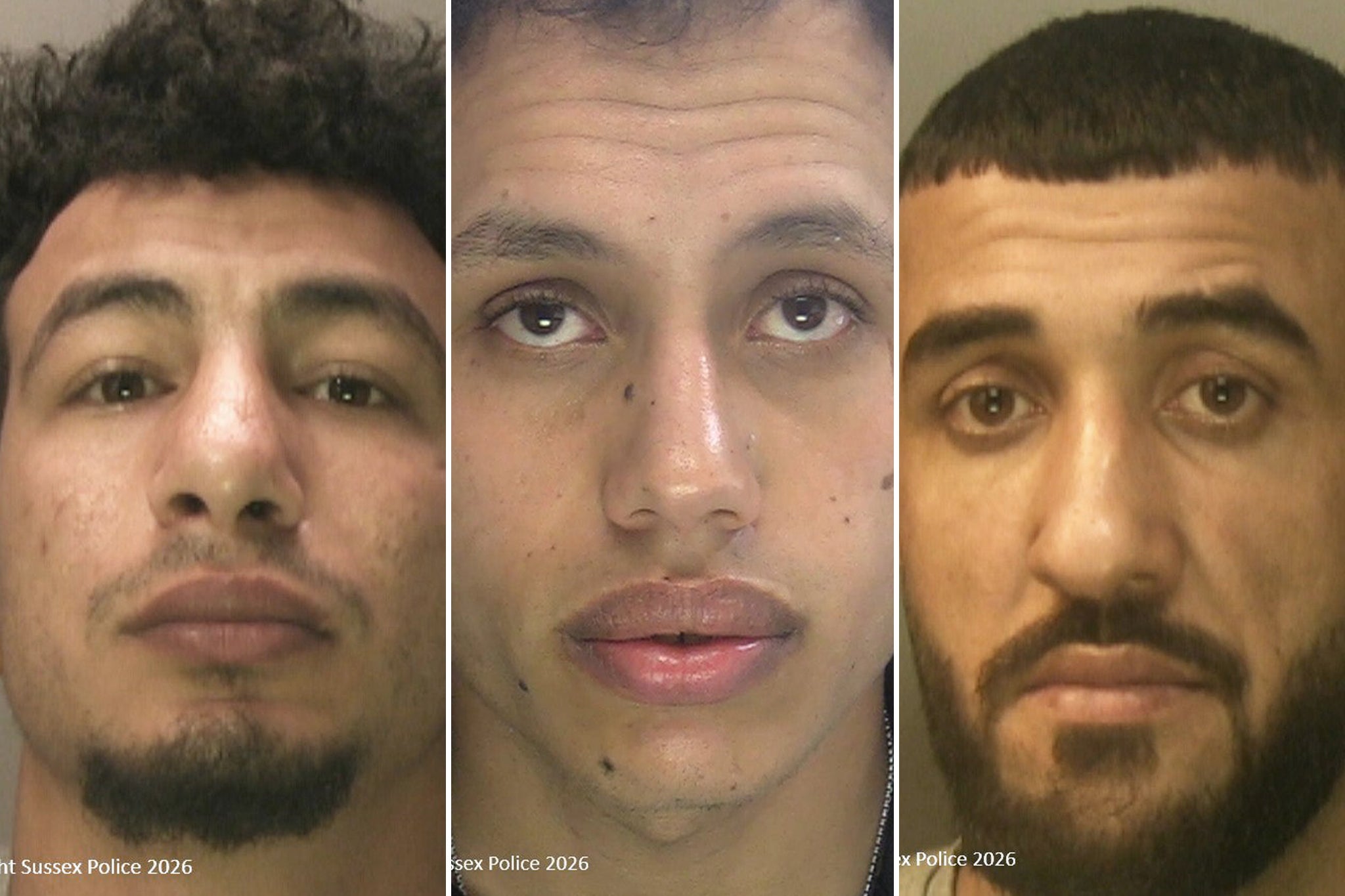
The Egyptian national was convicted following a trial at Hove Crown Court along with Ibrahim Alshafe, 25, and Iranian Abdulla Ahmadi, 26, who were each found guilty of two counts of rape.
The trio arrived in the UK after crossing the English Channel by boat and there were pending decisions on their asylum claims.
Details of Al-Danasurt’s past crimes emerged at a plea hearing in November last year ahead of the trial, but the judge withdrew evidence in the case after his defense team appealed the conviction.
At the time, prosecutors told the court that Al-Danasurt was found guilty of murder during his absence in Egypt, adding that the basis for his asylum request was that he fled the country to “escape a long prison sentence.”
However, the defense lawyer said that it was actually his brother who was convicted of murder, not him.
They added that the UK Government’s assessment of Egypt was that anyone who openly criticized the government was likely to be at risk of serious harm.
As a result, evidence could not be heard by jurors during the trial due to disagreement.
On Thursday prosecutor Hanna Llewellyn-Waters KC told the court there were “ongoing investigations at a very high level” into Al-Danasurt’s crimes abroad and said he had also been given a caution for criminal damage in the UK in April last year but was “not in a position” to give further details.
Judge Christine Henson also told the KC that “the deportation of these defendants is not a foregone conclusion” and added: “I am not the Home Office” when asked about reports determining whether rapists meet the threshold for extended sentences.
But following the verdicts, Border Security and Asylum Minister Alex Norris said: “Once the sentence has been handed down, we will take action to deport them from British territory.”
All three defendants knew each other at the time of the attack and were living in a Home Office-approved hotel for asylum seekers in Lower Beeding, near Horsham, West Sussex.
The hearing heard Ahmadi and Alshafe met while crossing the English Channel from France and arrived in England on June 19, 2025.
Jurors were told Al-Danasurt arrived in the UK on September 21, 2024, but were not told how he arrived in the country.
The hearing heard Alshafe’s asylum application was rejected on October 3, but he told the court he was unaware of developments in his case before traveling to Brighton that night.
While testifying, he said he came from the Egyptian port city of Alexandria, where he lived with his parents and two sisters.
He left school without formal academic qualifications and worked as a carpenter, as well as three years of compulsory military service.
He said he wanted to create a better future for himself. When asked if his plan was to come to England to do this, he said: “Yes.”
Al-Danasurt was born in Egypt and went to school there until he was about 11 years old, when he left Egypt and came to the UK in June 2022.
Ahmadi told jurors that he left Iran because he was working for an opposition Kurdish party and was found by security police who went to search for him at his home and asked his mother where he was.
“If I hadn’t gone, I would have been arrested and killed,” Sorani said in Kurdish through a translator.
The court heard Ahmadi did not attend school and had only received an education since being imprisoned.
His father died when he was 13 and he worked as a laborer and farmer in Iran.
The UK has prison transfer agreements with more than 110 countries that allow foreign prisoners to serve their sentences in their home countries, but Iran is not one of them.
However, the agreement with Egypt is voluntary; The prisoner to be transferred and both states must accept this move.
The Early Deportation Scheme (ERS) allows eligible foreign prisoners serving certain sentences to be deported from the UK before they have served their full sentence.
Under current law, most imprisoned foreign nationals can be considered for deportation after serving 30% of their prison sentence.
When deported under the ERS, they are not imprisoned in their home country but are banned from returning to the UK. If they return, they will have to serve the remainder of their sentences before deportation.
Border Security and Asylum Minister Alex Norris said: “My thoughts are first and foremost with the victims of this terrible crime and everyone affected by it.
“What she endured is deeply disturbing, and I admire her courage in coming forward and reporting these despicable individuals. I share the public’s outrage at these horrific acts.”
“The perpetrators have now been rightly convicted and the courts have delivered justice. Once sentences have been handed down, we will move to deport them from British territory.”
Egyptian officials have been contacted for comment.


