Scientists unveil Alzheimer’s finger prick test to predict risk of disease

Scientists have developed an innovative at-home test designed to predict a person’s risk of developing Alzheimer’s disease, according to a new study.
Experts confirmed that the new method combines a simple finger-prick blood test with an online cognitive assessment, both of which can be performed conveniently from home.
Academics led by researchers at the University of Exeter have highlighted the urgent demand for more “scalable tools” to identify individuals with early memory and cognitive problems who are unable to access specialist healthcare.
This home-based screening can be vital in identifying those at highest risk, allowing them to be prioritized for further diagnostic testing, treatment and basic support services.
Study leader Professor Anne Corbett, from the University of Exeter School of Medicine, said: “Our previous research showed that finger prick blood testing could be effectively taken at home and sent to laboratories and that we could identify biomarkers in the blood linked to dementia.
“This new study builds on this to show that we can link these biomarkers to performance on brain tests, giving us a potential way to predict dementia risk.
“This study increases the potential to screen people based on their risk without the need for clinic visits or complex clinical assessments.
“This will ensure that people at highest risk are prioritized for monitoring and diagnosis, unlocking the best support and treatment for those who need it most.”
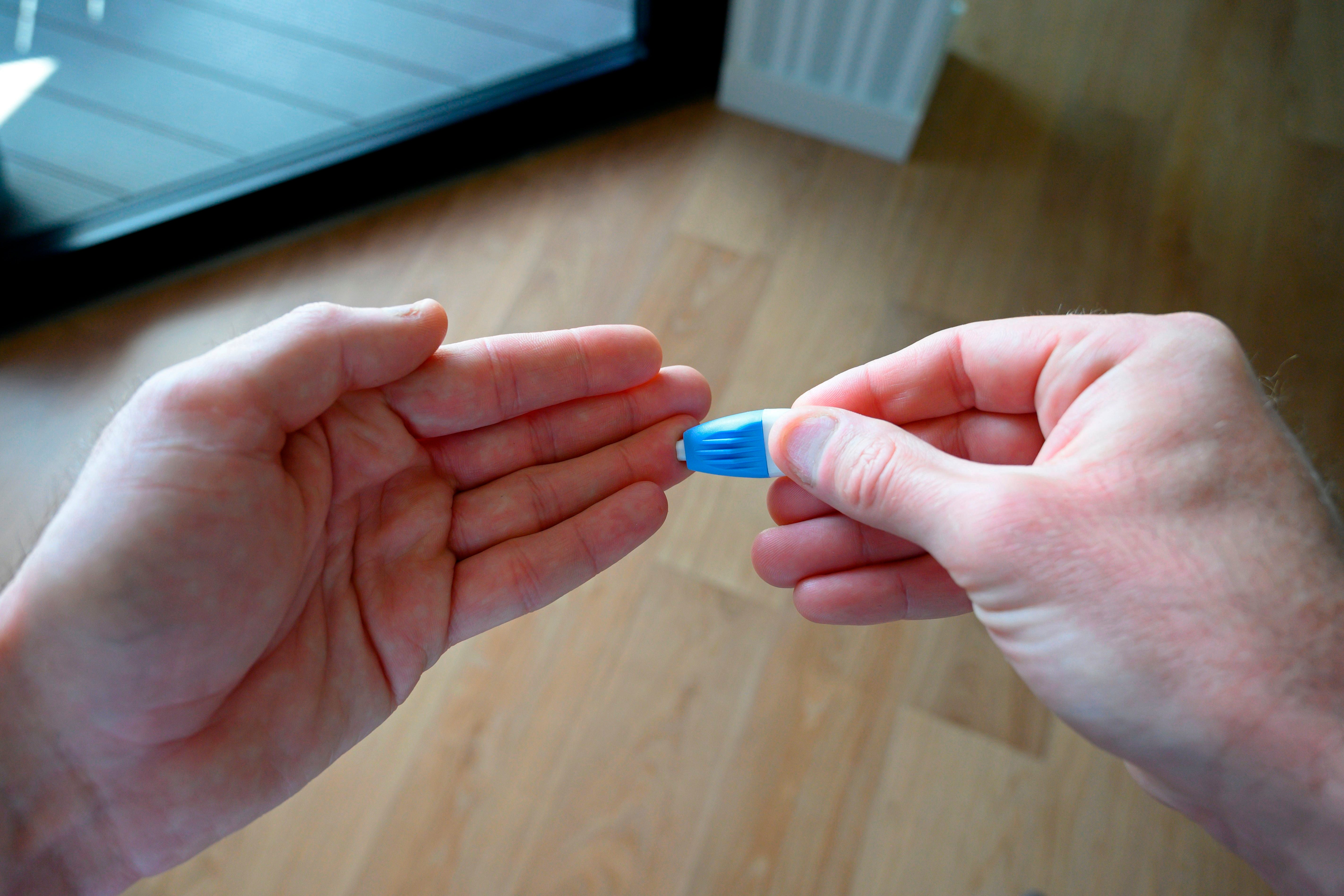
The new study, published in the journal Nature Communications, found that 174 people sent a test at home, administered it themselves, and sent it back to the research team.
These finger-prick blood tests looked for blood biomarkers, p-tau217 and GFAP, which have been linked to Alzheimer’s disease and broader brain decline, respectively.
People participating in the study also participated in online brain tests.
The research team found that the blood test can be used in conjunction with computerized cognitive tests to determine a person’s risk of Alzheimer’s.
They said the tests could be used to “triage” people at different risk of Alzheimer’s disease.
Professor Clive Ballard from the University of Exeter School of Medicine participated in the research. He said: “Almost a million people in the UK are estimated to have dementia, but currently only one in 1,000 people with the earliest signs of brain decline receive a specialist assessment.
“Our approach of combining our robust cognitive testing with protein measurement via postal blood testing can provide a simple, effective and cost-effective method to reach large numbers of people in the community who would not otherwise be prioritized in the next steps of diagnosis or support, and to optimize the clinical pathway to enable early detection of those at highest risk.”
Prof Ballard urged over-40s to take part in the online Safeguard study of more than 30,000 British adults who took regular cognitive tests to measure memory, attention and executive function or decision-making skills.
Professor Marian Knight, NIHR scientific director of NIHR Infrastructure, said: “The potential of this combination of cognitive and blood tests, both of which can be done at home, is really exciting.
“Not only would it reduce the burden on the NHS by screening people in their own homes rather than hospitals or clinics, it could also mean we can detect people with dementia earlier, tailor treatments more effectively and improve outcomes for patients.”
Commenting on the study, Alzheimer’s Research UK research director Dr. Sheona Scales said: “Finger prick blood tests could revolutionize dementia diagnosis, offering a low-cost, scalable way to identify people who may be at higher risk for Alzheimer’s disease and who should be offered further checks.
“The results show that the test can detect changes in blood biomarkers linked to Alzheimer’s disease and cognitive difficulties with a high level of sensitivity.
“As an early step towards diagnosis, such self-administered testing can give some people reassurance while helping others progress more quickly towards follow-up testing and support.
“As the test is easy to use and can be done remotely, it has the potential to improve access to assessment for people who face practical barriers to attending specialist clinics.”
But larger, more diverse studies are now needed to confirm “how well this tool performs in everyday health care settings,” he said.


