Experts discover huge rogue planet growing at fastest rate ever detected

Astronomers have discovered a significant “growth spurt” on a rogue planet outside our solar system.
The free-floating planet is currently consuming gas and dust from its surroundings at a rate of six billion tons per second; the strongest growth rate ever recorded for any planet, according to physicists.
New observations recently published Astrophysics Journal LettersIt was held at the European Southern Observatory (ESO) in Chile’s Atacama Desert.
Víctor Almendros-Abad, lead author of the latest study, said: “People may think of planets as quiet and stable worlds, but with this discovery we see that planetary-mass objects floating freely in space can be exciting places.
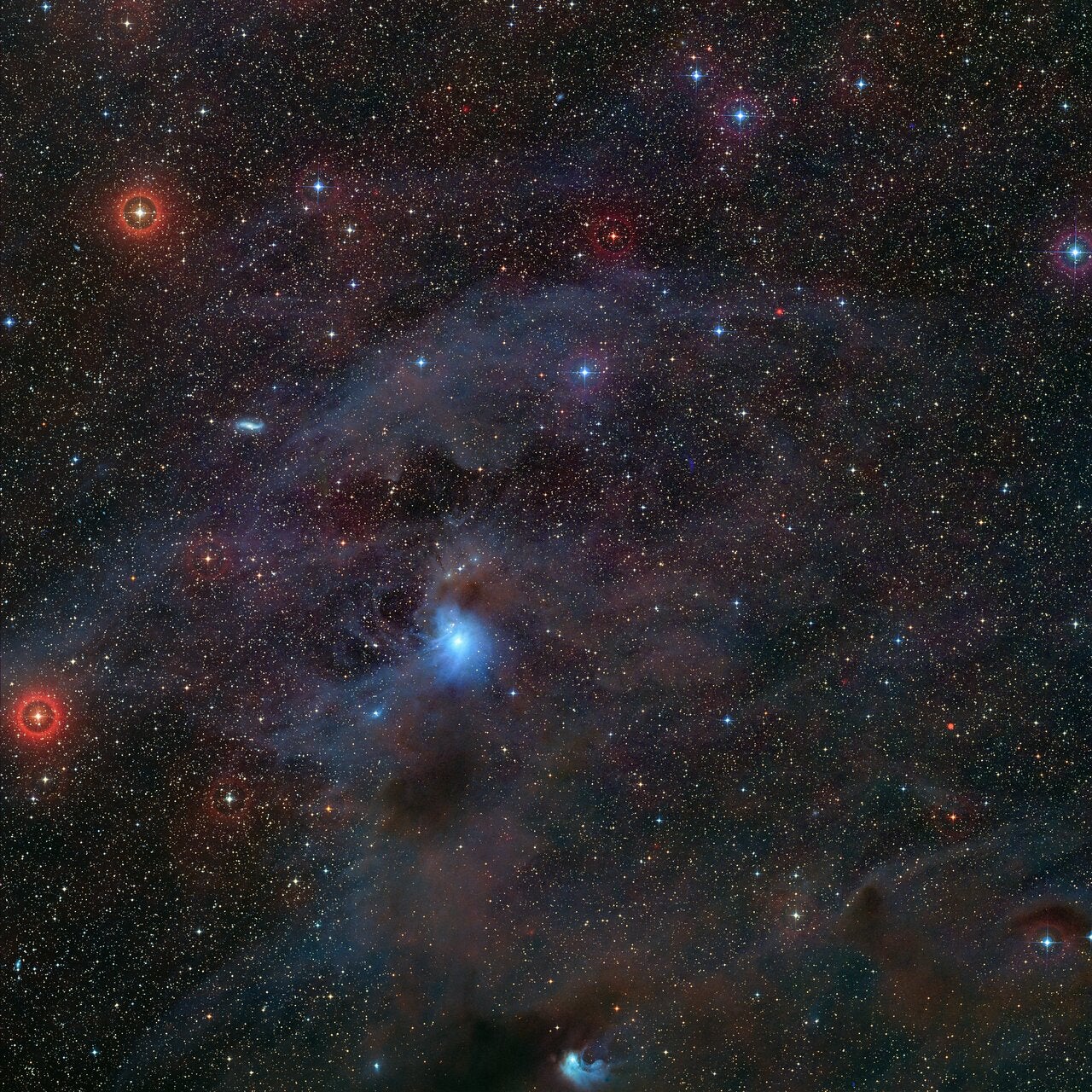
The sphere, officially named Cha 1107-7626, has a mass five to 10 times that of Jupiter and is located about 630 light-years away in the constellation Chameleon.
The research team found that the accretion rate, which is the process by which the planet is nourished by materials from the environment, is unstable. By August 2025, the planet was growing approximately eight times faster than in previous months.
“This is the strongest accretion event ever recorded for a planetary-mass object,” Mr. Almendros-Abad said.
The team also used existing data from the US-operated James Webb Space Telescope, the European and Canadian space agencies, and the SINFONI spectrograph.
The revelations still leave many scientific questions unanswered regarding the great mysteries of the universe. Study co-author Aleks Scholz, an astronomer at the University of St Andrews, asked: “The origin of rogue planets remains an open question: Are they the lowest-mass objects forming like stars, or are they giant planets ejected from their natal systems?”
By comparing the light emitted before and during the growth burst, scientists were able to uncover insights into the formation process. They found that magnetic activity plays a role in depleting surrounding mass, something previously discovered only in stars.
This suggests that even low-mass objects can handle magnetic fields strong enough to accumulate power. The findings suggest that at least some rogue planets may share a similar formation path with stars.
Another stellar-like phenomenon is that the chemistry of the disk around the planet changes during the accretion event, and water vapor is detected at this time, but not before.
Belinda Damian, another co-author and astronomer at the University of St Andrews, explained: “This discovery blurs the line between stars and planets and gives us a glimpse into the earliest periods of formation of rogue planets.”
Co-author and ESO astronomer Amelia Bayo added: “The idea that a planetary object could behave like a star is fascinating and invites us to wonder what worlds beyond our own might be like in their infancy.”


