Inflation, growth, rates all hinge on end to conflict

The central bank has warned that the crisis in the Middle East is exacerbating already high inflation in Australia and could lead to further interest rate distress if not resolved.
The Reserve Bank of Australia published its new quarterly economic forecasts on Tuesday and simultaneously raised its key cash rate by 25 percentage points to 4.35 per cent, as widely expected.
Interest rate hikes mean more repayment difficulties for mortgage and business loan holders; although the risk of further rate hikes later this year remains.
May quarter forecastsData prepared by central bank staff shows the economy is set to slow and consumer price inflation is rising, but unemployment is likely to remain little changed until the end of 2026.
“Prior to the conflict in the Middle East, inflation in Australia was significantly above target and the economy and labor market were operating with ongoing capacity pressures,” the RBA said.
“The conflict led to sharp increases in commodity prices, especially energy, which further increased inflation.”
The RBA acknowledged that financial markets currently assume the central bank’s cash rate will rise to 4.70 per cent by the end of 2026.
This is consistent with its use of market cash rate pricing as a base case assumption to inform modeling for the broader economy.
“Given the uncertainty about the duration and severity of the conflict, the outlook for inflation and economic conditions is more uncertain than usual,” the statement said.
The RBA’s baseline scenario is for inflation to remain above the 2 to 3 per cent target range for some time.
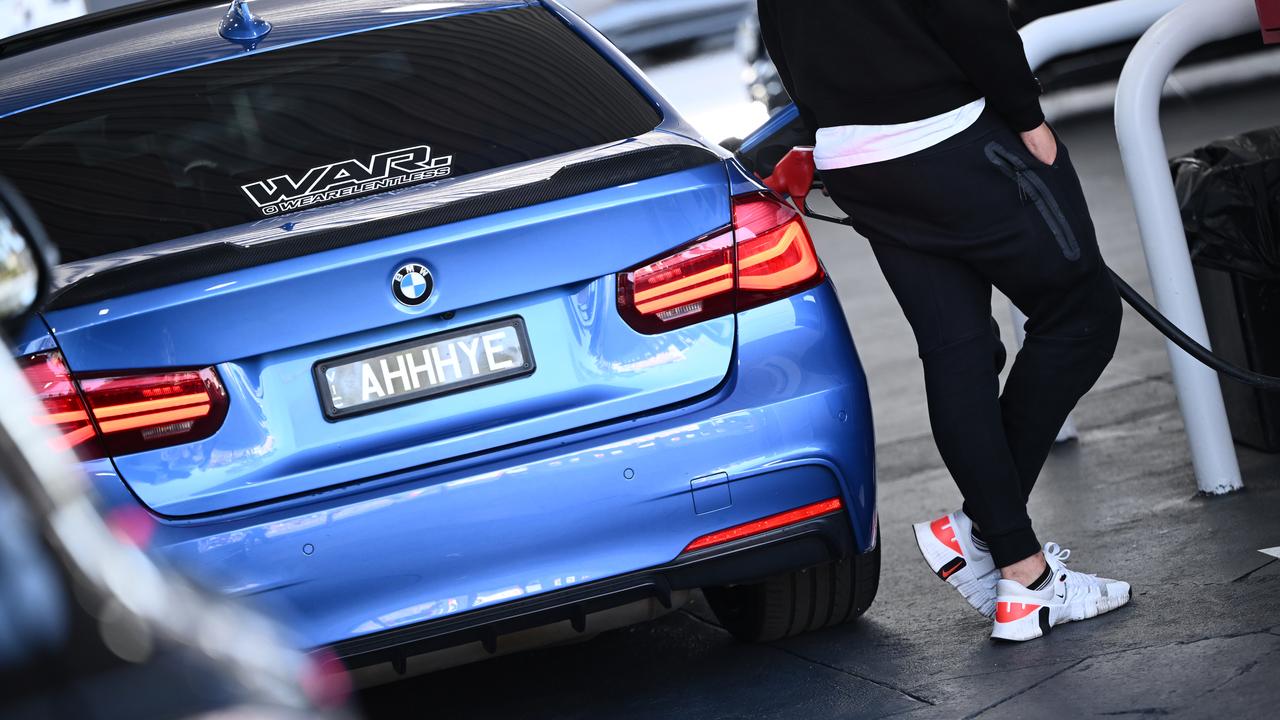
Headline inflation is expected to rise to 4.8 percent on an annual basis in June, then potentially fall to 4 percent in December.
The bank’s preferred measure of underlying or core inflation is heading towards 3.8 percent in June before falling to 3.5 percent in December.
The latest data from the statistics bureau for March shows that the measures were 4.6 percent and 3.3 percent respectively.
On the economy, the RBA predicts that spending will slow in the coming months as basic needs such as high fuel costs continue to be negatively affected.
“These effects will increase if the conflict in the Middle East is prolonged, but the global environment is unpredictable,” the statement said.
Gross domestic product growth is forecast to fall to 1.9 percent in the year ending June, then to 1.3 percent in December.
In the December quarter 2025, the last growth data available, the economy grew to 2.6 percent.

Turning to the labor market, things get a little complicated because if spending continues to fall, it could lead to job losses.
“If uncertainty rises particularly high, households and businesses may reduce their spending much further, which would cushion some of the rise in inflation but lead to a higher unemployment rate,” the RBA warned.
The RBA’s baseline scenario is for the unemployment rate to fall to 4.2 per cent in June, then rise again to 4.3 per cent in December.
Overall, the RBA does not see core inflation falling to the middle of its target range until June 2028.
The federal government will announce its estimates in the May 12 budget.

Australia’s Associated Press is the beating heart of Australian news. AAP is Australia’s only independent national news channel and has been providing accurate, reliable and fast-paced news content to the media industry, government and corporate sector for 85 years. We inform Australia.


