Jitters over Middle East sends Aussie share market down

The Australian share market is heading for a fourth consecutive session of losses as the ongoing conflict in the Middle East and the resulting energy shock continues to weigh on sentiment.
On Friday, the S&P/ASX200 index fell 19.3 points, down 0.22 percent at midday, while the All Ordinaries index fell 25.4 points, or 0.28 percent, to 8,998.8 points.
Wall Street fell from record highs overnight after Iran seized two commercial ships in the Strait of Hormuz and the United States vowed to attack ships mine-laying in the waterway, a key transit route for a fifth of global oil supplies.
“Markets remain on edge as tensions rise in the Middle East and inexorable progress toward a peace deal between the United States and Iran faces obstacles along the way,” said Kyle Rodda, senior market analyst at Capital.com.
“Market participants remain hopeful that it would be in the interest of both sides to continue talks and reach an agreement, but this would require meaningful compromise on the part of the United States and a possible softening of hardliners in Iran, which has reportedly resisted the deal and is responsible for controlling the Strait of Hormuz.”
As oil prices rose again, energy and utilities stocks outperformed; Only four of the market’s 11 sectors were on the rise.
Oil and gas giants Woodside and Santos and refinery operators Viva and Ampol experienced price increases of more than 1.5 percent as Brent crude approached $100 per barrel.
Coal producers and uranium stocks were generally weak.
BHP and Rio Tinto fell on the stock market even as iron ore and copper futures held on to recent gains.
Fortescue fell 3.7 percent to $20.19 after it revised downwards its shipment forecast for the 2026 fiscal year of the Iron Bridge project due to bad weather conditions.
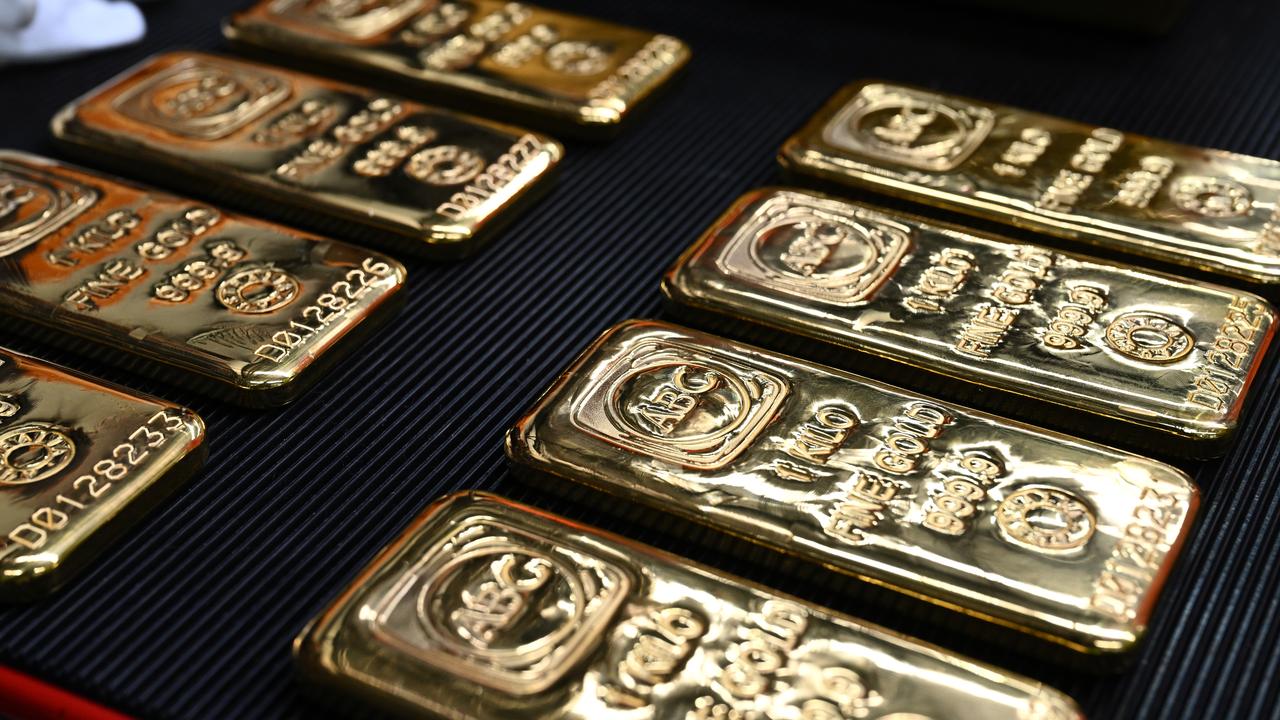
Gold miners were under pressure as gold fell to around US$4,700 ($6,590) per ounce; but US-based Newmont, which has three mines in NSW, bucked the trend with a 2.3 per cent increase, supported by strong quarterly earnings.
Lithium miner PLS, formerly Pilbara Minerals, also improved after increasing production by 12 per cent in the March quarter, taking advantage of higher spodumene prices despite a decline in sales.
Meanwhile, critical mineral producer IGO fell by nearly 11 percent following the downgrade of production on its Greenbushes project.
With NAB under particular pressure, major banks continued selling and fell to $39.94, the lowest in almost four months.
Most major insurers were in the red except Suncorp, which was up almost six per cent after signing a reinsurance deal worth up to $2.4 billion for protection over five years.
BT shares underperformed the broader market, falling 1.4 per cent on a broad-based sell-off led by WiseTech, Technology One and Life360.
The Australian dollar has weakened since Tuesday as risk sentiment worsened, buying 71.33 US cents from 71.52 US cents at 5pm on Thursday.

Australia’s Associated Press is the beating heart of Australian news. AAP is Australia’s only independent national news channel and has been providing accurate, reliable and fast-paced news content to the media industry, government and corporate sector for 85 years. We inform Australia.


