Louisiana jury awards more than $40 million to family of man who died in privately-run jail
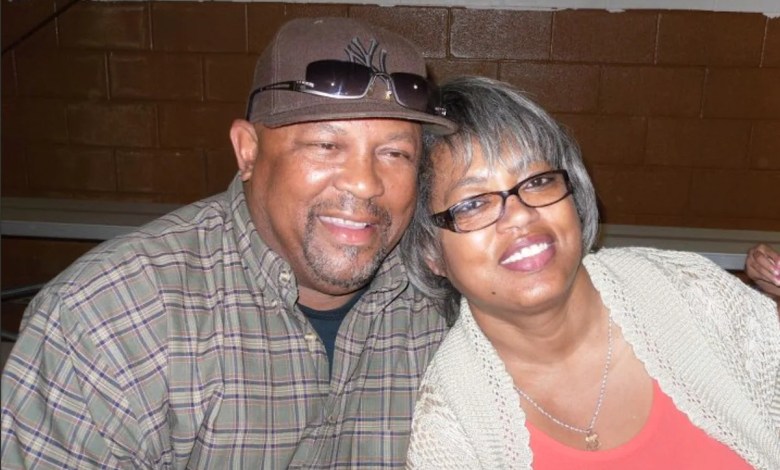
NEW ORLEANS (AP) — A federal jury found a private company that runs a Louisiana prison liable for the death of a man who died of a head injury he suffered while in custody in 2015 and awarded the family more than $40 million in damages.
Lawyers representing the family of Erie Moore Sr. say they believe the verdict handed down this week in the Western District of Louisiana is among the highest jury awards for a death in custody in the United States
“For the last 10 years, my sisters and I have suffered knowing that he was not at peace,” said his son, Erie Moore Jr. “This case has shed light where there was darkness. It has brought truth, justice and peace to our family.”
Moore was a 57-year-old mill worker with no criminal history and a father of three who was arrested for disturbing the peace at a donut shop in Monroe, Louisiana, on October 12, 2015.
According to court records, Moore became “agitated and unruly” while being detained at Richwood Correctional Facility. His lawyer, Max Schoening, said Moore was “not in a good mental state” at the time he was taken into custody.
Schoening said guards pepper sprayed him at least eight times during his 36 hours in prison.
Court records, including footage from prison security cameras submitted into evidence and viewed by The Associated Press, show Moore being forcibly taken down by several guards. Other footage shows guards grabbing Moore’s legs and handcuffing him when one of the guards stumbles and Moore’s head falls to the ground.
Moore was then brought to a secluded area of the prison where there were no security cameras. He was secluded for almost two hours, during which time no one sought medical attention, according to court records.
“The jury found that the guards continued to use excessive force against Mr. Moore in the area where the cameras were not available,” Schoening said. “When sheriffs from another law enforcement agency arrived to pick him up for transport to another jail, they found him unconscious and completely unresponsive.”
Court records show Moore was already in a coma when he arrived at the hospital and died about a month later. The Ouachita County medical examiner ruled Moore’s death a homicide due to head trauma.
A federal jury found the three guards liable for negligence, battery and excessive force. The jury also found LaSalle Management Co., which operates the Richwood Correctional Center, liable for causing Moore’s death due to the negligence of at least one of its guards.
Schoening added that no one has been charged in Moore’s death.
The jury ordered LaSalle and Richwood to pay $23.25 million in punitive damages and $19.5 million in compensatory damages to Moore’s three adult children.
“This is the biggest restitution claim I’ve ever heard of,” said Jay Aronson, a Carnegie Mellon University professor and author of “Death in Custody: How America Is Ignoring the Truth and What We Can Do About It.”
The city of Monroe contracted with the Richwood Correctional Facility for the prison between 2001 and 2019. LaSalle, which is part of the same business as Richwood Correctional Center, operates detention facilities in Louisiana and Texas, according to court filings.
Richwood Correctional Center now serves as a federal immigration detention center. Last year, U.S. Immigration and Customs Enforcement said LaSalle was “an essential part of ICE’s detention system.”
LaSalle did not respond to requests for comment sent to its attorneys or spokesperson. The City of Monroe declined to comment.
“Erie Moore Sr.’s life was a gift to his family and community. LaSalle Management Co. ended it with utter indifference,” Schoening said. “It is a testament to their children’s love, courage and resilience that, against great odds, they were able to obtain justice for their father and achieve a historic victory for civil rights in this country.”
___
Brook is an affiliate member of the Associated Press/Report for America Statehouse News Initiative. report for america is a nonprofit national service program that places journalists in local newsrooms to report on undercovered issues.