Southern California chemical tank at risk of exploding

Authorities are bracing for the possibility that a damaged chemical tank in Southern California could leak or explode as an evacuation order remains in place for 50,000 residents and there is no timeline for when they can return.
Fire crews use water hoses to spray the outside of the tank to cool the chemicals heated inside and prevent an explosion.
Lee Zeldin, the head of the U.S. Environmental Protection Agency, said Sunday that the “most likely scenario” would be a “low-volume release” where authorities could “monitor, neutralize and contain the threat.”
“The Orange County Fire Authority is working to keep the temperature of the tank low. This is very important,” he said on CNN.
He said it’s important to keep the temperature below 85 degrees F (29.4 degrees C).
The pressure tank overheated on Thursday and began venting vapors at a company facility in Garden Grove, 40 miles south of downtown Los Angeles, according to the Orange County Fire Authority.
No injuries were reported. Air monitoring tests have so far found air pollution around the evacuation zone to be within normal limits, and special equipment has been deployed to ensure no gas is released from the hazardous tank, state and federal environmental officials said Saturday.
Some Garden Grove residents filed a class-action lawsuit Saturday against GKN Aerospace Transparency Systems, the company that operates the facility where the tank is located.
Lawyers for residents living in the evacuation zone have argued in federal court filings that no matter what happens next, property values in the surrounding community are certain to be affected.
“There is no good outcome here for people who live nearby,” the lawyers wrote in a statement.
“In the best-case scenario, a slow, controlled leak would still force residents out of their homes for an indefinite period of time, disrupting families, businesses and daily life. In the worst-case scenario, a catastrophic eruption could send smoke and debris over a much larger area, damaging thousands of properties and exposing residents to serious health risks.”
Spokespeople for the company did not immediately respond to an email seeking comment Sunday.
Orange County Fire Authority division chief Craig Covey said officials said valves in the tank were broken, preventing crews from flushing the chemical or relieving pressure on the tank.
Firefighters’ first hope is to find a way to cool the chemical inside the tank so it doesn’t leak or explode.
If that’s not possible, it would be best to have the tank release a leak so the chemical can be largely contained, Purdue University engineering professor Andrew Whelton said.
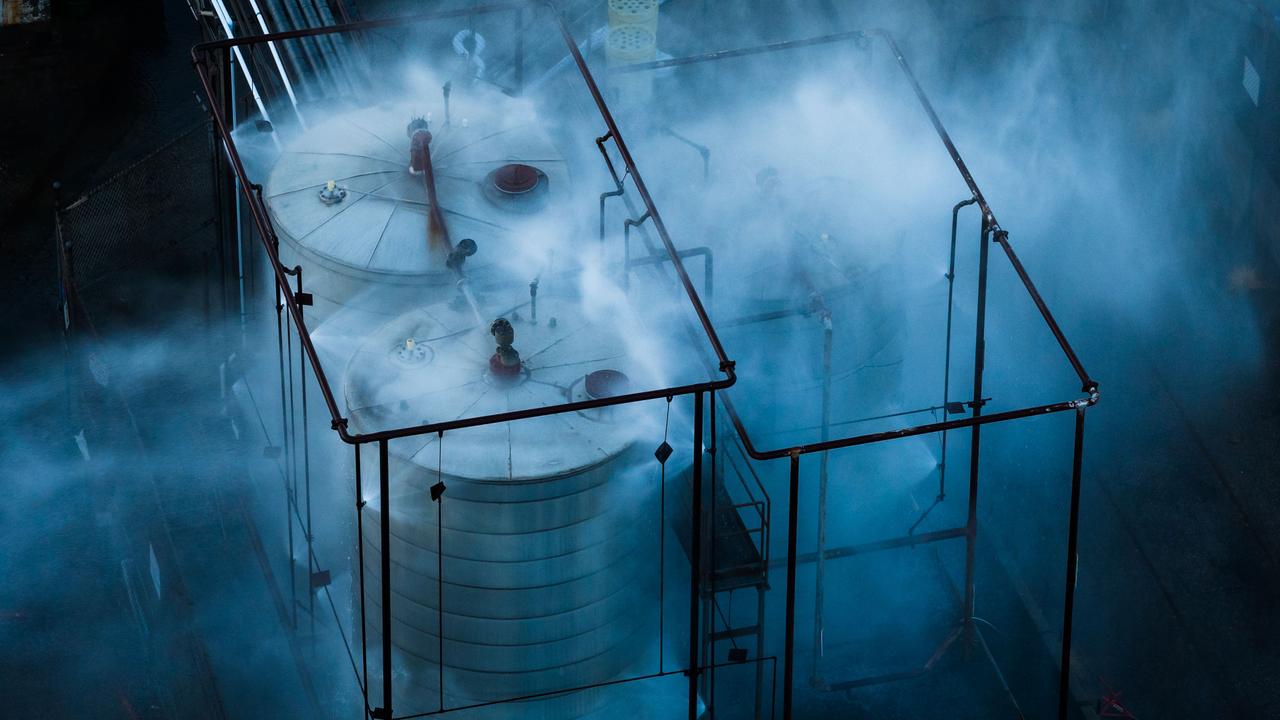
If the temperature inside the tank continues to rise, the pressure will continue to rise as the methyl methacrylate turns from liquid to gas because the pressure relief valves in the tank no longer work, officials said.
Whelton said firefighters were unlikely to consider cutting a hole in the tank because of fears it could create a spark that could ignite the volatile and flammable gas.
Covey said drones monitor temperatures at 10-minute intervals to watch for any spikes, and planning is done to ensure a potential leak can be quickly prevented from spreading into waterways or the ocean.

Australia’s Associated Press is the beating heart of Australian news. AAP is Australia’s only independent national news channel and has been providing accurate, reliable and fast-paced news content to the media industry, government and corporate sector for 85 years. We inform Australia.


