Cuba is defiant as U.S. targets Castro and fears of conflict loom
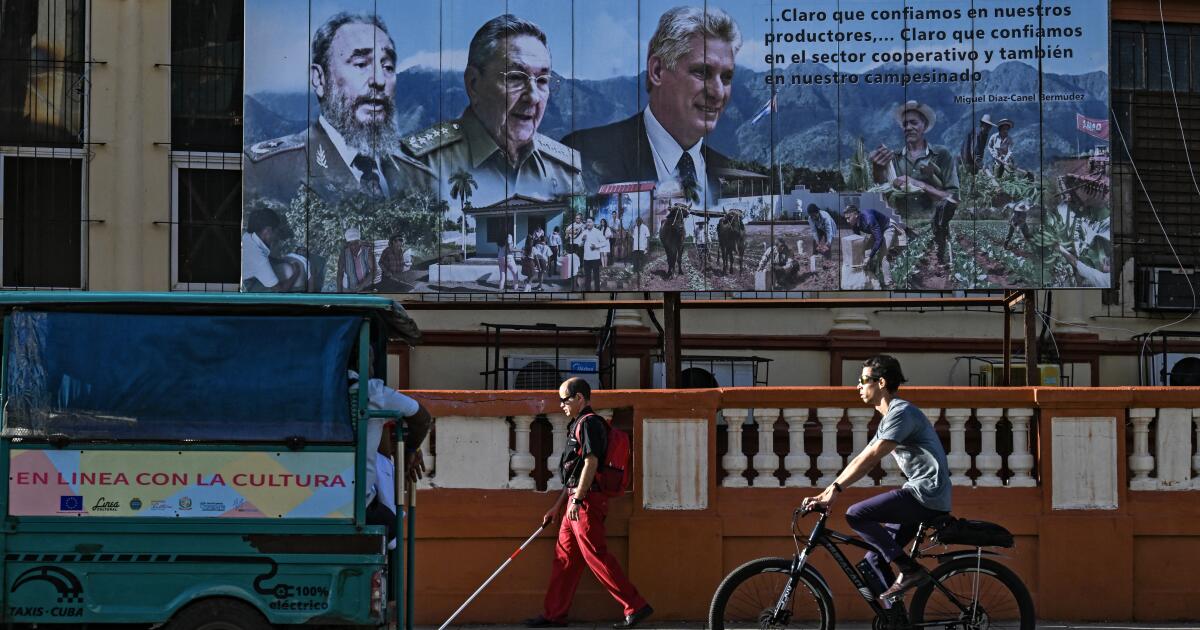
MEXICO CITY — In recent days, the U.S. Navy deployed an aircraft carrier off the coast of Cuba, the White House expanded sanctions against Havana leaders, and federal prosecutors charged former Cuban President Raúl Castro with murder.
Secretary of State Marco Rubio told reporters what has now become obvious to many: The odds of reaching a “negotiated and peaceful agreement” with Cuba’s communist government are “not high.”
Months after a punitive oil blockade that triggered widespread power outages on the island, the Trump administration has further stepped up its pressure campaign on Havana, raising questions about whether Cuba could become the next US target after Venezuela and Iran. The United States overthrew Venezuelan President Nicolás Maduro in January and killed Iran’s supreme leader Ayatollah Ali Khamenei a month later.
Officials in Cuba, who criticize the indictment against Castro as a “political action” to pave the way for invasion, say they are preparing for war.
Cuban deputy foreign minister Carlos Fernández de Cossío said the country hoped to avoid conflict but was strengthening its defences.
“It would be naive not to,” he said.
For weeks, Cuba has been distributing among its citizens a pamphlet – “The Family Guide to Protection Against Military Aggression” – which states that the United States “threatens to launch a military attack and destroy our society in order to perpetuate capitalism and destroy the dream of our Commander in Chief, Fidel Castro.”
The document instructs families to prepare survival kits, seek shelter when they hear air raid sirens, and shares first aid instructions on issues such as tying a tourniquet. “If the enemy attacks,” he writes, “our Revolution will defend itself until victory is achieved and the aggressor is expelled.”
Cubans are watching the developments with concern but are focused on daily survival.
An April shipment of crude oil, one of the only oil deliveries this year, ran out as Cuba’s Minister of Energy and Mines announced this week that the country lacked fuel to power its old power grid and was relying on domestic oil and solar panels. “We don’t have reserves anymore,” he said.
The energy crisis has plunged large parts of the country into darkness; many homes receive only a few hours of electricity each day. Food becomes scarce or rots due to lack of refrigeration. Some schools were closed. Cars and buses are idle. There is no electricity for respirators in hospitals.
“Cuba is spiraling,” said Michel Fernández Pérez of the Florida-based nonprofit Cuba Próxima. “This is a country on the brink of a deadly crisis. People don’t know what will happen next, and most have almost no hope that things will ever actually get better.”
The United States and Cuba have been in talks for months, with American officials demanding an overhaul of the island’s state-run economy and one-party political system. Last week, CIA Director John Ratcliffe traveled to Havana for talks.
But Cuba’s leaders appear unwilling to make major concessions. And they have publicly stated that they do not believe the United States is acting in good faith.
Cuba’s Ambassador to the United Nations said, “Frankly, statements like ‘We are ready to take over Cuba’ every day do not help the environment of dialogue and trust.” said This week’s New York Times. “Warmongering rhetoric is useless.”
The accusation against Castro, the 94-year-old brother of the late revolutionary leader Fidel, is perhaps the most aggressive move by the United States yet.
Castro, who served as defense secretary in the 1990s, was accused of ordering the downing of two planes over Cuban territory in 1996 by members of the Brothers to the Rescue, a group of Florida exiles opposed to the Castro regime. Four people died. Public records show that Cuban officials said they attacked the planes only after they tried to stop the flights through diplomatic back channels.
The attorney general will announce the charges in Miami on Wednesday. Gen. Todd Blanche hailed the trial as an important step toward justice and said he believed Castro would eventually travel to the United States for his day in court. “An arrest warrant has been issued for his arrest,” he said. “So we expect him to come here voluntarily or otherwise,” he said.
But it remains unclear what “another way” means, and Blanche said it was an issue for the Defense and Foreign Affairs ministries.
Matt Duss, vice president of the Center for International Policy, a progressive think tank, said President Trump appears to be on a warpath.
“Once again, he is dragging us into an unprovoked conflict,” Duss said, nodding to operations in Venezuela and Iran, adding that U.S. officials “have not presented a reasonable argument that Cuba or any of the three countries pose a threat.”
In March, Trump stated that he would be “honored to take over Cuba” and said, “I can do whatever I want with Cuba.” On Thursday, he denied that his administration was trying to scare Havana when asked about positioning the USS Nimitz near Cuba.
“Not at all,” Trump told reporters during an event in the Oval Office.
He later called Cuba a “failed country” and said his administration wanted to “help them” for “humanitarian reasons.”
“Other presidents have been looking at this for 50, 60 years and doing something,” he said. “And it looks like I’ll be the one to do it.”
A recent poll by Cuban news site El Toque found that 56% of island residents support US military intervention.
“This is the level of desperation that grips the Cuban people right now,” said Fernández, who likened ordinary Cubans to “hostages trapped between two powers: the illegitimate and dictatorial authority of the Cuban government and the United States, a global power that seeks to impose its will without regard for human rights.”
Also Thursday, the Supreme Court upheld lawsuits filed by U.S. companies whose property was seized during the Cuban revolution. The lawsuits do not seek compensation from Cuba, but they create another headache for the government by putting pressure on four cruise lines being sued for their use of Havana Port.
Anger is growing against the government in Cuba over power outages and decades of mismanagement of the economy. However, occasional protests were quickly suppressed.
The government is staging a massive protest on Havana’s waterfront on Friday in a show of force in defense of Castro.
Times staff writer Ana Ceballos Contributors to this report from washington.


