TRAGIC ANNIVERSARY: Life and death of the S.S. Edmund Fitzgerald

Article content
On the morning of Nov. 9, 1975, the U.S. Weather Service noted an area of low pressure developing over the Great Plains, centred in Kansas.
Advertisement 2

Article content
It would likely amount to a nothingburger; yet another fall storm was not uncommon in the Upper Midwest and along the Great Lakes.
Article content
Article content
At the far western end of Lake Superior, one of the largest ships on the lakes was taking on its load of taconite pellets, around 24,000 tonnes, at a dock in Superior, Wis. The Big Fitz’s destination was an iron ore facility on the aptly named Zug Island near Detroit.

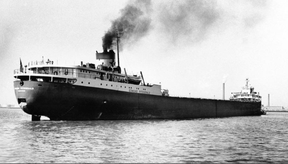
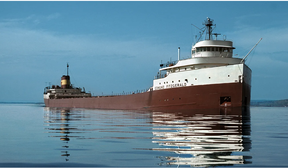
For 17 years, the S.S. Edmund Fitzgerald had been one of the biggest and grandest ships on the Great Lakes. By the 1975 shipping season, the ship had completed 748 round trips of the Great Lakes — a distance equivalent to 44 trips around the world.
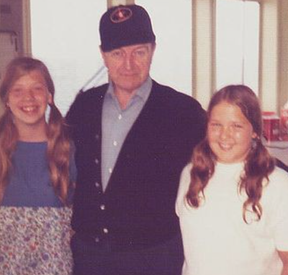
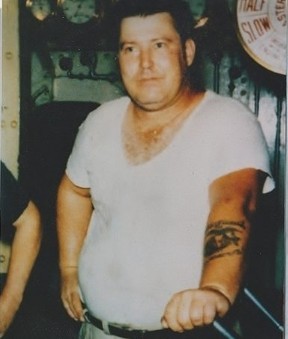
At 2:20 p.m. on Nov. 9, 1975, the Edmund Fitzgerald set sail with its usual confidence. The 29 crew members were among the most experienced and best on the Great Lakes, along with its legendary skipper, Ernest McSorely, now eyeing retirement.
Advertisement 3
Article content
The Fitz would never complete its final journey. Monday marks the 50th anniversary of the end of the ship’s terrifying trek.
EDMUND FITZGERALD NAMESAKE
“The business of America is business,” U.S. President Calvin Coolidge once said.
In the years following the Second World War, Coolidge’s maxim was the ethos across the Western world, one shared by the CEO of the Northern Mutual Life Insurance Co. of Milwaukee. His name was Edmund Fitzgerald.
The company was heavily invested in the booming iron mines of Wisconsin, Minnesota and Michigan. So, the company invested $8 million (the equivalent of US$89 today) to build the Great Lakes’ biggest ore carrier.
“We sure are proud of her,” Ken Garland, the mechanical superintendent of the Great Lakes Engineering Works, told the Windsor Star on June 7, 1958, the day the ship was launched.

Your Midday Sun
Article content
Advertisement 4
Article content

Garland was speaking of the Fitz, and he was speaking for the 700-plus men who had constructed her at the docks along the Detroit River in River Rouge, Mich. Reporter Al Roach described the ship as the “giant new queen of the Great Lakes.”
“Isn’t she beautiful? Isn’t that a dandy-looking stern?” shipyard superintendent Hugh McIlroy told the Detroit News, adding that two more months’ work remained before the Fitz would be sea-ready.
Garland could not contain his excitement the night before the Edmund Fitzgerald was launched. He said, “I won’t sleep tonight. That’s how worried I am.”
More than 15,000 people watched the Edmund Fitzgerald launch for the first time.
MONSTER WAVES
By the evening of Nov. 9, 1975, the low system had moved northeast to eastern Iowa and was gathering steam. Over the next 12 hours, the U.S. Weather Service later reported, it underwent “its most rapid intensification” as it moved into Upper Michigan. On the morning of Nov. 10, 1975, the low was directly over Marquette on Lake Superior’s southern shore.
Advertisement 5
Article content
Now, the low was tracking northeast. Ships on Superior were reporting high winds with waves between 4.8 metres and 5.4 metres. Those monster waves would double in size to terrifying dimensions.
PAGE 1 NEWS
The Port Huron Times Herald quivered with the giddy excitement of a schoolgirl as the Edmund Fitzgerald roared up the St. Clair River on her maiden voyage on Sept. 22, 1958. On her bridge was her “master, Capt. Bert Lambert, of Toledo.” The paper noted that the captain’s brother, George, lives in Port Huron. Son of a gun!
There were similar Page One stories in Detroit, Saginaw, Bay City, Jackson and Windsor.

In the tumultuous 1960s, year after year, the Edmund Fitzgerald shattered shipping records and was speedy despite its bulk. One of the most respected skippers on the Lakes, Capt. Newman Larsen, took the helm for the 1959 shipping season until he retired in 1966.
Advertisement 6
Article content
VISIBILITY WAS ZERO
At 7 p.m. on Nov. 9, 1975, the U.S. Weather Service updated its increasingly dire forecast. Gale warnings were issued for all of Lake Superior. The Edmund Fitzgerald and another ship, the Arthur Anderson, changed course northward, seeking shelter along the Ontario shore.
The Fitz reported that the winds were around 160 km/h and the waves were reaching a height of more than three metres. At 2 a.m. on Nov. 10, the gale warnings were upgraded to storm warnings.
In the early morning, the winds shifted “dramatically”, the USWS noted, and the rain changed to snow. The winds were now hurricane force. Visibility stood at zero.
‘OPERATING MANY YEARS’
From the first newspapers published to the late 1970s, shipping news was a staple item in port towns. Most of the mentions of the Edmund Fitzgerald in the 1960s pertained to the ship arriving in port or leaving places like Superior, Duluth, Zug Island and Toledo.
Advertisement 7
Article content
Recommended video

We apologize, but this video has failed to load.
By 1966, there was a new master: Capt. Peter Pulcer. He brought the ship a whole new level of fame with his gregarious personality and open-door policy. As the Big Fitz slid along the St. Clair and Detroit rivers, Pulcer played music day and night over the ship’s intercom.
At the numerous locks along the route, Pulcer entertained spectators with commentary about the ship. A 1970 article in the Toledo Blade hailed the Fitz as the workhorse of the Great Lakes, as it shattered another single load record in 1969.

“We can’t afford to be tied at a dock,” Pulcer told the Blade. “We can only make money when we’re moving.”
But years later, some experts ventured that perhaps overwork was one of the factors that sealed the Fitz’s fate. Still, in 1970, Pulcer believed the Fitzgerald had a grand future.
Advertisement 8
Article content
“The Fitzgerald should still be operating many years from now,” he said.
SAFETY AT WHITEFISH
At 7 a.m., on Nov. 10, 1975, the Fitz filed a weather report on the worsening conditions. The situation would become much, much worse.
The Edmund Fitzgerald had hooked up with another laker, the S.S. Arthur M. Anderson, and the two ships travelled together through the harrowing November storm. At 3:30 p.m., the Fitz’s skipper, Ernest McSorely, radioed the Anderson’s captain, Jesse Cooper.
McSorely: “Anderson, this is the Fitzgerald. I have sustained some topside damage. I have a fence rail laid down, two vents lost or damaged, and a list. I’m checking down. Will you stay by me till I get to Whitefish?”
Cooper: “Charlie on that Fitzgerald. Do you have your pumps going?”
Advertisement 9
Article content
McSorely: “Yes, both of them.”
***
The Edmund Fitzgerald was seen not only as one of the fastest and most sturdy ships on the Great Lakes, but it was also one of the safest since its launch in 1958. In 1969, the Big Fitz was honoured for running eight years without time off for worker injury.
But later that year, the Fitz ran aground. In 1970, she collided with the SS Hochelaga. That same year, the Fitzgerald struck the wall of a lock, then did so again in 1973 and 1974. Adding insult to injury, in 1974, the ship lost its original bow anchor in the Detroit River.
***
As the weather on Lake Superior became ever more terrifying, the situation on the Edmund Fitzgerald went from bad to worse. At 4:10 p.m. on Nov. 10, 1975, the Fitz radioed the Arthur M. Anderson requesting radar assistance until they reached Whitefish Bay. The ship could not pick up the Whitefish Point radio beacon. It, too, had been blown out along with the Fitzgerald’s radar.
Advertisement 10
Article content
Around 5:30 p.m., the Fitz was in radio contact with another ship, the Avafors. The Fitz radioed: “I have a bad list, lost both radars. And am taking heavy seas over the deck. One of the worst seas I’ve ever been in.”
About 16 kilometres away, the Anderson was also fighting for its life when it was pounded by two monster waves, each more than 10 metres high. The Anderson would miraculously survive. The Big Fitz would not.
“I watched those two waves head down the lake towards the Fitzgerald, and I think those were the two that sent him under,” Cooper later said.
***
At 7:10 p.m., the Edmund Fitzerald is last heard from in a radio exchange with the Arthur M. Anderson.
Anderson: “By the way, Fitzgerald, how are you making out with your problem?”
Advertisement 11
Article content
“We are holding our own,” McSorely replied.
Anderson: “OK, fine. I’ll be talking to you later.”
For the Edmund Fitzgerald and her 29 crew members, there was no later.
RETURN TO TERROR
Around 7:15 p.m., the Fitz entered a squall and vanished from Arthur M. Anderson’s radar. Not unusual for a squall. But then, the big ship did not reappear.
Sometime between 7:20 and 7:30 p.m. on Nov. 10, 1975, the S.S. Edmund Fitzgerald sank to the bottom of Lake Superior off Whitefish Point, Mich., with all hands on deck.
The Arthur M. Anderson made it safely to shelter in Whitefish Bay. No U.S. Coast Guard vessels were available, so they asked the Anderson to go back out and look for the Fitz and possible survivors.

“What else could we do?” naval cadet Ed Belanger, then 20 and on the Anderson, told the Petoskey News. “They were our brothers out there. If our ship went down, wouldn’t we want them to come looking for us? So, we picked ourselves up by our bootstraps and kept going. It took us two hours to reach the site where the Fitz went down.”
TRAGEDY 29 TIMES
The desperate search for their fellow sailors yielded nothing but heartache. And the Edmund Fitzgerald sailed into Great Lakes lore, boosted by Gordon Lightfoot’s haunting song.
“And all that remains is the faces and the names
Of the wives and the sons and the daughters.”
— GORDON LIGHTFOOT, WRECK OF THE EDMUND FITZGERALD
bhunter@postmedia.com
@HunterTOSun
Article content


