‘We’re gearing up’: scam fighters on Black Friday alert

Australian shoppers and retailers are using technology more than ever to snag deals this Black Friday, but so are scammers.
According to digital outsourcing specialist TP Australia, more than a third of bargain hunters; It used chatbots, video assistants, or AI-generated buying guides to find deals, compare products, and make purchasing decisions.
Similarly, retailers were increasingly leveraging technology to provide benefits such as 24/7 support, instant refunds, same-day delivery and live updates.
“The Black Friday sales period is a finite bubble tied to a specific time period, so if they don’t use that period they won’t get the sale,” Sarah Rugnath, director of strategy at consultancy group TP Australia, told AAP.
“Implementing systems frees up staff who need to focus on and prioritize customers in store and allows technology to handle some of the more routine, mundane tasks.”
As retailers woo punters for their share of the $6.8 billion in sales expected over the weekend, fraudsters are also casting their nets to capture some of the windfall, according to forecasts by Roy Morgan and the Australian Retailers Association.
“It’s an ever-evolving environment,” ANZ fraud leader Marc Broome told AAP.
“We are seeing some scams almost change over time as we put controls in place to protect consumers.”
Australians’ online fraud losses in November have almost doubled to $600,000 in 2024, according to Scamwatch.
Mr Broome said it was ultimately a numbers game, with criminals targeting victims with fake websites, scam ads on social media and phishing emails.
“There’s a scam for everyone,” he said.
“Scammers send out hundreds of thousands of baits and see who can get in.”
Mr Broome said consumers should be wary of dodgy URLs, deals that seem too good to be true and increasing demands for personal data.
Fake websites were becoming harder for humans to detect, and fake ads were increasingly appearing on social media platforms or in search engine results.
Meta, which owns Instagram and Facebook, projects roughly 10 percent of its 2024 revenue — about $US16 billion ($24.5 billion) — will come from fraudulent ads, Reuters reports.
As the scale and sophistication of online fraud increased, financial institutions were getting better at detecting and blocking dodgy transactions.
“We are really preparing for the next 24 to 48 hours,” Mr. Broome said.
“I hope we can detect as many of the fraud or scam-related payments as possible.”
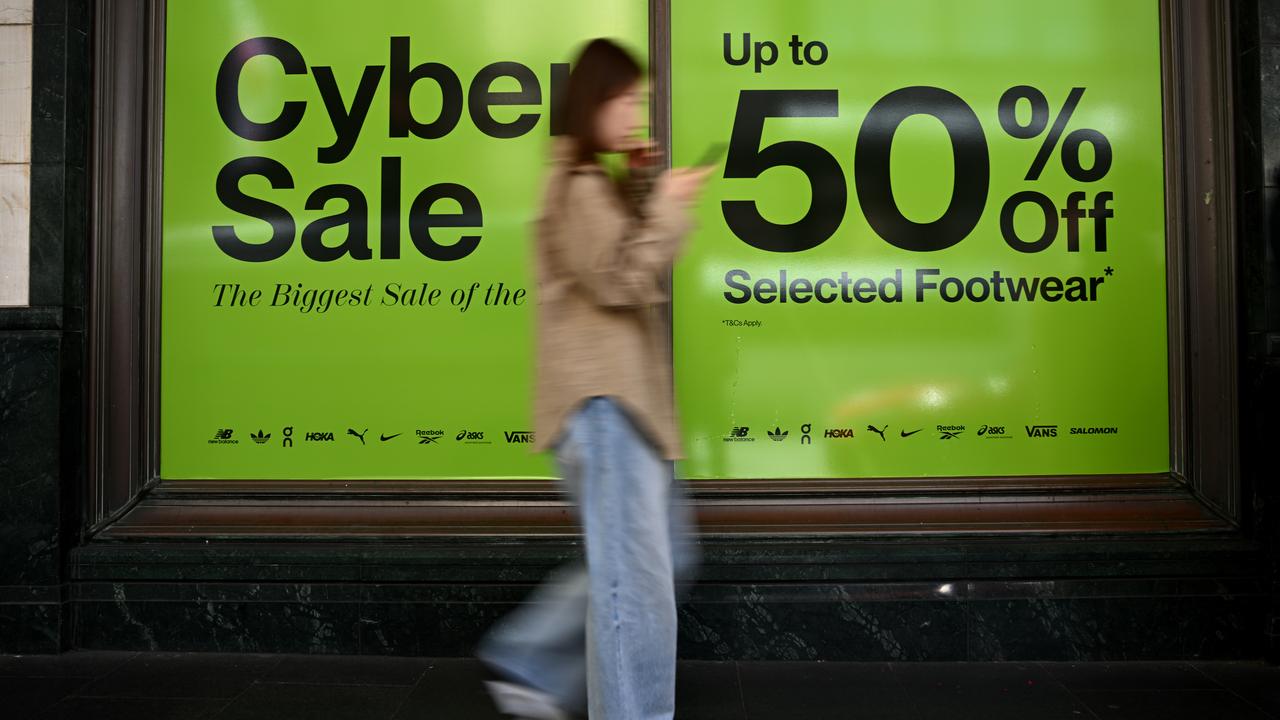
Meanwhile, two in five Australians planning to shop for sales will do so without a budget, according to Canstar.
Sally Tindall, director of data analysis at the financial comparison site, called for caution, especially when shopping on credit.
“Remember, a discount that looks impressive doesn’t automatically make your purchase a good deal,” he said.
“Check to see if you can find the product cheaper elsewhere, but then ask the two most important questions. One: Do I need this? And two: Can I afford it?”

Australia’s Associated Press is the beating heart of Australian news. AAP is Australia’s only independent national news channel and has been providing accurate, reliable and fast-paced news content to the media industry, government and corporate sector for 85 years. We inform Australia.


