Teens worldwide react to Australia social media ban
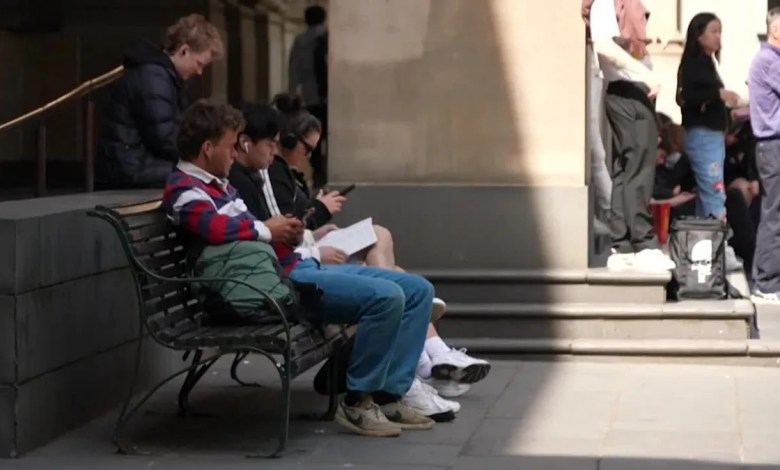
Australia’s landmark move to ban under-16s from social media will be watched closely by other countries that may follow similar laws.
AFP spoke to young people and adults around the world about the Australian ban, which comes into force on Wednesday. Here are some of their reactions:
– Mumbai: ‘Nothing is black or white’ –
On the coast of Mumbai, India, 19-year-old Pratigya Jena scrolls through Instagram videos of an influencer posing with her friends and a camel on the beach.
“Social media needs to be partially banned because, in my opinion, nothing is black or white,” the student said.
“Generation Z is very active, they are really successful on social media. Especially young entrepreneurs are doing great things,” said Jena.
It also has a “very bad impact” on children watching adult content online.
At a park in Mumbai, cricket coach Pratik Bhurke, 38, said Australia’s move would encourage children to spend time outdoors and could have “huge benefits” in India as well.
– Berlin: ‘Help detox’ –
In Germany’s cold capital, 13-year-old Luna Drewes watches selfie-style TikTok clips shared by other teenagers.
“It’s actually a good thing in some ways because social media often paints a certain image of what people should look like, like girls should be skinny,” he said of the ban.
Another teenager, Enno Caro Brandes, said: “I’m 15, so for me the ban will definitely come into effect. I really can’t imagine giving it up completely.”
“Banning is a bit extreme, but detoxing can definitely help.”
– Doha: ‘Really stupid’ –
An AI baby singing and answering interview questions is among the videos presented to 16-year-old Firdha Razak as she wanders around her room.
Razak is not a fan of bans. “It’s really stupid, to be honest,” he said, but “there’s not much we can do as 16-year-olds” if governments decide to take action.
Many people in Qatar have family living abroad, so “it will be much harder to talk to them.”
Youssef Walid, 16, also in Doha, said bans like those in Australia were “a bit harsh” and difficult to enforce.
“We can use VPN. We can easily bypass security and open new accounts easily,” he said.
– Lagos: ‘We were born with this’ –
At a high school in Nigeria, Mitchelle Okinedo prepares for exams by checking her handwritten notes. In the classroom, where phones are prohibited, students in uniform sit in separate desks.
“I see where the (Australian) government is coming from. Students are really distracted these days,” Okinedo said.
Even so, the 15-year-old added, “we were born with it.” “And I don’t think that’s something I want to stop.”
The mother of event planner Hannah Okinedo, 50, agrees with the social media ban on under-16s and says most parents “don’t have time to watch their kids all day”.
– Mexico City: ‘Express yourself’ –
Young Mexico City resident Aranza Gomez, 11, has had a smartphone with access to social media for a year.
Without it, she said, “I would be really sad. I wouldn’t have a really good way to spend my time.”
Santiago Ramirez Rojas, 16, sits on a bench in the Tabacalera neighborhood, browsing through posts containing news about Argentina and a musician’s tour dates.
“Social media today is so important for expressing yourself, no matter how old you are,” Rojas said.
But “there are a lot of kidnappings that start online” and “young children as young as 10 or 12 are much more vulnerable.”
– Sydney: ‘It will have no impact’ –
One family in Australia has different ideas about how to apply the law.
“I don’t think the government really knows what they’re doing and I don’t think it’s going to have any impact on kids in Australia,” said 15-year-old Layton Lewis.
But her mother, Emily Lewis, hopes it will help children “form better, more authentic relationships.”
“They will make appropriate plans to meet their friends face to face and have decent conversations, as we used to, as opposed to misleading friendships online,” he said.
burs-kaf/pst