Burnham facing backlash from UK Jewish leaders over Gaza comments

Andy Burnham has faced backlash from Jewish leaders who say they have “significant concerns” about his indication that he will pursue a tougher policy against Israel in support of Gaza.
The future prime minister posted a video on social media on Thursday in which he apologized for Labor’s previous response to the violence in Gaza and admitted the government had been too slow to call for a ceasefire.
He said in the video: “I know many people think that my party did not get it right at the beginning of Israel’s military operation in Gaza, and I am sorry about that. The response was often not good enough. We need to do better.”
While the statement was welcomed by many in the Labor Party, the Board of Deputies of British Jews and the Jewish Leadership Council expressed concern about the comments on Friday.
“We have contacted Andy Burnham’s team directly to raise our significant concerns about his comments yesterday,” the groups said in a statement.
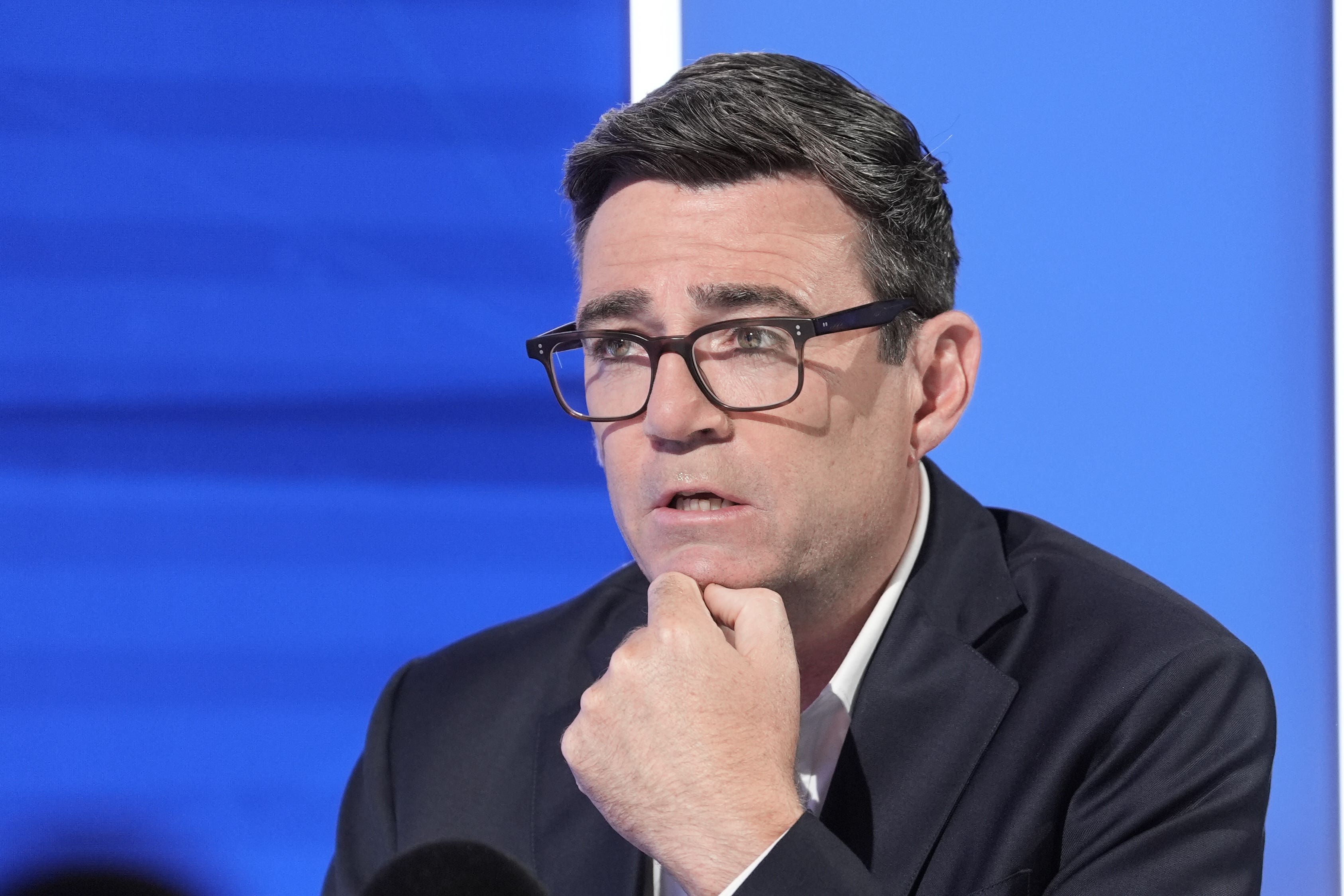
“We welcome his zero-tolerance approach to antisemitism, endorse his assertion that there is no contradiction between combating antisemitism and disagreeing with the actions of the Israeli government, and share our concerns about the humanitarian situation in the Gaza Strip.
“However, antisemitism cannot be combated without addressing all of its drivers. In today’s Britain, this includes Islamist, far-Left and far-Right extremists who go beyond criticizing the Israeli government and creating a climate of hatred towards Jews and Israelis.”
In his video, Mr Burnham apologized for Labour’s initial response to Israel’s military action in Gaza and admitted the party “didn’t get it right”.
The intervention is significant and signals a break with the Starmer government’s approach of insisting that Israel “has the right to defend itself”.
This means arms sales to Israel could be banned under Mr Burnham’s leadership, while Foreign ministers are understood to be currently looking at ways to prevent goods and services from settlements entering the UK without affecting legitimate trade with Israel.
Mr Burnham also sought to signal that he would not accept antisemitism in the party and again strongly condemned the October 7 attacks on Israel, as well as terrorist attacks on synagogues and Jews in Golders Green in London and Heaton Park in Manchester.
But the Board of Deputies of British Jews and the Jewish Leadership Council added that critics were using “distorted or one-sided depictions of the situation in Gaza” to “promote the world’s only Jewish state”.
“The dire situation in the Gaza Strip and the suffering of innocent Palestinians cannot be understood without reference to Hamas’ role not only in initiating the conflict but also in continuing the war by holding hostages, recruiting entirely civilian populations, and refusing to give up power and disarm in line with the 20-point peace plan.”
Mr Burnham, who is expected to take over as prime minister on July 20, said the party must “do better” under his leadership and would put more pressure on the Israeli government through sanctions on both individuals and organizations as it seeks to win back voters who abandoned the party over its stance on Gaza.
“We must do more to pressure the Israeli government… Yes, we have taken some important steps… But let’s be honest, the UK has been too slow to call for a ceasefire. We must now do more to strengthen our approach.”
It comes as nominations open on Thursday to replace Sir Keir Starmer as Labor leader, with Mr Burnham the only candidate to stand out so far.
After Mr Burnham nominated himself, a number of Labor MPs posted their nomination forms for him on X in a show of solidarity. Mr Burnham needs just one more MP to nominate him to make it mathematically impossible for anyone to oppose him, and Home Secretary Mike Tapp has said he will support him when the House of Commons returns on Monday.


