Emma McDaniel, abandoned by millionaire father Mark Talbot as baby, wins £123k in court fight over his will

A mother-of-two who was abandoned as a baby and expressly excluded from her millionaire father’s will has successfully received a £123,000 payment from his estate following a fight with her stepmother in the High Court.
Emma McDaniel’s father, Mark Talbot, left her life when she was just eight months old. He later amassed a significant fortune through real estate investments and successful businesses and became a millionaire.
Despite this, his last will, drawn up in 2014, specifically disinherited Emma, saying he had not seen Emma for twenty years and leaving all his property to his wife Rosemary Talbot, Emma’s stepmother.
However, a significant turn of events saw Mark and Emma reconcile five years later in 2019, developing what has been described as a “close” relationship.
However, Mark died suddenly in October 2022, aged 63, without updating his will, leaving behind an estate worth £1.75 million.
Struggling financially, relying on government benefits and facing the challenges of raising two disabled children while managing her own health issues, Emma, 40, filed a legal claim in the High Court last November seeking a share of her father’s fortune.
Judge Caroline Shea KC gave her verdict, ruling that Emma should receive £123,418 from the estate.
The judge emphasized Emma’s financial need and ruled that her contributions to the care of Mark and his mother (his grandmother) constituted a “moral” claim to receive “provisions” from the estate.

London’s High Court heard Mark separated from Emma’s mother in 1985. She never met Mark’s brother Rhys, who was born after his departure. Mark had a 36-year relationship with Rosemary Talbot, now 68, whom he married and had two more children with.
His financial success resulted from the sale of a courier business in 1997, followed by a series of property investments and part-ownership of Berkshire estate agents the Cricketts. At the time of his death, his assets included a portfolio of rental properties and a villa in Portugal worth £450,000.
The court was told Emma and her father were not physically reunited until 2019 when he made contact, although they had spoken on the phone when he was 16. This belated meeting turned into an “intimate” relationship as the two vacationed together at his villa.
Mark’s will, drawn up in May 2014, clearly stated: “I DECLARE THAT I HAVE NOT MADE any provision in my Will for my son Rhys Winstone, whom I have never met, or for my daughter Emma Winstone, whom I last saw nearly twenty years ago. I have no contact with either of them.”
This document remained unchanged despite the renewed bond between father and daughter, leading Emma to request “reasonable financial consideration” from the estate.
Emma’s lawyer, Aiden O’Brien, told the court: “Emma is married with two children, both of whom are disabled. The plaintiff’s husband also has heart and spine problems.”
He added: “Unfortunately, the plaintiff also has her own health issues, including spine issues, autism, ADHD, fibromyalgia, chronic fatigue and burnout.”

The court heard Emma and her family lived in a three-bedroom housing association property and relied on “a complex cocktail of state support including Universal Credit, PIP, Child Benefit and Disability Living Allowance”, supported by her modest business income.
Rosemary Talbot disputed the claim, saying Mark was clear in his desire for his children not to inherit his estate.
He also argued that the estate represented their “joint efforts” because the business focus “halted Rosemary’s ability to earn” and effectively served as her “pension.”
In his ruling, Judge Shea acknowledged the profound impact of Mark’s death on both women, noting that Rosemary’s “very bad mood” had been made worse by Emma’s lawsuit. However, he rejected Rosemary’s suggestion that the reconciled relationship between Mark and Emma was merely a friendship rather than a true father-daughter bond.
“It is true that the relationship was brief, but both Mark and Emma acted with the expectation that the relationship would continue into the future,” the judge said.
He concluded that it was “unreasonable that the applicable provisions governing Mark’s estate should not make provision for Emma’s maintenance.”
Judge Shea described Emma as a “necessary plaintiff” whose financial situation was “severely constrained to provide little (if any) more than the maintenance of herself and her family.”
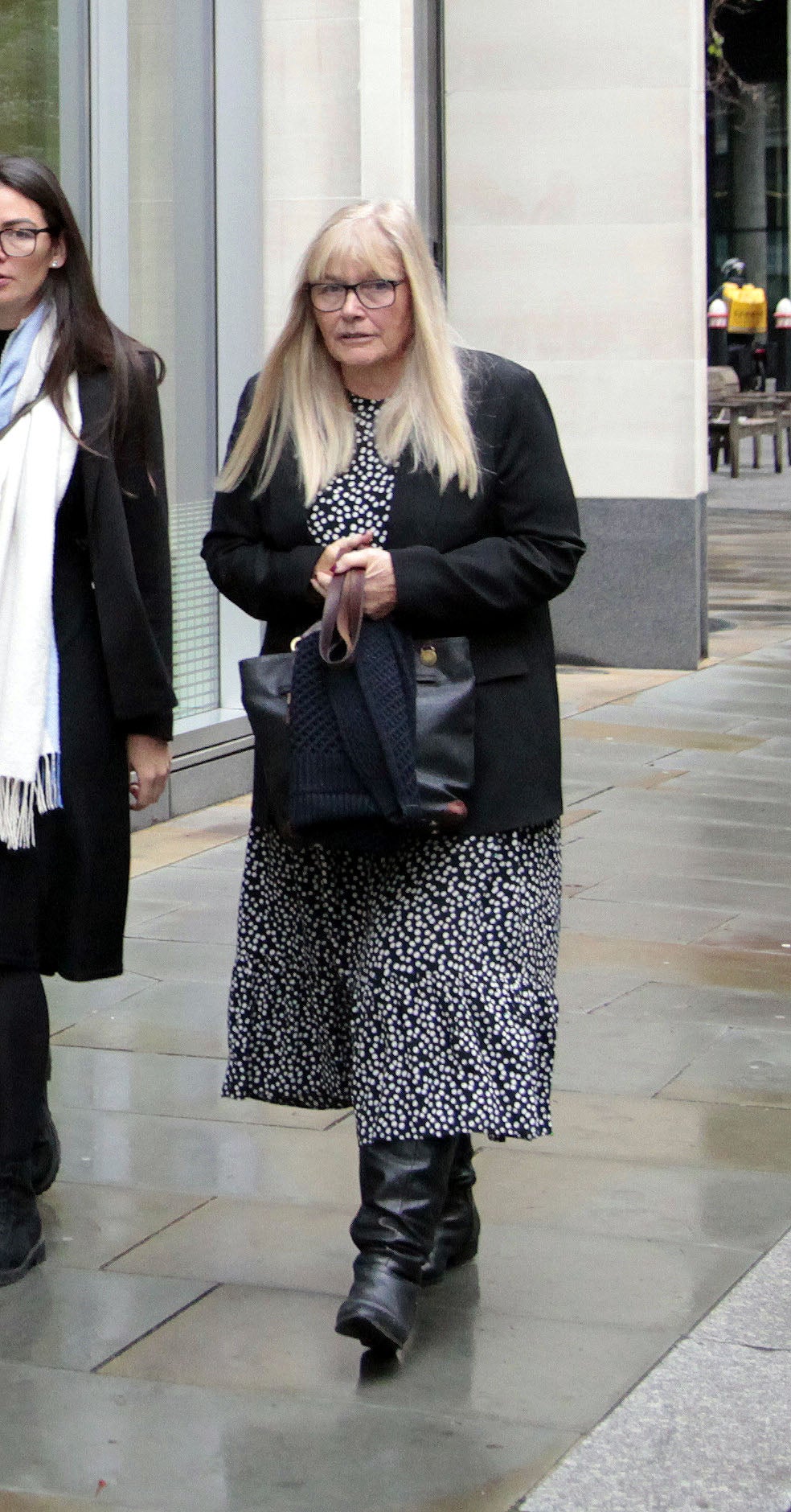
He added that Emma was able to make ends meet “by depriving herself and her family of small luxuries or going into debt to afford them, and with no means beyond borrowing more to cover unexpected expenses.”
The judge found a “special circumstance” that tipped the balance in Emma’s favour: her “compassionate contributions extending not only to her own children, but also to Mark and to her mother, Barbara, before and after the reunion and since Mark’s death”.
He praised Emma’s “generous attitude” and “the open-hearted and generous bond that enabled Emma to quickly become an important part of Mark’s life.”
Judge Shea said that “the strength of the bond, which has grown so rapidly and shows every sign of continuing, gives the case a flavor quite different from other so-called alienation cases.” He concluded that Emma’s qualities and their close father-daughter relationship elevate the situation to “the moral dimension where issues of love, duty, affection, care and respect operate.”
The judge also considered Rosemary’s financial situation, noting that she was “both well off of Mark’s inheritance and a woman of considerable wealth in her own right.” He concluded that an award to Emma would not jeopardize Rosemary’s standard of living or deprive her of the bulk of her inheritance.
The court then ordered Emma to be paid £123,418 from her father’s estate.


