Exclusive-Qatar’s energy boss says he had warned of dangers of provoking Iran
Written by: Maha El Dahan, Andrew Mills and Yousef Saba
DUBAI, March 20 (Reuters) – As Qatar reels from an Iranian attack that disrupted its giant natural gas company, its boss, who also serves as the country’s energy minister, said he had warned officials and executives of such a danger if Iran’s own facilities were hit.
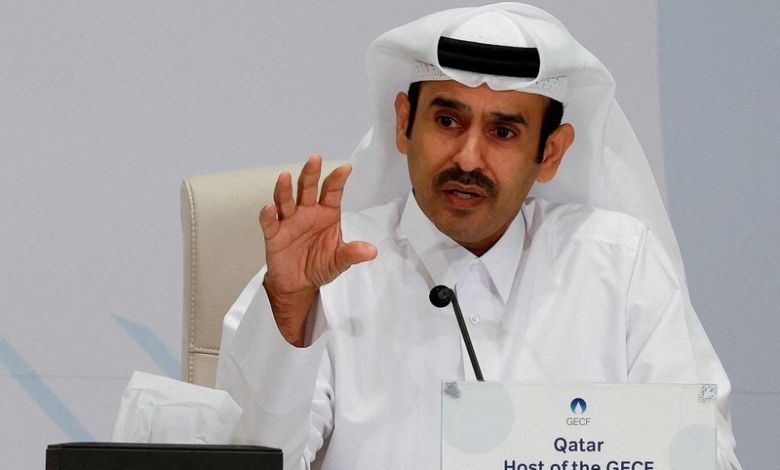
“When I was talking to oil and gas executives who are partners with us, when I was talking to the US Secretary of Energy, I was always warning him about this outcome and the fact that it could be detrimental to us,” QatarEnergy CEO Saad al-Kaabi told Reuters.
QatarEnergy’s partners include major US energy companies such as ExxonMobil and ConocoPhillips.
‘WE ARE AWARE OF THE DANGER’
“They were aware of the threat and they were reminded almost daily by me that we need to make sure there are restrictions on oil and gas facilities,” he said.
The US Department of Energy referred the issue to the White House.
Asked for comment, White House spokesman Taylor Rogers said: “President Trump and his entire energy team were not unaware of the fact that there would be short-term disruptions in oil and gas supplies during ongoing operations in Iran and planned for these highly anticipated, temporary disruptions.”
ExxonMobil declined to comment.
“We are fully committed to our long-standing partnership and will continue to work with QatarEnergy on the road to recovery,” a spokesperson for ConocoPhillips said.
Three weeks into the US-Israeli war with Iran, missile and drone attacks have damaged tankers, refineries and other key energy infrastructure; The largest known impact to date was on QatarEnergy’s Ras Laffan, the world’s largest liquefied natural gas (LNG) complex.
Kaabi told Reuters on Thursday that damage to the facilities, which cost $26 billion to build, would affect LNG deliveries to Europe and Asia for up to five years.
Governments have long feared such a scenario, in which facilities vital to the world’s supply of not only crude oil and natural gas but also products such as jet fuel and liquefied petroleum gas (LPG) used for heating and cooking could suffer long-term damage.
NO ADVANCE WARNING
Israel attacked Iran’s main South Pars gas field on Wednesday, in a sharp escalation of the war. Tehran’s response was a series of attacks on Gulf energy infrastructure in Kuwait, the UAE, Saudi Arabia and Qatar’s Ras Laffan.
Kaabi said he received no advance warning about the South Pars attack.
“I wasn’t aware of anything, but I don’t think anyone else was either. President Trump said he didn’t know. So do you think we would know?”
South Pars is part of the world’s largest gas field, called the Northern Field, which Iran shares with Qatar.
Kaabi said QatarEnergy has not yet assessed whether insurance will cover war-related losses.
DAMAGE DETAILS
He said the attack on Ras Laffan not only disabled 17% of Qatar’s LNG export capacity, but the impact could last up to five years due to what was damaged.
“The cold boxes are gone,” Kaabi said, referring to the refrigeration mechanism that purifies and cools gas to transport it as a liquid, which was damaged on two of the complex’s 14 trains.
“This is the main unit of LNG, the cooling box, completely destroyed.”
MAJOR EXPANSION NOW POSTPONED
Kaabi, who evacuated his facilities after the Iranian attack at the beginning of this month, said that there will be a delay in the expansion in Ras Laffan, which will affect the gas planned to be delivered to countries such as France, Germany and China from 2027.
“It wasn’t easy to pull everyone from offshore, you know, 10,000 people were evacuated in 24 hours and all operations were stopped,” he said.
“I’m very happy that we have zero injuries and zero fatalities. This is thanks to the decision we made.”
The expansion, aimed at strengthening Doha’s position as the world’s largest LNG exporter, would increase Qatar’s liquefaction capacity from 77 million to 126 million tonnes annually by 2027.
“No work is being done on the expansion of the North Field. There are no workers there. It is definitely delayed,” Kaabi said.
“I think it will be delayed for months, if not a year or more.”
Kaabi said QatarEnergy’s production could only restart if hostilities end, and even then it would take at least three to four months to resume full loading.
WIDER GULF ECONOMIC IMPACT
Kaabi, who is also the chairman of Qatar Airways, said the wider impact of the war would reverberate across all economies of the Gulf.
“This has set the entire region back 10 to 20 years.”
“Tourism is over. Your airlines are not flying… Your trade has decreased. There is nothing moving from any port.”
“You have economies that have zero revenue from oil and gas, and we have a predominantly oil and gas economy. So obviously governments are going to be spending at a much, much lower rate.”
‘HARD TO EXPLAIN’
Kaabi spent his career at QatarEnergy, joining the state-owned firm while studying at Pennsylvania State University in the mid-1980s.
Known for keeping his cool in challenging situations, he rose through the ranks to become CEO of what was then Qatar Petroleum in 2014.
When asked how he felt about the attacks on his company and his country, Kaabi was at a loss for words.
“It’s hard to describe how I feel,” he said, before pausing and moving on to the next question.
(Reporting by Maha El Dahan, Andrew Mills and Yousef Saba; Additional reporting by Sheila Dang, Timothy Gardener, Jarret Renshaw and Stephanie Kelly; Editing by Jason Neely)


