Grim forecasts for Aussie inflation and unemployment

The Central Bank’s new forecasts include the prediction that Australia is ready for higher inflation, faster price increases and lower real income growth.
Updated forecasts from bank staff, released along with the central bank’s decision to raise interest rates by 0.25 points on Tuesday, point to further interest rate hikes in the future to bring inflation back to target.
The RBA uses market cash rate pricing as a base case assumption to inform its modeling of the wider economy.
When the bank was writing its last forecasts in November, markets were expecting the bank to cut interest rates once again.
Before Tuesday’s decision, this rate had returned to two increases in 2026.
But even if the two increases are priced in, the RBA expects its preferred measure of core inflation to fall to just 2.6 per cent by June 2028.
This means the central bank does not expect two increases in 2026 to be enough to reduce inflation to the point target of 2.5 percent by the end of the forecast horizon.
Core inflation is still expected to be 3.2 percent at the end of 2026, compared to a forecast of 2.7 percent in November.
The RBA said it had underestimated the strength in the economy as international conditions showed better than expected.
Australian household consumption, business investment and the housing market performed above expectations.
With the unemployment rate at 4.1 percent, below forecasts, there appears to be less spare capacity in the economy than previously thought.
This has contributed to a rise in inflation, but the RBA said some of this was still due to temporary factors such as volatility in some goods prices and domestic travel.
“Rising capacity pressures are consistent with the recent pick-up in inflation, although less persistent sector-specific factors are assumed to explain much of the recent inflation surprise,” RBA staff said in its Monetary Policy Statement.
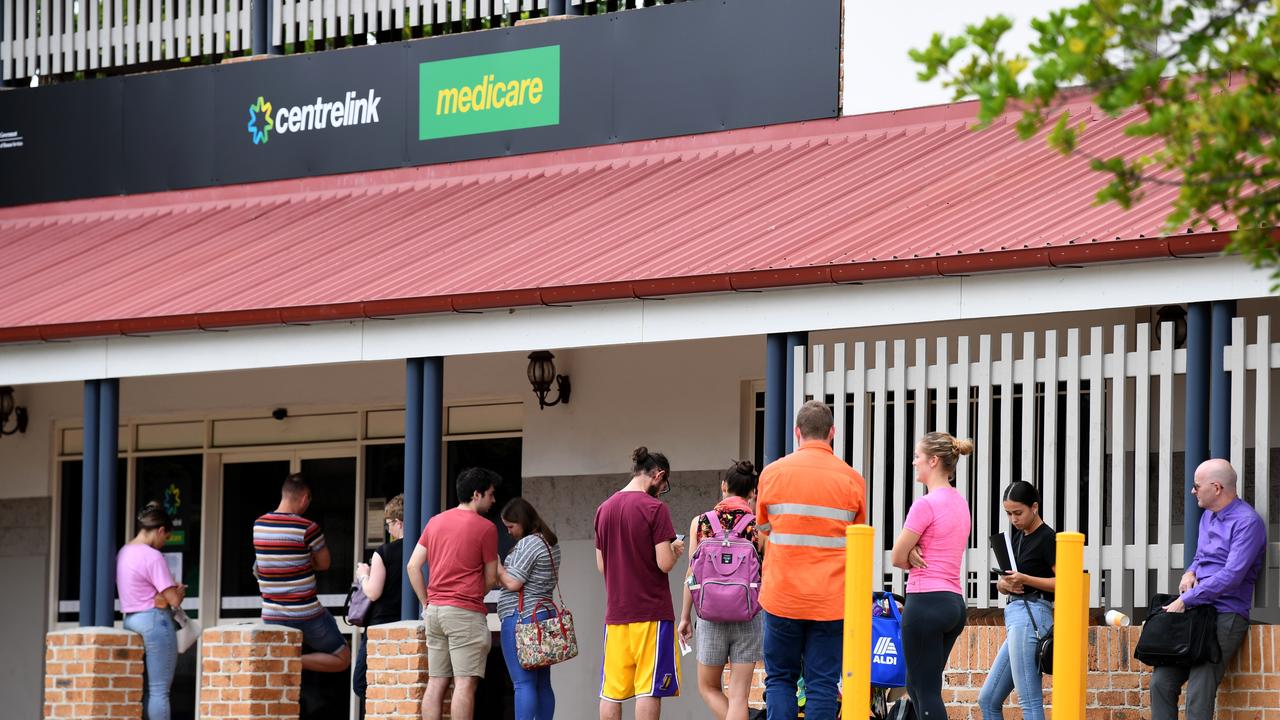
If the predictions are confirmed, it means more pain for Australian workers.
Workers’ wages are predicted to decline in real terms by the end of 2025, after eight consecutive quarters of real wage growth.
Real wages, which measure how much or little workers take home after accounting for increases in prices, are expected to fall by 0.9 percent by June, compared with a forecast of 0.5 percent in November.
The unemployment rate is also expected to be higher than previously expected in the medium term, with the unemployment rate expected to reach 4.6 percent by June 2028.
Largely as a result of higher cash rate pricing, GDP is expected to be lower than previously forecast after June 2026.

Australia’s Associated Press is the beating heart of Australian news. AAP is Australia’s only independent national news channel and has been providing accurate, reliable and fast-paced news content to the media industry, government and corporate sector for 85 years. We inform Australia.


