Iran’s Revolutionary Guards Set Up Covert Iraqi Cells To Attack Gulf Neighbors: Report

June 19 (Reuters) – Iran’s Islamic Revolutionary Guard Corps (IRGC) has set up secret new cells in Iraq to launch attacks on Gulf states hosting American forces and has disabled established militia networks to avoid detection, eight Iraqi sources told Reuters.
Three or four cells, each consisting of about 10 elite Iraqi Shiite Muslim fighters, launched at least seven drone strikes between April 20 and May 17 from desert areas near the southern cities of Basra and Samawa to sites in Kuwait, Saudi Arabia and the United Arab Emirates, three of the sources said.
Some of its members were drawn from the Islamic Resistance in Iraq, an umbrella group of hardline Shiite groups with thousands of fighters. But the new groups operate outside its command structure and report directly to the Revolutionary Guard, according to sources including two Iraqi military officials, a security official and five local militia commanders.
Five militia commanders said the establishment of new Iraqi cells, which had not previously been reported, reflected a change in Revolutionary Guard tactics aimed at preserving Iran’s ability to project power across the region at a time when Iran’s armed proxies have been greatly diminished and its own military and economic resources have been depleted.
Iraq, a Shiite-majority country, has numerous militias, many with close ties to Tehran. They form the mainstay of Iran’s regional “Axis of Resistance”, which stretches from Gaza and Lebanon to Yemen and Iraq.
Groups operating under the banner of the Islamic Resistance in Iraq have claimed responsibility for dozens of drone and rocket attacks on American assets in the country since the United States and Israel attacked Iran on February 28, prompting deadly retaliatory airstrikes. However, Iran’s proxy forces did not experience mass mobilization within Iraqi borders.
Many powerful Shiite groups there have been signaling since last year that they are ready to disarm and focus on domestic politics to avoid an escalating conflict with the administration of US President Donald Trump. This development may have encouraged the Revolutionary Guard to establish groups under its direct control, according to retired Iraqi army general Jassim al-Bahadli and two MPs from the Shiite ruling alliance.
Two of these groups, Asaib Ahl al-Haq and Imam Ali Brigades, announced this month that they would begin surrendering their weapons to state authorities, following repeated US warnings to the Iraqi government to dismantle armed groups operating on its territory.
“The new groups established by the Revolutionary Guard appear to be smaller, more ideologically rigid and more tightly controlled, reflecting Iran’s need to preserve resources in the face of economic distress,” said Bahadli, an expert on Shiite armed groups.
US-Iran Deal does not address Tehran’s support for proxies
The presidents of the United States and Iran signed an interim deal to end the war on Wednesday that includes talks that will follow on difficult issues such as the future of Tehran’s nuclear program. However, Iranian officials said Tehran’s support for “resistance groups” was not open to discussion and that the agreement did not address this issue.
Nathan Laine/Bloomberg via Getty Images
Iran’s foreign ministry and the United Nations missions in New York and Geneva did not immediately respond to detailed questions for this article.
The US State Department reiterated its “expectation that the Iraqi government will take immediate measures to eliminate all instruments of Iran’s destabilizing activities in Iraq, including the Revolutionary Guard and Iran-linked terrorist militias in Iraq.”
At a meeting Monday, Iraq’s new prime minister, Ali al-Zaidi, and U.S. envoy Tom Barrack discussed Iraq’s plans to “completely disarm and disband all armed groups” operating outside the control of the Iraqi state and to ensure that “Iraqi territory is not used by any party to threaten regional peace,” according to a joint statement.

Murtadha Al-Sudani/Anatolia via Getty Images
Zaidi’s military spokesman, Sabah al-Numan, declined to comment for this article.
Kuwait’s information ministry, the Saudi government’s communications office and the UAE’s foreign ministry did not respond to requests for comment.
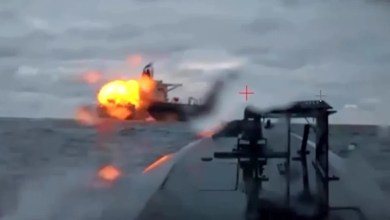
The war in Iran has battered the world’s most important energy-producing region, disrupting supplies and causing inflation to soar. Tehran responded to the US-Israeli bombings by effectively closing the Strait of Hormuz, through which roughly one-fifth of the world’s oil and liquefied natural gas trade passes, and by launching a massive campaign of drone and missile attacks on its Gulf neighbors.
New groups that have emerged in Iraq during the conflict, often operating under unusual names and with minimal public profiles, have carried out at least three drone strikes targeting Kuwait, two targeting Saudi Arabia and two targeting the UAE, three Iraqi security sources said, citing a combination of human intelligence, intercepted communications and evidence gathered from launch sites.
The sources said the targets included Ali Al Salem Air Base in Kuwait, where US forces are based, and a military terminal at the country’s international airport. Attacks against Saudi Arabia and the UAE have been halted, according to sources who could not confirm the targets.
Reuters could not independently verify his accounts.
Early Exam for Iraq’s New Prime Minister
Iraqi officials have said the IRGC is turning to new cells to maintain plausible deniability, shift blame away from the country’s main Iran-backed groups and reduce U.S. pressure on Baghdad to disarm them.
Iraqi security forces have limited information about the groups but are trying to uncover their chain of command to help prevent future attacks, officials said. They added that the groups consist of elite warriors who specialize in drone operations and communications.
Tehran has spent decades and billions of dollars building a network of regional alliances that have been severely weakened since the Iran-backed Palestinian militant group Hamas attacked Israel on October 7, 2023.
While Israel was beating Hamas in Gaza and Hezbollah in Lebanon, the Houthi movement in Yemen was the target of US and British air strikes. The overthrow of Syrian President Bashar al-Assad in December 2024 cut off a key supply route for Iraqi militias and further isolated the Islamic Republic.
Instead of maintaining a vast network of well-financed groups in Iraq, Iran now appears to rely on a limited number of “more radicalized cadres willing to operate with weaker financial support, prioritizing loyalty, deniability and operational influence over mass recruitment,” militia expert Bahadli said.
The new groups pose an early test for Zaidi in Iraq, who took office last month following a US crackdown on the dominant alliance of Shiite political blocs to prevent the return of former Prime Minister Nouri al-Maliki, who has close ties to Iran. Baghdad has long walked a tightrope between its two closest allies, Washington and Tehran; It’s a balancing act that becomes even more difficult during combat.
Attacks originating from Iraq also risk unraveling Baghdad’s painstaking efforts to rebuild ties with its wealthy Gulf neighbors, which have been tense since Saddam Hussein’s invasion of Kuwait in 1990 but have begun to thaw in recent years.
Kuwait, Saudi Arabia and the UAE summoned Iraqi ambassadors in April to protest the attacks.
Iraqi authorities are investigating whether it was involved in the drone strike that caused a fire at the Barakah Nuclear Power Plant on May 17, security officials said. On the same day, Saudi Arabia announced that it had captured three drones entering its airspace from Iraq; Iraqi officials said that the attack was carried out by a new group.
Zaidi condemned the two attacks, calling them criminal acts, and promised a joint investigation with both Gulf countries to verify whether Iraqi territory was used to target them. Zaidi’s spokesman, Numan, did not respond to questions about the status of the investigation.
(Reporting by Reuters; Writing by Yousef Saba; Editing by Alexandra Zavis)