Suspect in Belfast stabbing was asylum seeker who came to UK from Sudan

A Sudanese man has been charged over a stabbing attack in Belfast, Northern Ireland, which left one man in a serious condition.
Police said the 30-year-old man was charged with attempted murder, while the victim, in his 40s, was hospitalized with serious injuries to his eyes, back and face.
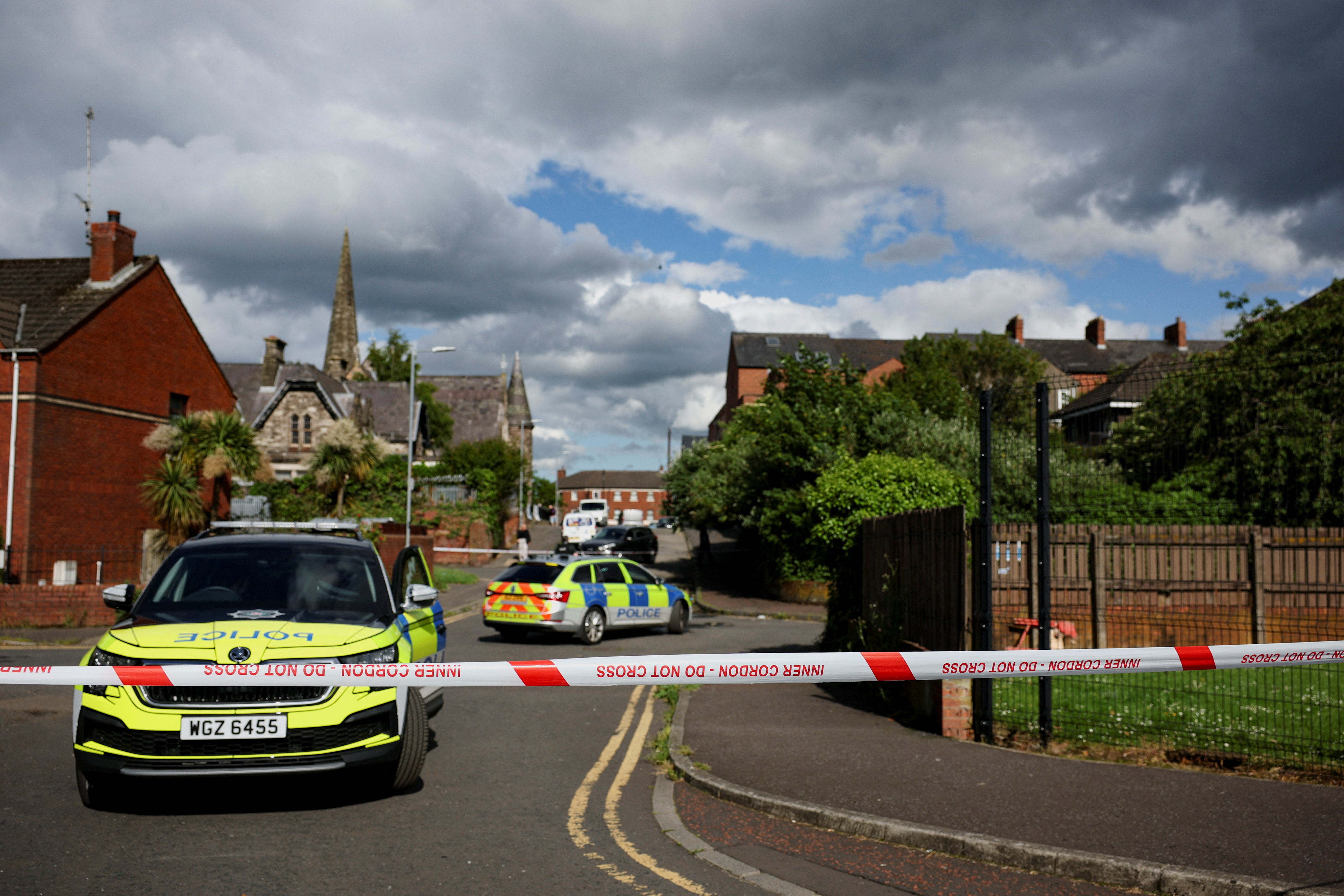
Footage circulating online showed members of the public trying to fight off the attacker before police arrived at the scene late on Monday and seized what they believed to be a kitchen knife.
Authorities have urged the public to remain calm and let police do their job amid calls for protests online, at a time of rising tensions over immigration in the UK.
Here’s what we know about the suspect who was detained during the police investigation into the stabbing:
Who is the suspect and where is he from?
The 30-year-old Sudanese national was charged with attempted murder. His name was not given.
Deputy police chief Ryan Henderson said at a news conference Tuesday that authorities are not looking for anyone else in connection with the case at this time.
Police initially reported that the suspect was believed to be of Somali origin.
The Home Office has since said the man arrested is a Sudanese national and has permission to remain in the UK until 2028.
“The individual claims to have entered the UK via the Common Travel Area,” a spokesman said.
How did he come to Northern Ireland?
Police believe the suspect traveled from Sudan to Paris several years ago, before arriving at Dublin in the Republic of Ireland and then Belfast in Northern Ireland.
The Home Office said the man arrived in the UK in 2023 and was granted refugee status at the end of the same year, adding that there was no record of the man being in the country before that year.
Chief Constable Jon Boutcher said he was believed to have been granted permission to remain in the UK on September 28, 2023.
Mr Boutcher said police were working to establish that the man traveled from Sudan to Paris on unknown dates and then flew to Dublin on a date also to be confirmed.
“My current understanding is that he traveled by bus from Dublin to Belfast on 10 February 2023 and requested asylum on that date,” he added.
“There is no trace of this suspect in any of our national security databases and he was not known to the Police Service of Northern Ireland.”


