Rail passengers facing ‘epidemic of violence’ as police admit staff cuts mean emergency response is too slow

A rise in crime on the railways is leaving passengers facing an “epidemic of violence” after transport police bosses admitted a shortage of officers was affecting their response to emergency calls.
The latest Home Office figures show British Transport Police (BTP), which also polices the London Underground, recorded a 5 per cent increase in crime in the year to June 2025 compared to the previous year. This included a 7 per cent increase in incidents of “violence against a person” and a 6 per cent increase in sexual offences.
The Department for Transport insisted the rail network still had a low crime rate, with a rate of 26 crimes per million passenger journeys, and said BTP had recently agreed an increased budget that would allow it to employ the highest number of officers since the Second World War.
However, an £8.5 million funding gap this financial year has triggered a “reset of the agency”, with more than 500 posts cut and 11 police stations closed by March, in addition to the five police stations that have been closed since 2020.
A report submitted to the British Transport Police Authority warned: “Despite efforts to maintain services, the closure of police stations and the resetting of the agency with the reallocation of resources to higher demand roles has reduced BTP’s visibility. We now have fewer frontline officers and staff than last year and less capacity to investigate crime. Where we have closed stations we are slower to respond to emergency calls.”
Many major towns and cities, including Stoke, Bradford and Middlesbrough, do not have BTP stations in their railway hubs, while two cities (Bath and Derby) have police stations but no BTP officer protection. Five London stations (Blackfriars, Charing Cross, Cannon St, Marylebone and Fenchurch Street) do not have a permanent BTP presence.
BTP’s offer In the three-year financial plan published in October, it was stated that the rate of officers per million passengers was estimated to fall to the lowest record level this financial year due to increased rail usage.
Worryingly, the number of crime incidents is predicted to rise by 13 per cent in 2025/26 compared to last year, and will rise further over the next three years.
The latest Home Office figures showed BTP had 2,852 police officers in March last year; that figure was down slightly from 2,964 in 2020; However, under its three-year financial plan, spurred by the increase in funding, it will be further increased by an additional 180 police officers, as well as 36 officers joining a dedicated team targeting violence against women and girls.
However, data on crimes continues to cause concern.
British Transport Police Authority annual report This year, it was revealed that there was a 5 per cent increase in crimes involving violence and intimidation against women and girls in 2024/25 compared to the previous year.
Separate figures published by the Office for Rail and Road in October showed that attacks on passengers and members of the public on the railway mainline reached a record high in 2024/25, with harassment and general assaults accounting for three-quarters of crimes.
In November last year, 11 people had to be treated in hospital following a mass stabbing on an LNER-run service from Doncaster to London King’s Cross.
Maryam Eslamdoust, general secretary of transport union TSSA, said: Independent: “As transport workers and passengers face an epidemic of violence, abuse and harassment across the rail network, our members in British Transport Police have endured years of deep uncertainty following repeated funding cuts. It is no coincidence that crime is rising as funding dwindles.”
“Despite promises to increase funding over the next three years, the current budget does not go far enough to replace the 500 BTP roles that will already be lost this year and comes with so-called efficiency savings that risk causing further cuts.
“Less staff means officers are increasingly being moved away from frontline policing duties to carry out tasks previously carried out by police staff, reducing visibility, responsiveness and effectiveness across the network. If this trend continues, the situation will only get worse.”
The RMT union has threatened to hold a national strike vote if “an appropriate funding plan” is not implemented to deter attacks.
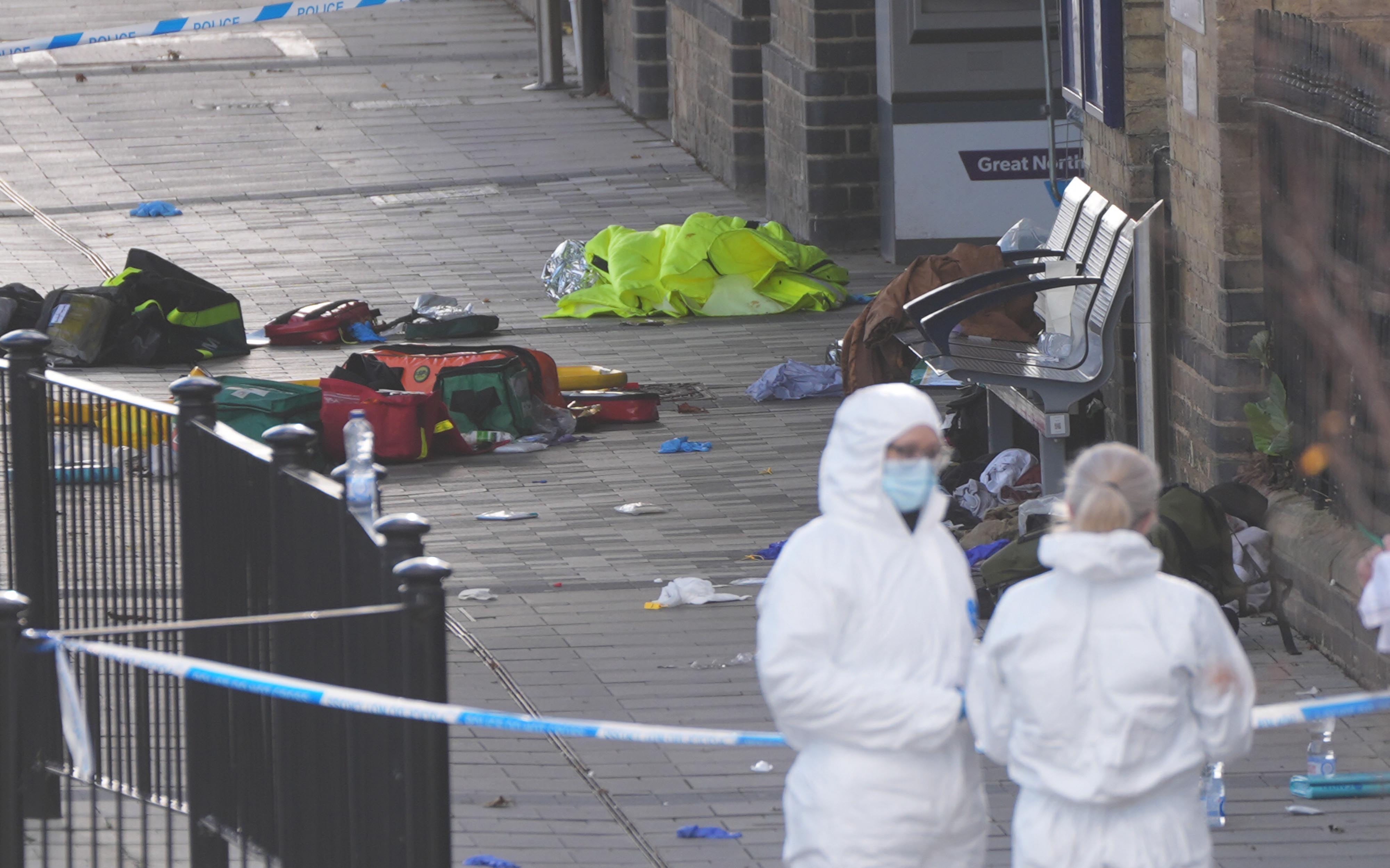
General Secretary Eddie Dempsey said: “Last year’s horrific mass stabbing on a train diverted to Huntingdon station shocked the nation and underlined why the safety of rail workers and passengers must be a top priority.
“We need a properly resourced British Transport Police and a visible officer presence in stations and on trains to gain the trust of passengers and protect staff all year round.”
The report, submitted to the British Transport Police Authority in October, said BTP did not have sufficient resources to respond to every “urgent and priority incident” on its network and that the force was relying on other police forces to respond to 17 per cent of incidents in 2024/25.
This week a BTP spokesman said: “Our officers and staff work tirelessly every day to keep our railways safe. We will continue to deploy resources where they are needed most, using intelligence to guide our operations and patrols, while working closely with our industry partners to ensure a visible and effective presence.
“The safety of those who use and work on the railways remains our top priority and we are committed to ensuring the network remains a hostile environment for criminals.”
Some of the more than 500 posts to be abolished this year are already vacant, the force said.
Following the LNER service incident, in which train driver Andrew Johnson is believed to have helped stop the attack, transport minister Heidi Alexander promised a review of rail safety.
A Department for Transport spokesman said: “Passenger safety is our top priority. The railway has a low crime rate, with fewer than 26 crimes per million journeys, and the overall crime rate on our railways has decreased over the past year.
“British Transport Police was recently given an increased budget of £482 million by 2028/29 (£419 million in 2025/26), an increase of 15 per cent, which will see more police officers than at any time since the Second World War.”


