Stock markets fall again as investors warned over more Iran war volatility

Investors have been warned not to be too optimistic following last week’s stock market revival; Another weekend of uncertainty is expected to cause more damage in the Middle East.
London’s FTSE 100 and US S&P 500 indexes, among others, finished the week strong as sentiment turned positive on hopes of the reopening of the Strait of Hormuz.
However, this quickly turned around as Iran once again said it was closed and refused further talks. Meanwhile, the USA announced that it seized an Iranian ship trying to bypass the blockade.
Stock markets took a hit earlier this week and experts warned that investors will need a “deep reserve of patience” before the whole situation is over.
The FTSE 100 was down more than 0.5 per cent at 10am (BST) on Monday, while European shares suffered further losses. France’s CAC 40, Germany’s DAX and Spain’s IBEX 35 fell more than 1 percent, while the Euro Stoxx 50 fell 1.3 percent.
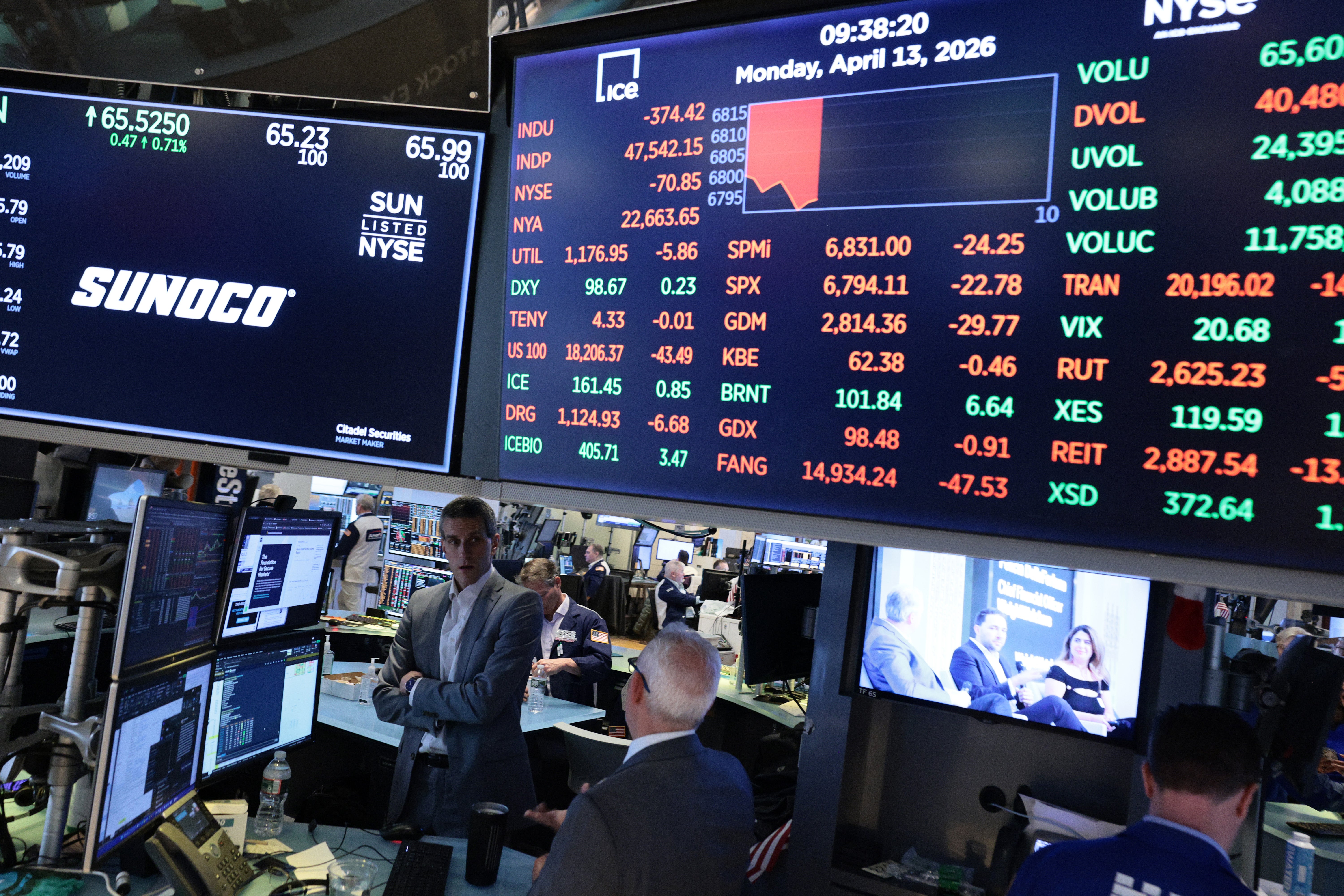
It shows that futures indexes in the US are expected to fall when markets open later, with the Dow Jones, Nasdaq and S&P 500 down more than 0.5 percent.
Richard Hunter, head of markets at Interactive Investor, said this continued to mean a bumpy period for investment, with many markets on the other end of the seesaw against oil prices rising once again on Monday.
“A very familiar theme has emerged where markets take two steps forward and then one step back, driven almost entirely by the news flow from the Middle East,” he said.
“On Friday, Iran reportedly declared the Strait of Hormuz ‘wide open’, setting fire to the stocks of those so far affected by the conflict, especially airlines and cruise ship operators, while oil prices fell in anticipation of a return to some kind of normality.”
However, for long-term investors, avoiding the temptation to sell recent underperformers remains a focus; London’s main index has risen more than 7 percent for the year despite problems causing stocks to fall.
“While short-term investors try to navigate a challenging path of wild volatility and uncertainty, long-term investors tend to ignore the noise and focus on a return to normality with a relatively good economic backdrop now in place. The FTSE100 has become something of a poster child for this investment mindset and despite a weaker open following the weekend’s developments, the index remains solidly ahead by 7 per cent in the year to date,” he said.
Derren Nathan, head of equity research at Hargreaves Lansdown, said further talks between countries would determine the markets’ next moves.
“The discourse has intensified once again as attention turns to a second round of talks between Tehran and Washington in Pakistan, but it remains to be seen whether these discussions will take place. It remains to be seen whether this stalemate is just a detour on the road to resolution, but further instability seems the most likely outcome,” he said.
A quick solution was initially hoped for but has since proven impossible; Susannah Streeter, Wealth Club’s chief investment strategist, reminded investors that ignoring the noise is an important trait in times like these.
“A deep reserve of patience is needed, but with some industries, such as airlines, facing jet fuel shortages, these are tense times and valuations reflect that,” he said. “Although indexes in Asia remain stable and investors are still focused on expectations that talks will continue, Wall Street stocks look set for a stumble, with S&P 500 futures pointing to a small pullback from record highs.”
“Last week’s market excitement over the reopening of the Strait of Hormuz appears to have been premature,” added AJ Bell investment director Russ Mould.


