These nostalgic photos show Remembrance Sunday over the years
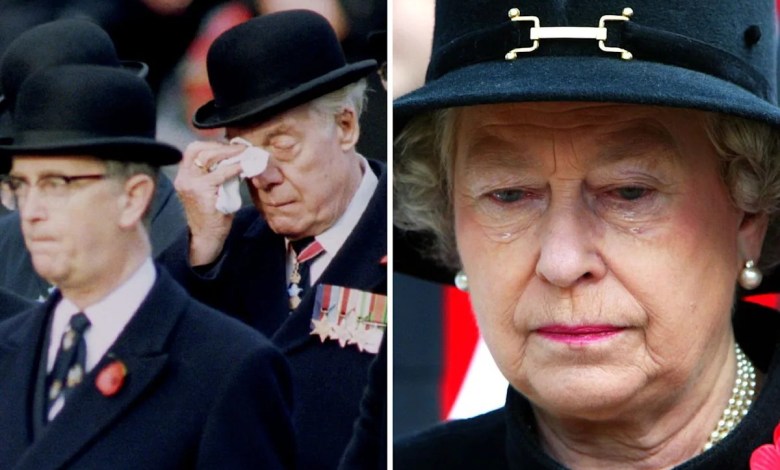
The nation came together to mark Remembrance Sunday in the annual recognition of those who lost their lives in the two world wars and later conflicts.
Veterans, politicians and the Royal Family attended the National Service of Remembrance at the Cenotaph on Whitehall in London, which marked 80 years since the end of the Second World War, on Sunday (9 November).
As Big Ben tolled at 11am, a single gun fired on Horse Guards Parade and the nation joined in a two-minute silence.
The King and other members of the Royal family joined political leaders, current and ex-members of the Armed Forces and World War veterans at the foot of the Cenotaph memorial, where wreaths of poppies were laid in remembrance.
King Charles III was joined by politicians and veterans for the Remembrance Sunday service at the Cenotaph in London on Sunday, 9 November. (PA)
In recent years, the number of Second World War veterans attending the commemorations has dwindled. Indeed, it is thought as few as 8,000 veterans remain in England and Wales of the millions who fought for their country.
So, as the nation remembers those who have fallen in service to their country, Yahoo News looks at how the commemorations have changed over the decades.
Early commemorations
Remembrance for the dead of the First World War originally fell on Armistice Day, starting in 1919.
That year, King George V hosted a “Banquet in Honour of The President of the French Republic” at Buckingham Palace on the evening of 10 November, followed by the first official Armistice Day events held in the grounds of the palace the next morning, including a two-minute silence at 11am. However, the banquet was criticised for being too celebratory.
The following year, the funeral of the Unknown Soldier took place at the Cenotaph and a two-minute silence was observed throughout the nation.
During the Second World War, commemorations were moved to the Sunday preceding 11 November to avoid disruption of the production of vital war materials. Then, in 1946, after the end of the war, the second Sunday in November was designated as Remembrance Sunday.
William Morrison, speaker of the House of Commons, Lord Simonds, the lord chancellor, Clement Attlee, leader of the opposition, and prime minister Winston Churchill watched as the Queen laid her wreath at the Cenotaph. (PA Photos Alamy)
Politicians including Winston Churchill joined in Remembrance commemorations on 10 November 1946. (PA Photos Alamy)
The Two Minutes Silence is observed by crowds at the Artillery Memorial on Hyde Park Corner in London. (Getty Images)
King George VI salutes the Cenotaph during the 1946 Remembrance Service in Whitehall alongside his daughter Princess Elizabeth of York (lather Queen Elizabeth II). (Getty Images)
The Royal Family
The Royals always play a key role in Remembrance commemorations.
King Charles and other members of the Royal family joined political leaders, current members of the Armed Forces and veterans at the Cenotaph, where he was among those to lay wreaths of poppies to mark the occasion.
Charles’ late mother laid a wreath at the Cenotaph for the first time as Princess Elizabeth on Sunday, 11 November 1946 – the first Remembrance Sunday after the end of the Second World War.
She attended Remembrance Sunday at the Cenotaph for the first time as monarch on 9 November 1952, and according to the Royal British Legion, from that point onwards only ever missed seven Remembrance Sunday events: once in 2021, four due to being abroad on Royal tours and two when she was pregnant.
Her wreath featured around 90 poppies and was either laid by her personally or on her behalf in later years by her son Charles.
Princess Elizabeth addresses an event believed to be in the late 1940s at the British Legion Festival of Remembrance at the Royal Albert Hall on the eve of Remembrance Sunday. (Getty Images)
Queen Elizabeth II leads the nation in homage to the dead of two world wars during the Remembrance Day service at the Cenotaph. (PA Images via Getty)
The Queen leading the nation in remembrance as she lays a wreath on the Cenotaph on Remembrance Sunday. (PA Images via Getty Images)
King Olav V of Norway, Princess Diana, Princess Anne, Alice, Duchess of Gloucester and The Queen Mother watching the Remembrance Sunday service at the Cenotaph. (Jayne Fincher/Hulton Archive/Getty Images)
Queen Elizabeth II sheds a tear during the Field of Remembrance Service at Westminster Abbey in London in 2002. (PA Images via Getty Images)
Queen Camilla, then Duchess of Cornwall, with Catherine, who was Duchess of Cambridge at the time, and Sophie, Countess of Wessex, during the Remembrance Sunday service in Whitehall in 2011. (LEON NEAL/AFP via Getty Images)
In 2020, the COVID pandemic did not stop the Queen from marking Remembrance. Here she attends a service to mark the centenary of the burial of the Unknown Warrior ahead of Remembrance Sunday. (AARON CHOWN/AFP/POOL/PA WIRE/AFP via Getty Images)
King Charles salutes during the Remembrance Sunday ceremony at the Cenotaph in 2024. (TOBY MELVILLE/POOL/AFP via Getty Images)
In 2025, the King was joined by the Prince of Wales as both laid wreaths at the Cenotaph, followed by the Duke of Edinburgh, with wreaths also laid on behalf of the Duke of Kent and the Princess Royal, who was in Australia where where she attended a remembrance service at the Anzac Memorial in Sydney.
The Queen and the Princess of Wales watched from a balcony overlooking the Cenotaph, joined by the Duke and Duchess of Gloucester, the Duke of Kent and the Duchess of Edinburgh.
The King was joined by the Prince of Wales, (left) and the Duke of Edinburgh (right) during the 2025 Remembrance Sunday service at the Cenotaph. (PA)
Queen Camilla and the Princess of Wales watched from a balcony at the Foreign, Commonwealth and Development Office (FCDO). (PA)
Veterans
As those who fought for the nation, whether in the world wars or more recent conflicts, veterans have always been key to Remembrance commemorations.
But with 2025 marking 80 years since the end of the Second World War, the number of veterans from that conflict is dwindling.
According to veterans’ charity Blesma, in 2025, it is estimated that fewer than 8,000 British Second World War veterans remain alive in the UK.
Those still alive range in age between 98 and 110 – at the time, the youngest conscription age in Britain was 18 years old; however, some lied about their age.
In 2009 Harry Patch, the longest-surviving soldier of the First World War, dubbed ‘The Last Fighting Tommy’, died at the age of 111.
Three D-Day veterans were among the Second World War personnel attending the 2025 Remembrance service at the Cenotaph in Whitehall, with around 20 veterans of the conflict between 1939 and 1945 expected to have arrived in central London for the occasion.
Every year, veterans join the Royal Family, politicians and dignitaries at the National Service of Remembrance at the Cenotaph in Westminster – even during the COVID pandemic when social distancing was in place. (Arthur Edwards – WPA Pool/Getty Images)
Veterans from the First World War being driven past the Cenotaph on Remembrance Day. (Reuters)
Former servicemen and women arrive for the Remembrance Sunday Service in 2005. (Reuters)
Only around 8,000 Second World War veterans are estimated to be left in the UK in 2025. (Getty Images)
Any surviving WW2 veterans in Britain are estimated to be between the ages of 95 and 112. (Getty Images)
Veterans on mobility scooters take part in the parade at the annual Remembrance Sunday service at the Cenotaph. (Getty Images)
The day always marks the contribution of veterans to the world wars and later conflicts. (Getty Images)
Troops march during a Remembrance Sunday ceremony at Commando Memorial in Spean Bridge, Scotland in November 2012. (Jeff J Mitchell via Getty Images)
Dignitaries and veterans stand in front of the Cenotaph as they attend the Remembrance Sunday ceremony in Whitehall in 2015. (GLYN KIRK/AFP via Getty Images)
Service personnel parade along Whitehall after the Remembrance Sunday ceremony at the Cenotaph on 13 November, 2016. (JUSTIN TALLIS/AFP via Getty Images)
Members of the public look on veterans attend the annual Remembrance Sunday service in 2019. (Getty Images)
Military veterans marching during the Remembrance Sunday service in 2021. (PA Images via Getty Images)
Politicians
Leading politicians, including the prime minister, leader of the opposition and other key political figures, are always among those to join the Royal Family and representatives of the armed forces for the Remembrance service at the Cenotaph.
Over the years, parties have put their differences aside to stand side by side and lay wreaths as part of the occasion.
Liberal Party leader David Steel, former Labour leader James Callaghan and Conservative prime minister Margaret Thatcher at the Remembrance Day service in November 1980. (Hulton Archive via Getty Images)
Prime minister Tony Blair (right) joined by Liberal Democrat leader Paddy Ashdown and Conservative leader William Hague to mark Remembrance. (PA Images via Getty Images)
Conservative leader Kemi Badenoch at the Cenotaph in 2024 with prime minister Sir Keir Starmer, as well as former PMs Boris Johnson and Theresa May. (Getty Images)
Liberal Democrat leader Sir Ed Davey, Conservative Party leader Kemi Badenoch, Prime Minister Sir Keir Starmer and (second row, left to right) former prime minister Boris Johnson, (obscured) former prime minister Lord David Cameron and former prime minister Gordon Brown attended the Remembrance Sunday service at the Cenotaph in 2025. (PA)
A nation remembers
Remembrance services and commemorations are held across the country, from services in churches to gatherings at war memorials in cities, towns and villages.
Each year, the nation marks the importance of Remembrance by donning poppies sold by the Royal British Legion.
Founded in 1921, the poppy appeal raises funds for the Royal British Legion’s work supporting serving personnel, veterans and their families.
Twin sisters Pamela and Pauline Chamberlain selling Remembrance Day poppies at Leytonstone in London in November 1953. (Getty Images)
A veteran weeps during the annual Remembrance Sunday Ceremony at the Cenotaph in 1995. (Reuters)
An old woman makes the sign for Victory during the Remembrance Day service at the Cenotaph in 1966. (Getty Images)
A Remembrance Sunday parade in Middlesbrough in 1978. (Getty Images)
Lloyds employees observe two minutes silence at a ceremony on the Underwriters floor in the Lloyds building in London in November 2005. (Getty Images)