Break in economic data keeps Middle East in focus

As the Iran conflict enters its eighth week, events in the Middle East once again cast a shadow over developments in the domestic economy.
The benchmark oil price fell below $90 a barrel for the first time in more than a month after Iran announced at Friday night AEST that the Strait of Hormuz would be open to commercial shipping for the duration of a 10-day ceasefire between Israel and Lebanon.
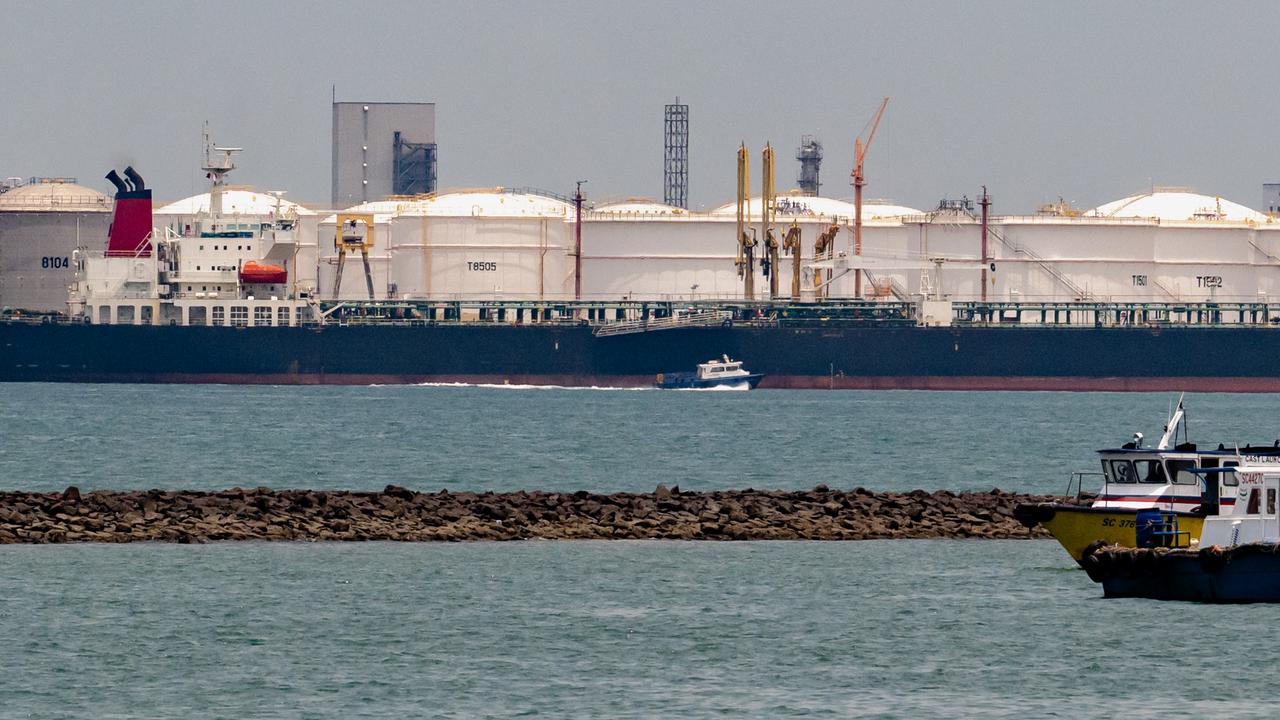
But traders were left in limbo on Sunday when Iran again closed the vital waterway in retaliation for the ongoing US blockade of Iran’s use of the strait, leaving hundreds of ships stranded in the Persian Gulf.
As the fragile ceasefire between the United States and Iran comes to an end on Wednesday, all eyes will turn to Islamabad, which is hosting talks between the warring sides.
Prime Minister Anthony Albanese stressed on Saturday that the strait must be kept open permanently and that international plans to restore maritime security will continue until then.
Shortages of vital commodities such as oil, helium and fertilizer are expected to worsen in the short term, as the last ships are allowed to pass as they unload their cargo in the coming days before the war begins.
Before Saturday’s announcement, Commonwealth Bank commodity analyst Vivek Dhar predicted that the benchmark Brent oil price could rise from just under US$100 per barrel to as high as US$135 per barrel by the end of April.
But markets remain bullish, with the price remaining below $92 per barrel on Sunday.
AMP chief economist Shane Oliver stated that stocks reached record levels on Wall Street after US President Donald Trump said that the possibility of a deal “looks very good.”
“We continue to believe that Trump will find a way to stay out of the war,” he said.
Pressure is mounting on the president to back down; Opinion polls show little support for the war, and approval ratings are falling as affordability begins to deteriorate.
“Republicans see an increasing likelihood of losing both the House of Representatives and the Senate in the midterm elections,” Dr Oliver said.
“Likewise, pressure on Iran to reach a deal is high as the US transition from bombing (which can unify a population) to harsher economic sanctions, such as blockading Iran’s oil exports, will increase public discontent with the Iranian government.”
Wall Street investors were optimistic about an agreement to end the war and the decision to open the Strait of Hormuz.
Two of the three major indexes rose to their third consecutive record close in New York on Friday, while the other posted its highest close since late February.
Dow Jones Industrial Index increased by 1.79 percent to 49,447.43 points, S&P 500 index increased by 1.20 percent to 7,126.06 points and Nasdaq Composite increased by 1.52 percent to 24,468.48 points.

Australian stock futures rose 82 points, or 0.91 percent, to 12,680.
Before the announcement of Hormuz’s reopening, the S&P/ASX200 fell 8.1 points on Friday, falling 0.09 per cent to 8,946.9 points, while the All Ordinaries lost five points, or 0.05 per cent, to 9,168.5 points.
On Tuesday, ANZ and Roy Morgan’s weekly consumer confidence index will offer a fresh look at how Australian households are responding to the crisis and the prospect of further rate hikes from the Reserve Bank.
In their speech in Washington DC last week, Federal Reserve officials Sarah Hunter and Andrew Hauser reiterated the importance of keeping inflation expectations stable to prevent the risk of runaway price increases similar to those in the 1970s and 1980s.

Australia’s Associated Press is the beating heart of Australian news. AAP is Australia’s only independent national news channel and has been providing accurate, reliable and fast-paced news content to the media industry, government and corporate sector for 85 years. We inform Australia.


