From gigabits to terabits: fibre to fire up downloads

Australia’s busiest internet route could get a speed boost of up to six times after Telstra launched the first major milestone on its $1.6 billion fiber optic network.
The company activated its internet project’s Sydney-Melbourne coastal link on Tuesday, promising transmission speeds of up to 700 gigabits per second on a single fiber channel.
Telstra has also revealed a study that found the network could boost Australia’s gross domestic product by $29 billion in 2040 and support more than 84,000 jobs in areas such as artificial intelligence, agriculture, healthcare and defence.
The announcement comes after the federal government named artificial intelligence a national priority. Productivity Commission estimates that technology could contribute more than $116 billion to the economy over the next decade.
Telstra’s project, renamed the Aura Network, is designed to connect mainland capitals with a 14,000km bi-wire network offering transmission speeds 6.3 times faster than existing connections.
Telstra InfraCo chief Dino Georgiou said more than a third of the network had now been built, including the final route, which is “the country’s busiest digital superhighway” and carries more than twice as much data as other routes.
The Sydney-Melbourne link, which runs through Canberra, will also provide ultra-high-speed internet connections to regional towns such as Monash, Cooma and Wollongong along the way.
“We are really moving connectivity from the gigabit to the terabit world,” Mr Georgiou told AAP.
“We will see the network enabling new use cases for AI and digital, as well as increasing job creation opportunities in critically important areas such as healthcare, education, mining and transportation.”
The announcement follows the launch of a link between Sydney and Canberra in June, with connections to Adelaide, Perth and Brisbane going forward.
An Oxford Economics report analyzing the fiber network and commissioned by Telstra found that the fiber network has the potential to increase GDP by $29 billion in 2040; this includes a $5 billion increase in Australia’s regions.
The Aura Network was also found to support 84,000 jobs and add another $7 billion to the economy if Telstra pursues “potential routes” including connecting Melbourne to Hobart, Brisbane to Darwin and Darwin to Perth.
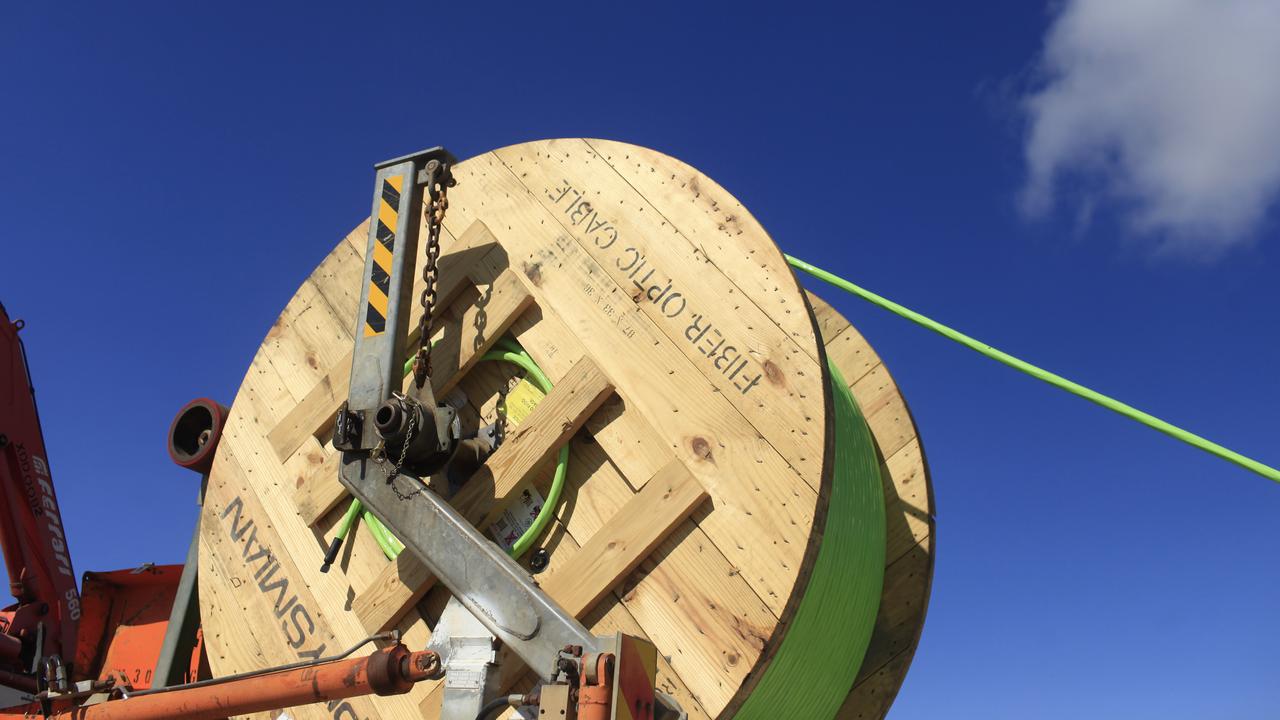
Mr Georgiou said investments in Australia’s broadband backbone were critical, with internet traffic expected to grow five to ninefold by 2033, and would support national investment in digital innovations such as generative artificial intelligence models.
“If we don’t make these investments now, Australia will be left behind,” he said.
“We are delighted to see that the government has made AI a national priority and connectivity fits the bill, because we won’t be able to scale AI without high-capacity, high-bandwidth fiber to connect our data centers and businesses.”
In its interim digital technology report, the Productivity Commission estimated that investments in artificial intelligence could increase workforce productivity by 4.3 percent over the next decade, equivalent to $116 billion.
Telstra’s Aura Network, scheduled to be completed within 18 months, is expected to compete with fiber networks planned by HyperOne and Subco.

Australia’s Associated Press is the beating heart of Australian news. AAP is Australia’s only independent national news channel and has been providing accurate, reliable and fast-paced news content to the media industry, government and corporate sector for 85 years. We inform Australia.


