Gasoline price gouging in California draws a warning
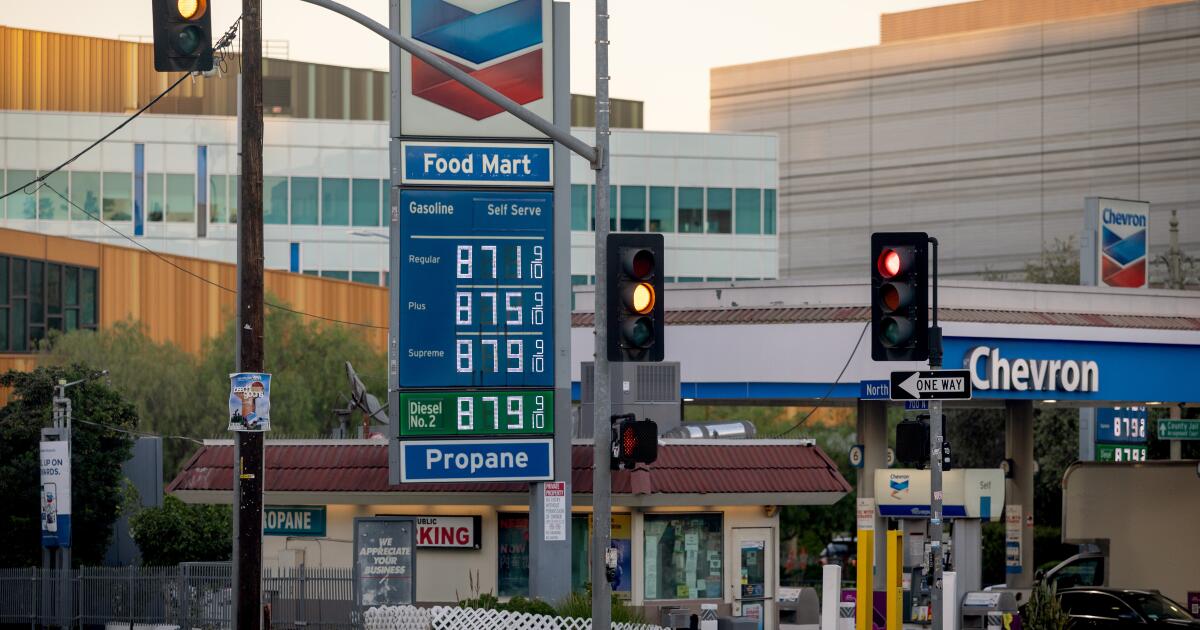
California’s oil market watchdog is warning of price increases of more than $7 or even $8 per gallon at some gas stations as the Iran war causes oil prices to rise.
The average gas price in California is now $5.66, according to GasBuddy, which tracks prices across the country, but as of Friday, one Chevron station in Essex was charging $9.69, another in Los Angeles’ Chinatown was charging $8.71 and a station in Vidal Junction was charging $7.79.
“Our team carefully monitors the retail, wholesale and spot markets,” Tai Milder, director of the California Energy Commission’s Petroleum Market Oversight Division, said in a statement. “Any reports of unfair practices or market manipulation will be taken seriously and we will not hesitate to refer any illegal behavior for further investigation and prosecution.”
Gas prices have risen nearly 30% nationally since the United States and Israel attacked Iran three weeks ago, blocking Iran from 20% of global oil supplies. Already facing prices more than $1 per gallon above the national average, Californians are particularly feeling the pressure.
The department noted that excessively high prices at some gas stations in California “are not supported by current crude oil prices or gasoline futures.”
California’s oil and gas monitoring division was established in 2023 to provide more insight into the state’s oil market after summer gas price increases exceeded $6 per gallon for two consecutive years.
The state consistently sees the highest fuel prices in the country state taxes and fees, environmental programsthe need for a cleaner fuel blend and an isolated oil market where 80% of gasoline comes from in-state refineries.
This isolation makes California gas prices more susceptible to refinery outages and market manipulation. In 2024, the department reported that after accounting for environmental rules and taxes, Californians were still paying extra fees. 41 cents more per gallon, and the biggest share of that goes to industry profits. Them also found It said the price increases of the previous two years were due to refineries going offline with no backup supply and “potentially manipulative trading” when supply was in short supply.
Lawmakers and regulators have been quieter about price gouging lately, and the Energy Commission put on hold a decision to impose profit caps on refineries after a series of refinery closures raised concerns about future fuel supply shortages.
Jamie Court, president of the nonprofit taxpayer advocacy group Consumer Watchdog, said the widening gap between national and California prices since the start of the war is evidence of price gouging.
“We know they made 49 cents per gallon in January,” said Court of the refineries. “We now know their margins are closer to $1.25 per gallon,” he said, citing the group’s analysis of state and Oil Price Information Service data.
Most of its gas stations are owned and operated by independent businessmen who are “free to set the retail price of fuel and other products,” Chevron said in a statement.
“These costs are generally determined by fundamental economic forces such as demand, supply and competition,” spokesman Ross Allen said. Most gasoline pricesincreased, but California’s taxes and environmental fees could also rise above $1.20 per gallon.
Valero, Marathon Petroleum and Shell did not immediately respond to requests for comment.
The oil watchdog said it has reached out to stations since the war began, including “multiple stations in Los Angeles and San Bernardino counties, in addition to multiple stations in Northern California,” where pricing appeared “excessive and disproportionate to the increases in costs for these sellers.”
It also encouraged Californians to “shop around and compare prices between branded gasoline and unbranded (or generic) gasoline.”
“While retailers typically charge more for branded gasoline, all gasoline sold in California must meet the state’s high standards for emissions control and engine performance,” the statement said.