Inflation to ease in April – before oil prices drive fresh surge later this year

April inflation figures in the UK are expected to slow from 3.3 percent to 3 percent, but there are warnings that prices will continue to rise later this year.
The war in Iran and the ensuing Middle East conflict have caused oil prices to rise sharply since the beginning of March, leading to higher energy prices; This will impact food production, manufacturing and overhead costs for companies, as well as higher fuel costs.
Rising prices mean a return to rising inflation for the UK, after the Bank of England (BoE) struggled for four years to control it, as it spiraled due to the Ukraine war.
However, when figures for April 2026 are released by the Office for National Statistics next week and comparisons of month-to-month figures are made, the headline Consumer Price Index (CPI) figure will also compare the current picture with April last year.
Last year there were notable price increases in water, electricity, council tax bills and many other areas. This provides a higher starting point of comparison; This means that the jump in April prices is slightly smaller, giving the impression that inflation is slowing down. Slowing inflation still means prices are rising, but not as fast as a year ago.
But with the aforementioned incoming costs impacting prices as the year progresses, April inflation numbers are likely to be little more than a brief dip on a longer upward trajectory.
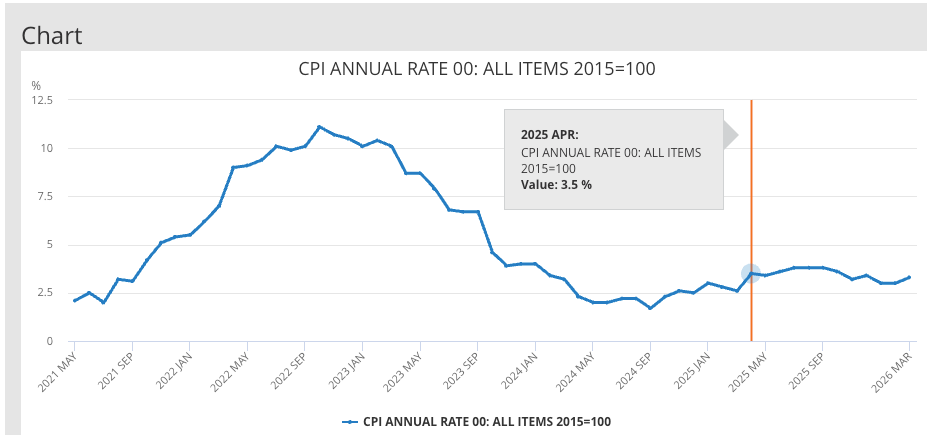
The chart above shows the CPI inflation rate over the last five years, with the increase in April 2025 highlighted.
While current levels are nowhere near the peaks seen in 2022 and 2023, the BoE has been forced to change its previous plan to cut interest rates to freeze them to stave off the worst of inflation.

Get a free partial share of up to £100.
Capital is at risk.
Terms and conditions apply.
ADVERTISING
Get a free partial share of up to £100.
Capital is at risk.
Terms and conditions apply.
ADVERTISING
The Food and Drink Federation has predicted that grocery costs could rise by as much as nine per cent or even 10 per cent by the end of this year, with most of this increase coming from the second half of 2026.
Some supermarket bosses have vowed to keep extra costs out of final prices as much as possible, but energy bills, as well as the fertilizer used to grow food crops, are rising due to conflict in the Middle East. And that doesn’t take into account internal issues like the rising cost of employment and other operating cost pressures last year.
Regardless of the April report showing falling inflation rates, the broader picture shows that the UK is back on an upward path.
Sanjay Raja, Deutsche Bank’s chief UK economist, predicts the UK’s “headline CPI tracking will be 3.2 per cent on an annual basis” [for 2026]“before falling to ‘only’ 2.7 percent on an annualized basis in 2027.”
Annual inflation was 3.4 percent for 2025 and 2.5 percent the previous year. But there is a big warning that as the Iran war drags on, rising cost pressures will become more fueled over time, and the pain of rising inflation will last longer.
However, the prospect of interest rates rising once again will arise, further increasing financial pressures on households and businesses with mortgages or other borrowing costs, feeding into restrictive pressures for the wider UK economy.
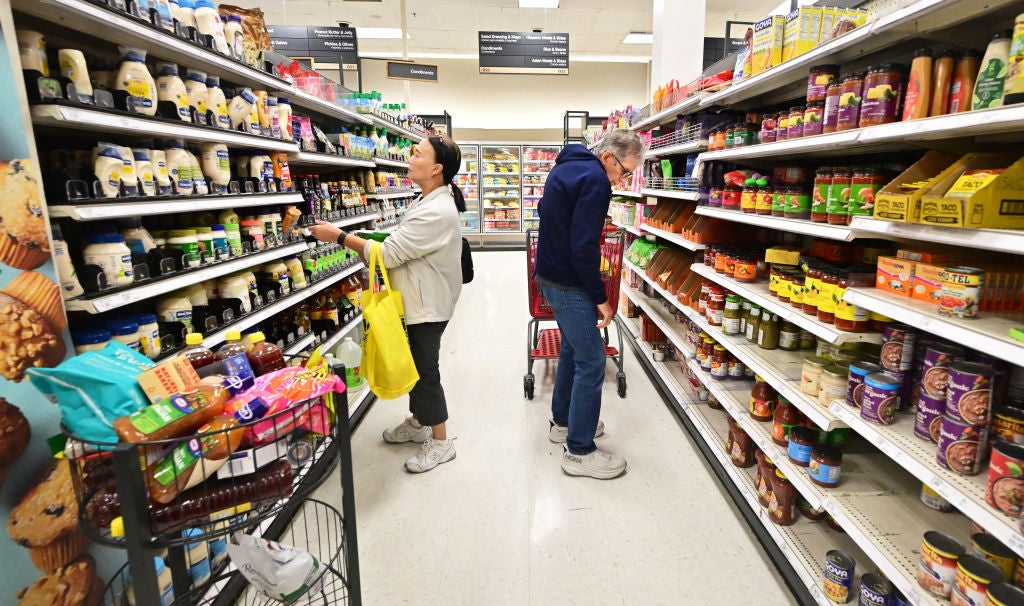
As a result, Barclays analysts Jack Meaning and Cian Hennigan expect food, alcohol and tobacco prices to slow, as well as housing services and airfares.
But prices for durable goods, as well as communication services and gas pumps, are also rising.
As recently as February, many economists had identified April 2026 as the month when inflation figures would finally return to the Bank of England target of 2 percent set by the government.
While the events of the following months were unpredictable, the reversal of inflation was a painful reminder of how dependent Britain had become on external shocks; These shocks have once again changed the future trajectory of households and businesses.


