Rutgers grad sues school over ‘gross negligence’ in racking up $516 million sports debt
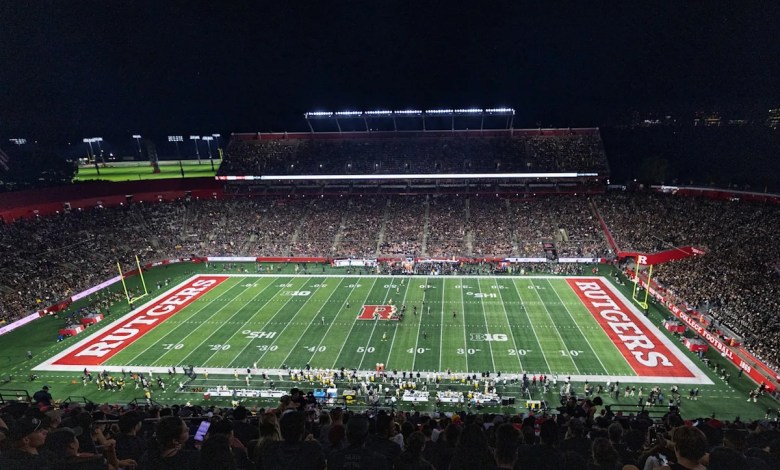
A. Rutgers University alumnus has filed a class-action lawsuit against his alma mater, alleging that the school’s athletic department “wasted tens of millions of dollars in taxpayer funds” through “wasteful spending, lack of oversight, and other gross negligence” and “hurt New Jersey taxpayers” while running a deficit of half a billion dollars over the past decade.
The lawsuit, filed Tuesday in Middlesex County Superior Court by attorney Hector Rodriguez, aims to “stop the continued waste and unlawful diversion of public funds” against the athletics department, which reported a record deficit of $78 million for the 2024-25 academic year.
Advertising
Rodriguez was a Rutgers graduating class of 1975. was once a judge in Franklin TownshipThe filing argues that the $516 million deficit accrued since Rutgers joined the Big Ten in 2014 “constitutes a systematic misuse of public resources undertaken without meaningful oversight, regulatory authorization, and a credible plan for fiscal sustainability.”
Rodriguez, who is seeking a trial by jury, is asking the court to declare that the school’s “continuation of supporting athletics deficits with public funds violates New Jersey law” and orders “an independent financial audit of Rutgers athletics.” It also seeks to prevent Rutgers from “approving or financing athletic deficits using taxpayer-supported funds without legislative authorization” and demands that Rutgers “return to the State of New Jersey all amounts deemed improperly used.”
President William Tate, the Board of Governors, and the Board of Trustees were named as defendants.
Advertising
Rutgers spokeswoman Dory Devlin said in a statement to NJ.com that the university “does not comment on pending litigation” and will “respond to the complaint through legal process.”
“Rutgers’ academic mission and national profile have advanced significantly since the university joined the Big Ten,” Devlin said in a statement. “At the same time, despite the large revenue increase from Big Ten distributions, costs from required talent and infrastructure, including coach salaries, higher salary fringe rates, facilities and student-athlete resources, have outpaced revenues.
“Rutgers is not alone: Rutgers athletics operating expenditures rank 11th among 18 teams in the Big Ten. During this time of unprecedented change in college athletics, the university is taking several steps to work toward a sustainable athletics budget, which currently accounts for 3% of Rutgers’ $6 billion budget.”
Rodriguez was not immediately available for comment Tuesday. Bruce Nagel, the attorney representing him in this case, He said the lawsuit was about “stopping this wasteful spending of money that causes great harm to taxpayers.”
Advertising
“Rutgers is running its athletic department at a shocking deficit,” Nagel said. NJ.com. “It has caused more than $500 million in losses. It is funded by taxpayer money and it needs to be stopped.”
Since joining the Big Ten, Rutgers has reported operating expenses of $1,356,068,522 and operating income of $1,165,521,194; This resulted in a deficit of $190,547,328. But the revenue figure also includes subsidies, which account for 28% of that total, according to one study. NJ.com analysis.
Subtracting student fees ($138.1 million), university aid ($146.2 million) and state funding ($42.1 million) from total revenue puts Rutgers’ deficit since joining the Big Ten at more than $516 million, the largest in the league by a significant margin.
NJ.com analysis shows most Big Ten schools rely on some form of subsidy, but none come close to Rutgers. Over the past four years, the New Jersey school has received by far the most state aid, direct university support and student fee revenue ($109.6 million).
Advertising
Rodriguez is seeking the return of all state funding for athletics, noting that only three of the 13 public schools not on the Big Ten’s west coast have received subsidies from their state budgets in the past four years: Illinois ($29.6 million), Rutgers ($27.2 million) and Wisconsin ($6.2 million).
In the guest column NJ.comTate argued that “deficit figures reflect NCAA accounting rules, not how most athletic departments define their actual operating results.” He notes that the $78 million deficit in the last fiscal year included “various forms of support, including $7 million in university funding, $8 million in state aid, and $15.8 million in student fees,” which he believes should be “counted as revenue.”
Tate also noted that athletics represent “about 3% of the university’s $6 billion budget, less than half of the average athletic spending at top Division I universities.”
In the 2024-25 academic year, athletic spending represented 3.67% of Rutgers’ budget; this was the seventh-highest rate among the Big Ten’s 16 public schools.
Advertising
That’s too much for Rodriguez, who is trying to force Rutgers to use fewer subsidies and reduce athletics spending.
“We are extremely confident that we will ultimately be successful in our efforts to take responsibility and stop wasteful spending,” Nagel said.
Read the original article NJ.com. To add NJ.com As a Preferred Source by click here.